5G (NR) Roaming: Definition and Complete Implementation Process
5G (NR) roaming refers to a terminal (UE) that moves from its Home Public Land Mobile Network (HPLMN) to a Visited PLMN (VPLMN) and continues accessing 5G services through other operator‘s network.
5G (NR) roaming process works as below:
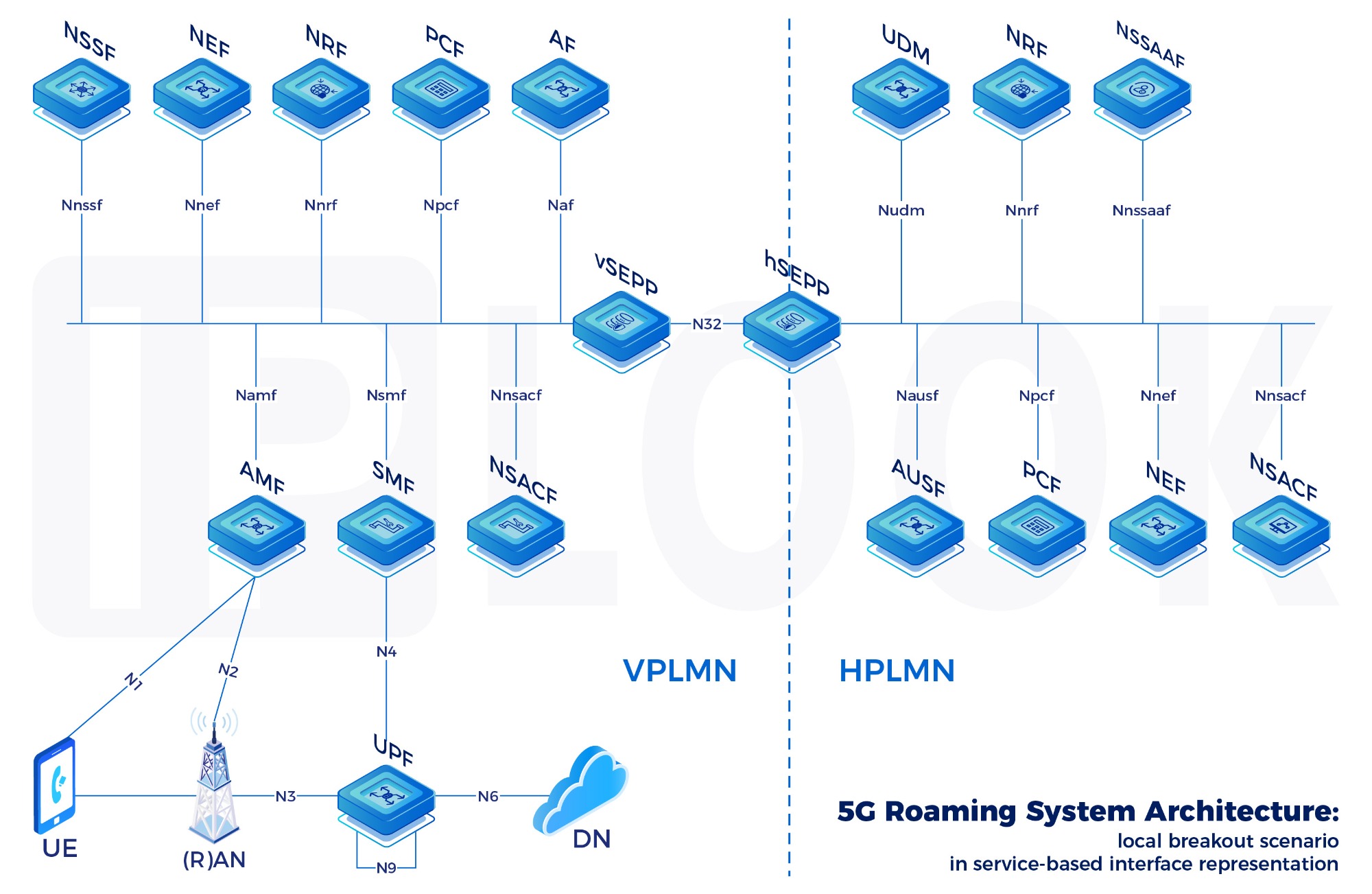
- UE powers on and searches for a signal.
- UE selects the VPLMN based on roaming agreements.
- UE sends an attach request to VPLMN through the RAN.
- AMF in VPLMN sends an authentication request to HPLMN.
- AUSF and UDM in HPLMN authenticate UE.
- Home Security Edge Protection Proxy (hSEPP) ensures secure communication with VPLMN.
- Visited SEPP (vSEPP) receives an authentication response, ensuring secure inter-network communication.
- AMF and SMF in VPLMN establish sessions for the UE.
- NSSF selects the appropriate network slice.
- PCF manages session application policies and billing rules.
- Data is routed via UPF, which in VPLMN routes data from the UE directly to the data network (DN), enabling local breakout.
- UE accesses the internet through the DN.
Click to explore more 5G features of IPLOOK’s 5GC here.