Our High-Performing Core Network
Fully virtualizable on VMware, K8S, Docker and OpenStack containers
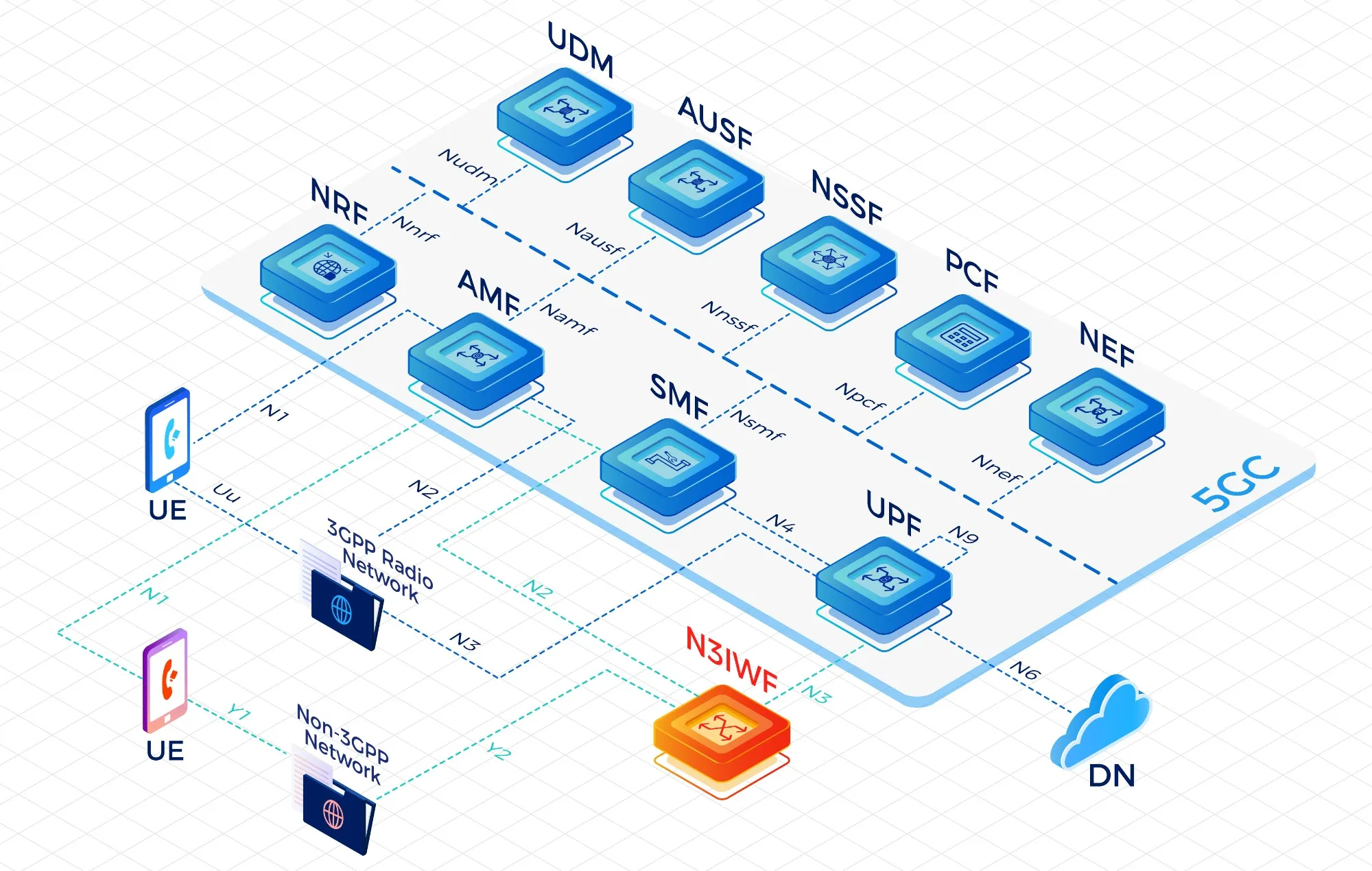
N3IWF (Non-3GPP InterWorking Function)
Key Benefits

Support both 3GPP access network and non-3GPP access network

Flexible and balanced traffic load scheduling

Support satellite access

High traffic transmission
5GC Integrated with Satellite Technology
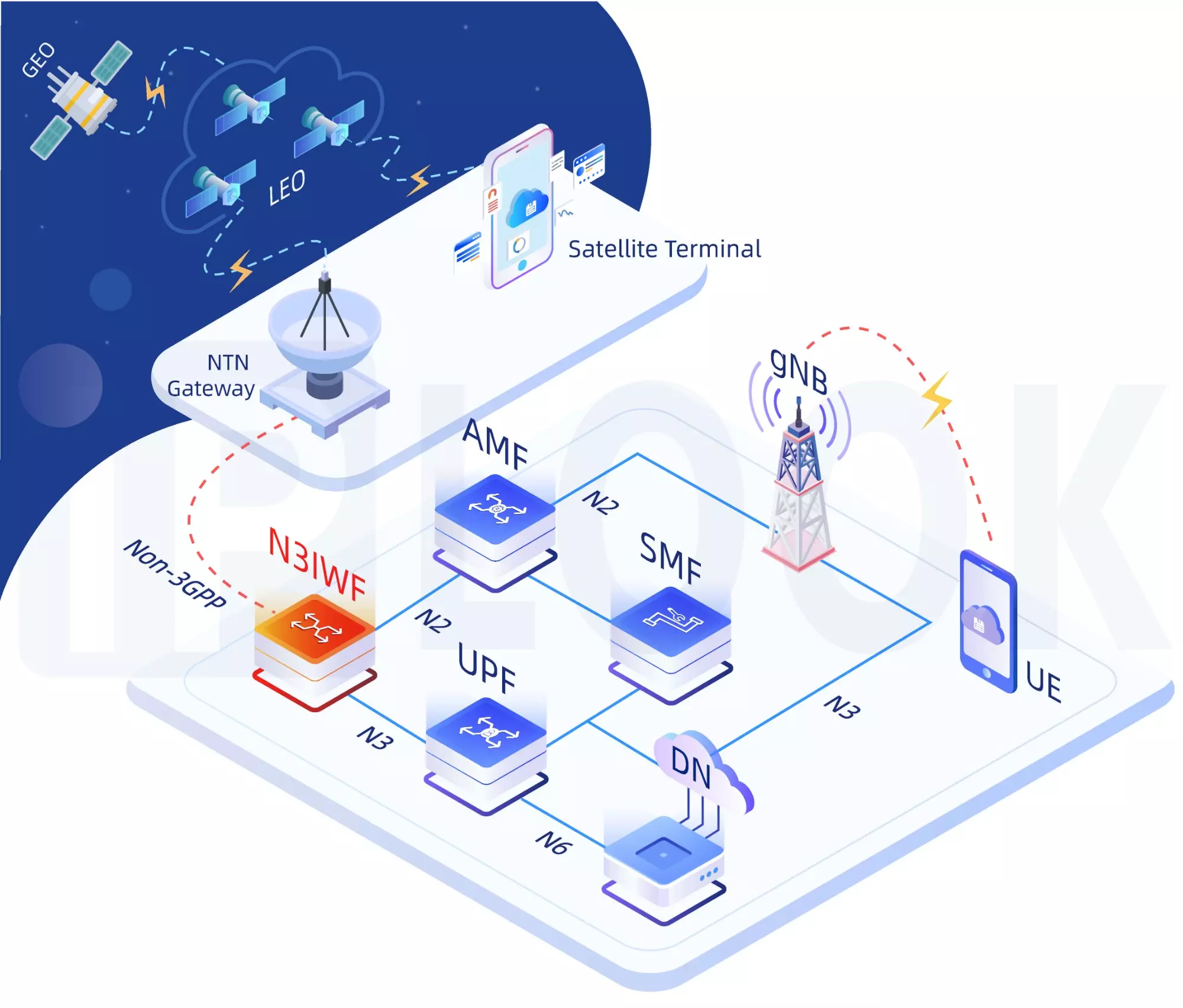
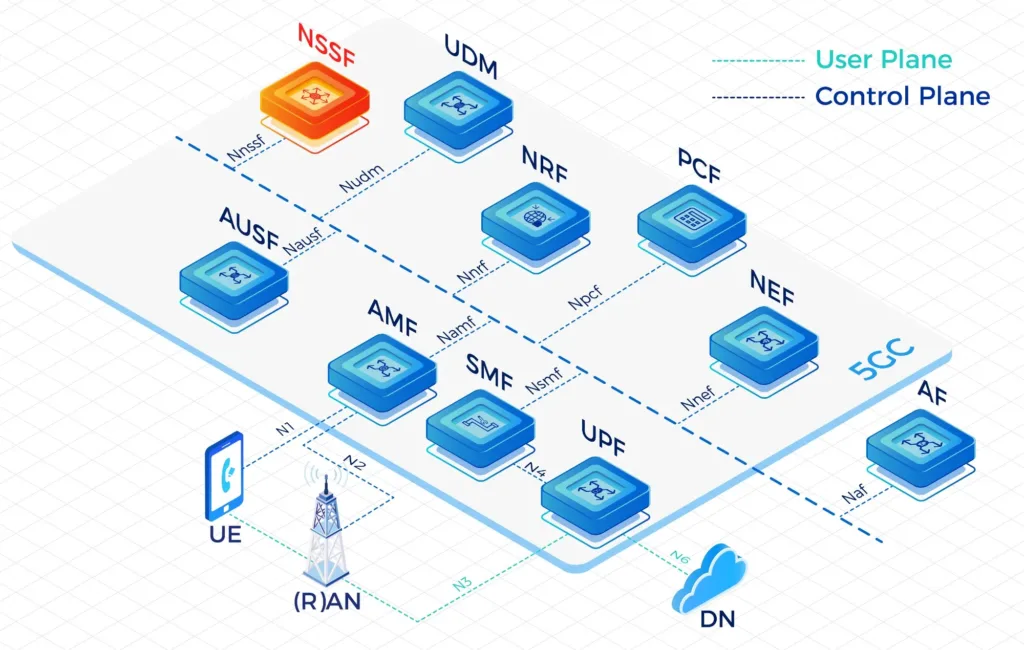
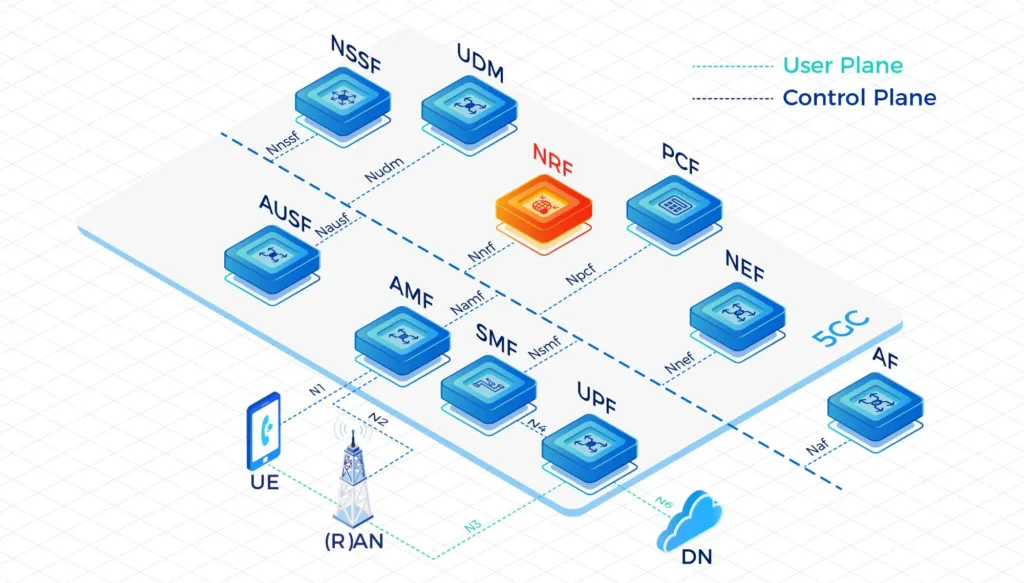
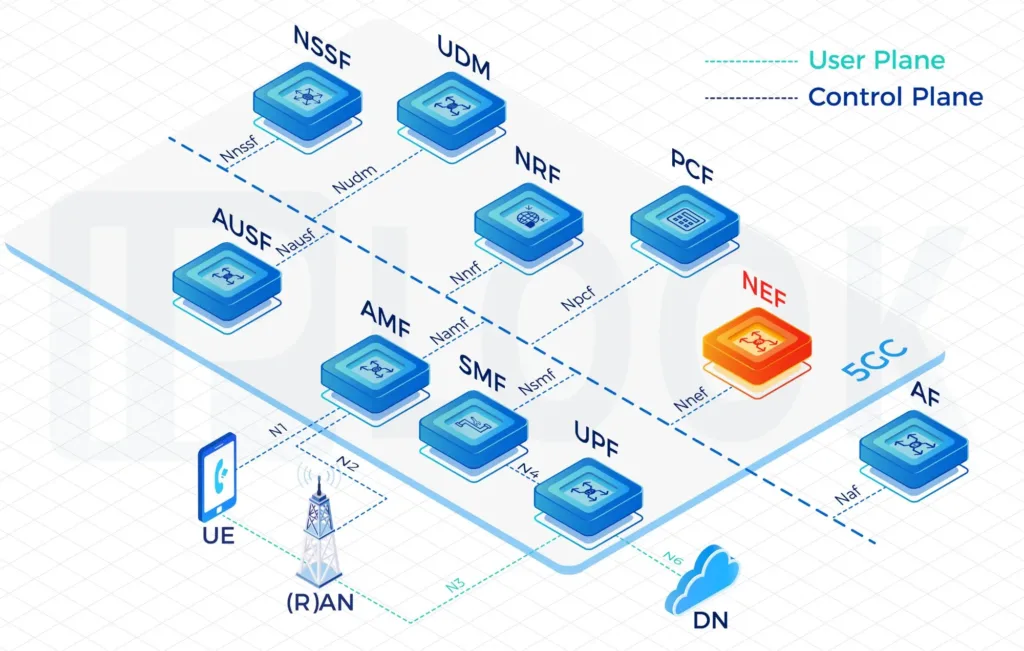
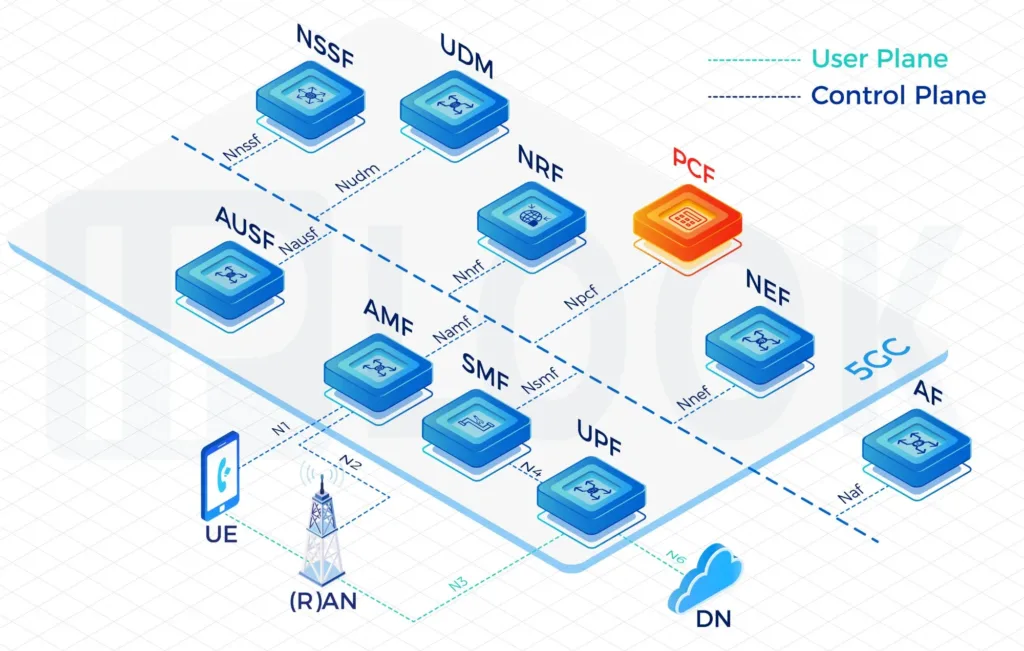
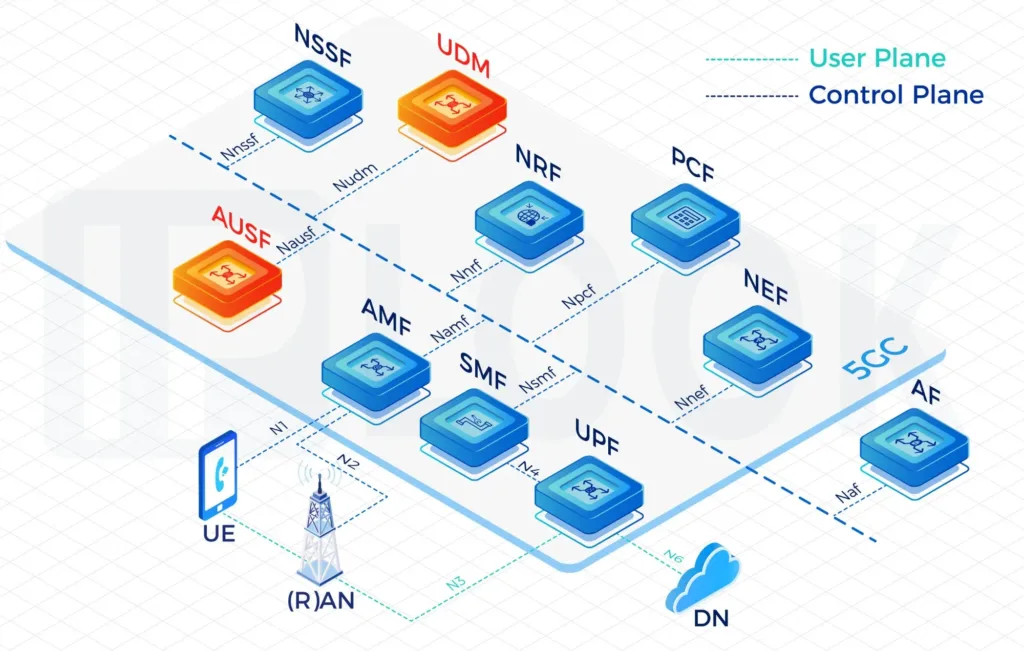
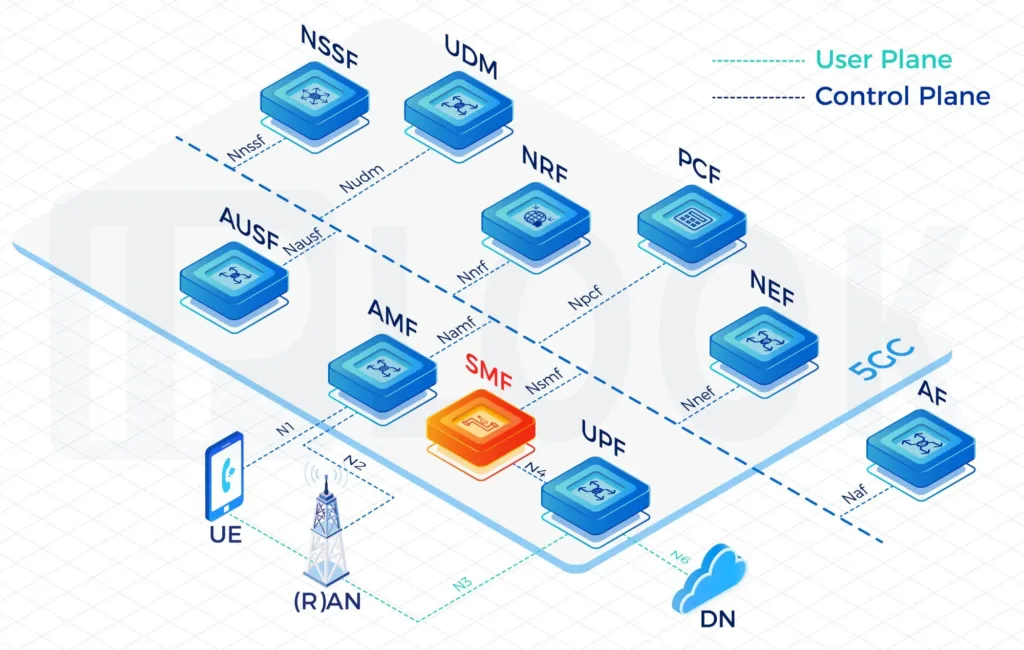
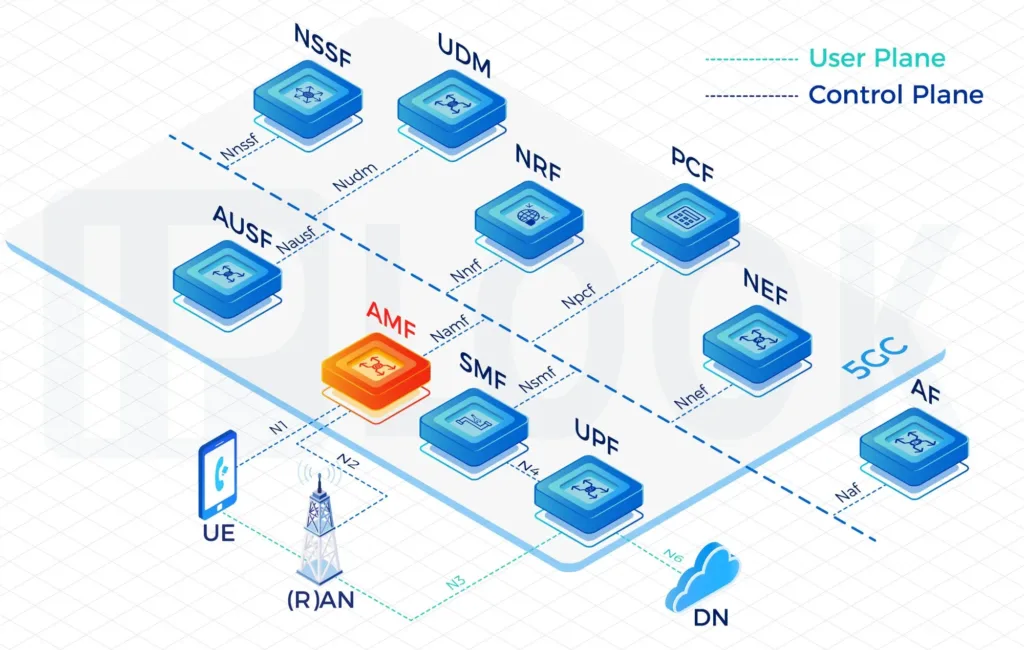
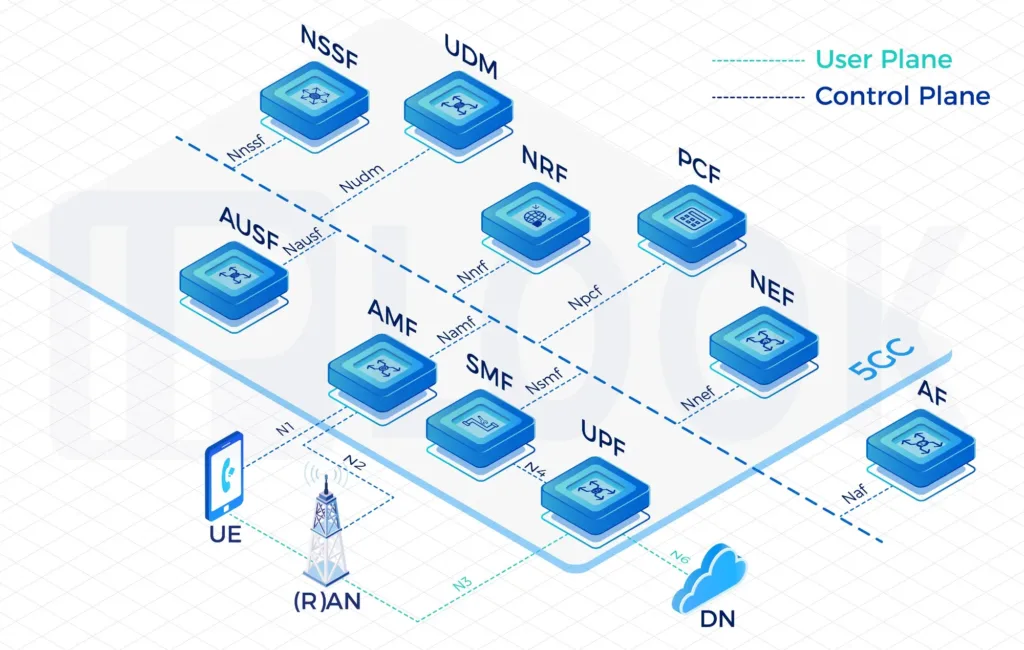
- The core network of satellite communication system adopts the same architecture as the ground 5GC. The network functions located in the control plane provide service functions through service-based interfaces, and other network functions can reuse the service functions of a certain network function.
In addition to the basic services provided by 3GPP, in order to support the integration with the ground, it is necessary to add N3IWF network functions on the user plane of 5G Satellite Core Network: - Support the establishment of IPSec Security Association (IPsec SA) with UE, forward the NAS signal of uplink and downlink control plane between UE and AMF, forward packets of uplink anddownlink user plane between UE and UPF, perform N3 packet marking corresponding to QoS, and perform local mobile anchor function in non 3GPP access network.
Video Series
Features
Comply to 3GPP R15/R16 Standards
Interface Function
- N2 Interface
- N3 Interface
- Web Server
Support the establishment of IPSec tunnel with UE
Provide NWU interface using IKEv2 / IPSec protocol
Forwards UE authentication information to the core network through N2 interface
Forward the uplink and downlink N1 messages (NAS signalling) between UE and AMF
Establish IPSec Security Association (IPSec SA) to forward PDU session user data
Process N2 session / QoS PDU control plane messages sent from SMF
Forward the uplink and downlink data between UE and UPF
Encoding / decoding of IPSec and N3 data
Support the QoS control of N3 interface
Support N3 uplink packet marking
Support local anchors
Support AMF selection
- API
- RESTful
FAQ
What is the primary role of the N3IWF in a 5G network?
The N3IWF is responsible for connecting untrusted non-3GPP access networks (such as public Wi-Fi or satellite networks) to the 5G Core (5GC). It acts as a gateway that allows the 5G network to treat non-3GPP access similarly to standard 3GPP RAN access.
How is security established between the User Equipment (UE) and the N3IWF?
Security is maintained through the establishment of an IPSec tunnel using the IKEv2 protocol. This ensures that all signaling and data traffic coming from an untrusted network is encrypted and secure before it enters the 5G Core.
Which interfaces are used by the N3IWF to communicate with the 5G Core?
The N3IWF utilizes two main interfaces:
N2 Interface: Used for the Control Plane to connect to the AMF (Access and Mobility Management Function).
N3 Interface: Used for the User Plane to connect to the UPF (User Plane Function).
How does the N3IWF handle NAS signaling?
The N3IWF forwards uplink and downlink N1 messages (NAS signaling) between the UE and the AMF. It encapsulates these messages within the IPSec tunnel to ensure they are securely transmitted from the UE to the core network.
What is the significance of N3IWF in satellite communication?
In satellite-integrated 5G systems, the N3IWF is essential for ground-to-satellite integration. It supports the establishment of IPSec Security Associations (SA) with the UE and performs N3 packet marking to ensure appropriate Quality of Service (QoS) across the satellite link.
Does the N3IWF support Quality of Service (QoS) control?
Yes. The N3IWF processes N2 session and QoS PDU control messages sent from the SMF (Session Management Function). it also supports N3 uplink packet marking and encoding/decoding of IPSec and N3 data to maintain service quality.
Which 3GPP standards does the IPLOOK N3IWF comply with?
The N3IWF solution is fully compliant with 3GPP R15 and R16 standards, ensuring compatibility with modern 5G core network deployments and multi-vendor environments.
Can the N3IWF select the appropriate AMF for a user?
Yes, the N3IWF supports AMF selection. When a UE connects via a non-3GPP access network, the N3IWF helps route the initial signaling to the correct AMF within the core network.
What are the management and API features of the N3IWF?
The N3IWF provides a graphical web-based management interface for configuration and monitoring. Additionally, it supports RESTful APIs, allowing for easy integration with external orchestration and management systems.
Does the N3IWF support local anchoring?
Yes, the N3IWF can perform the local mobile anchor function within the non-3GPP access network. This helps manage traffic locally and can improve efficiency for data transmission when the UE is connected through these alternative access points.