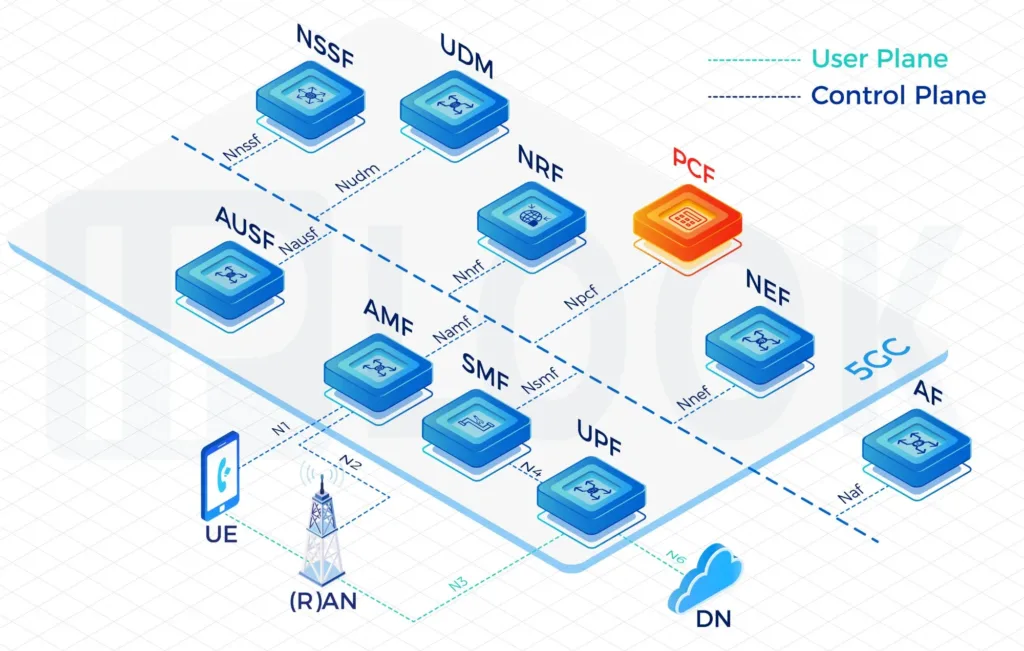
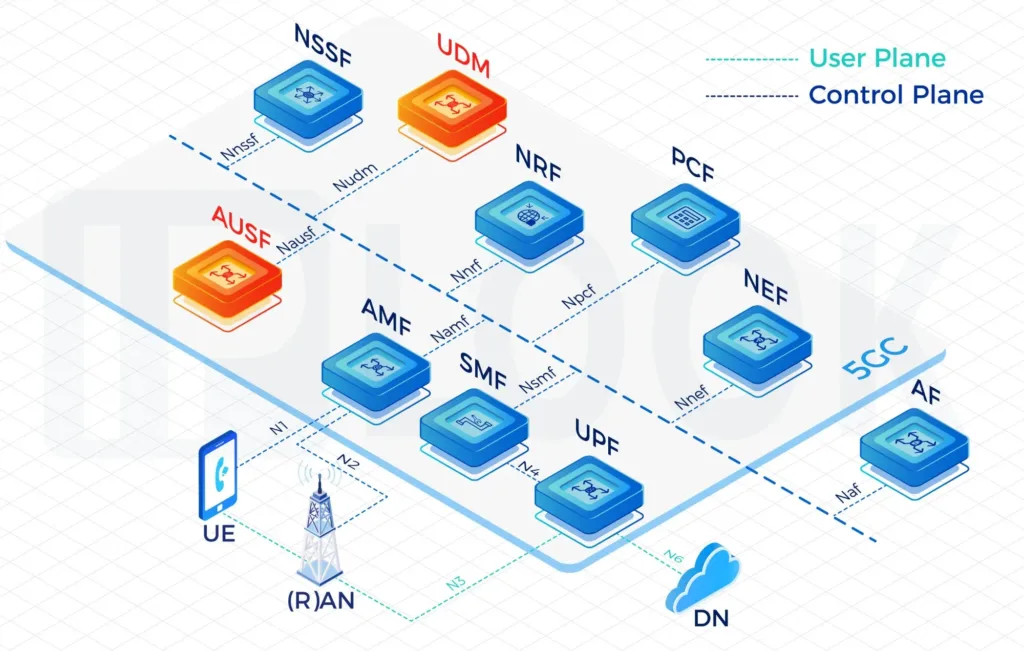
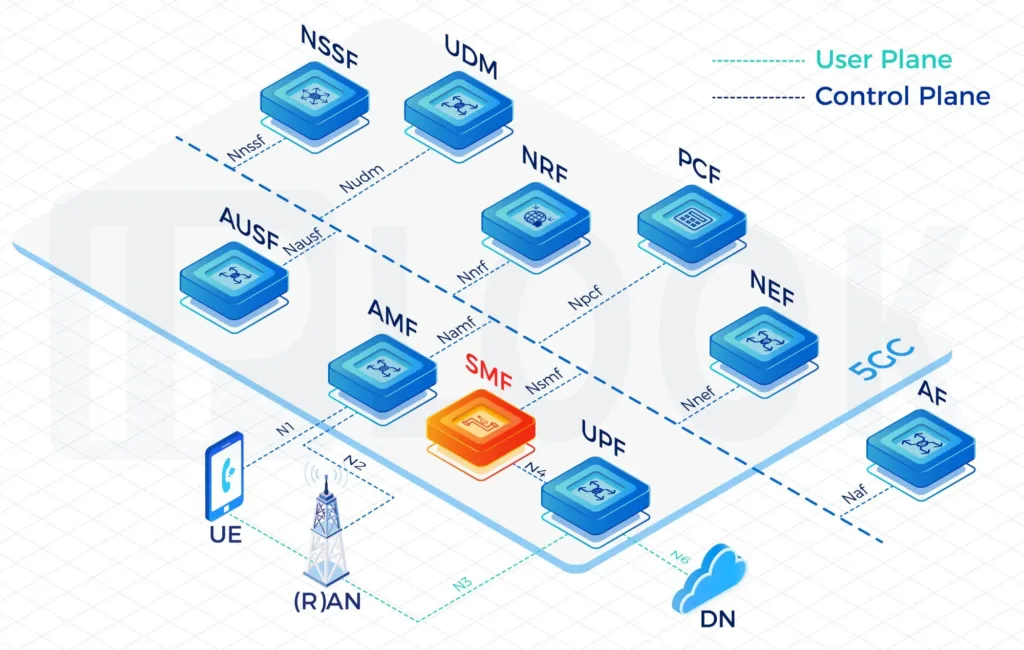
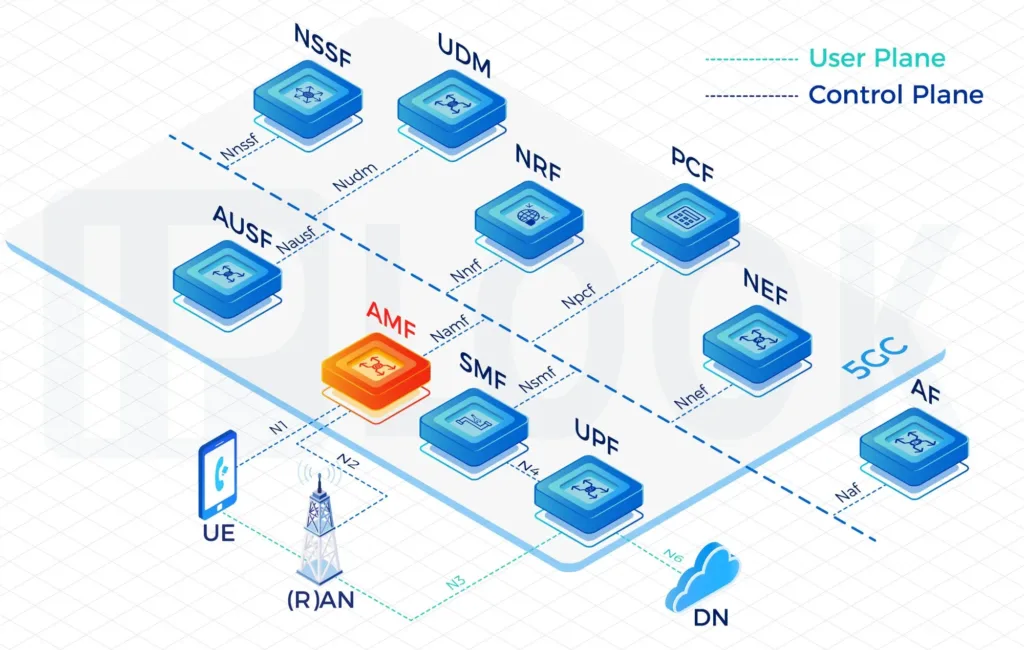
Fully virtualizable on VMware, K8S, Docker and OpenStack containers
Binding Support Function(BSF)
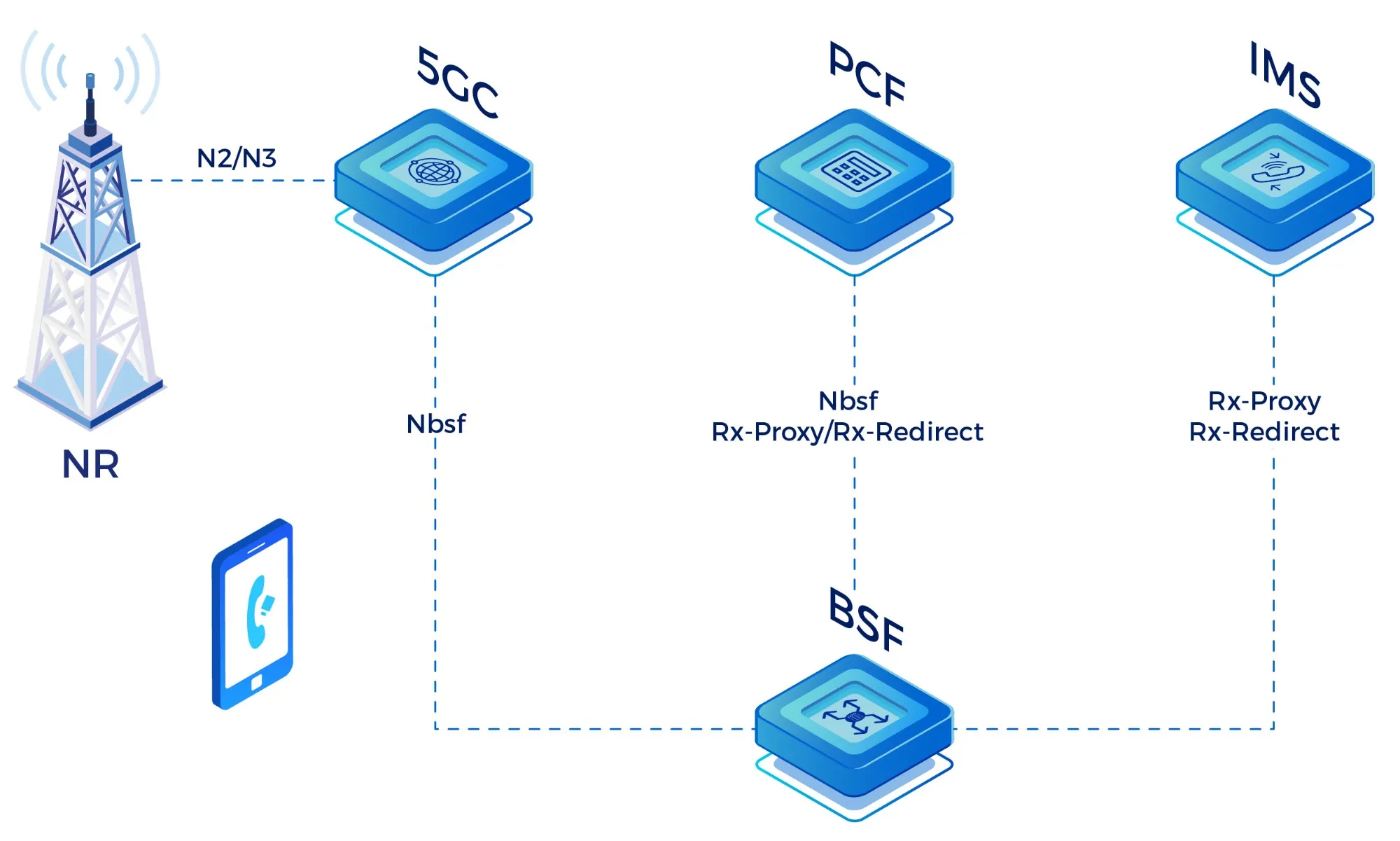
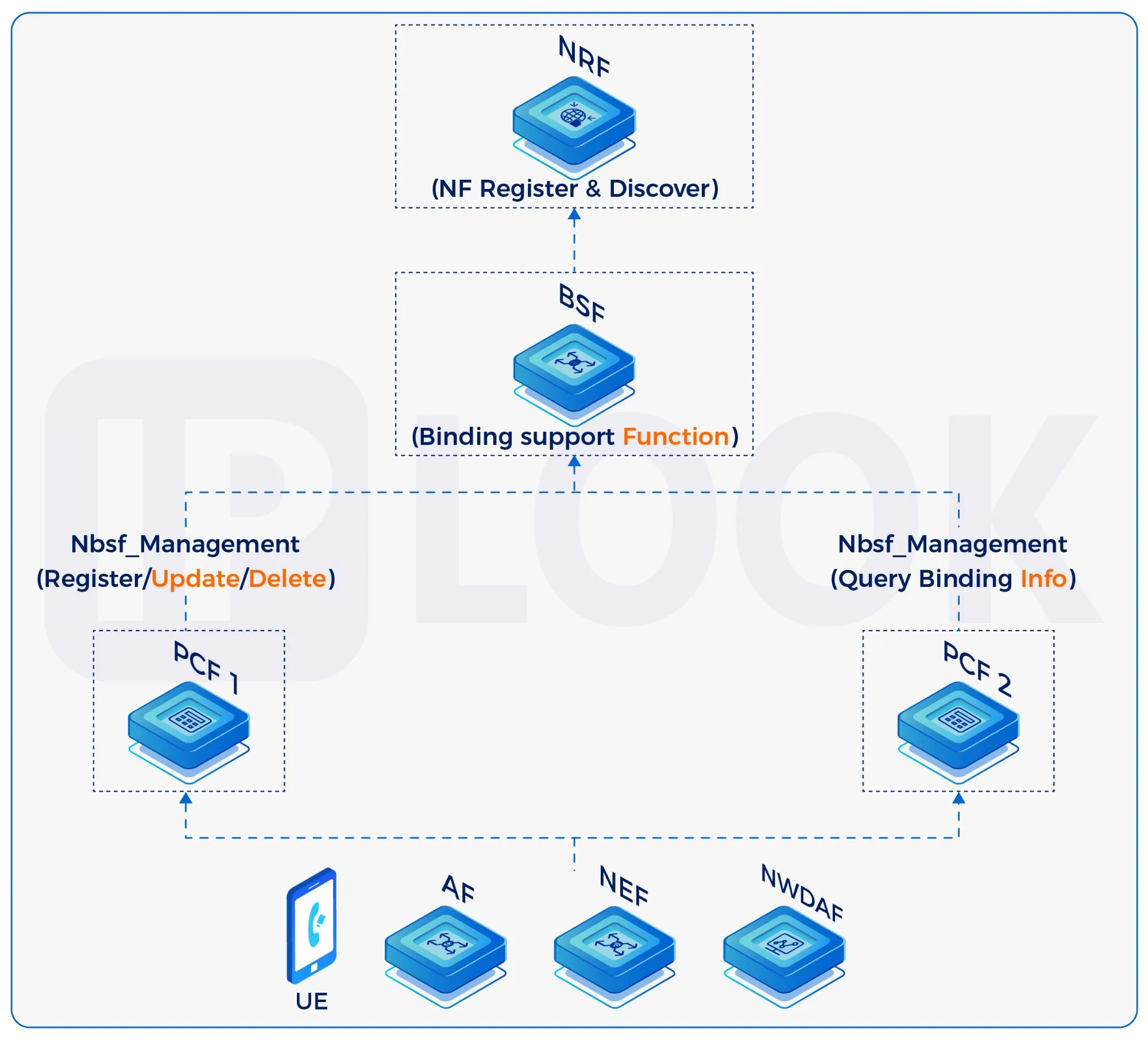
The primary function of BSF is to act as a binding middleware between PDU sessions and AF, ensuring that in deployments with multiple individually addressable PCF/NEF/AF/MBSF/NWDAF/TSCTSF, session information for a specific PDU session can be queried through the BSF. This supports policy control and session management.
Supports multi-PCF policy binding and slice management.
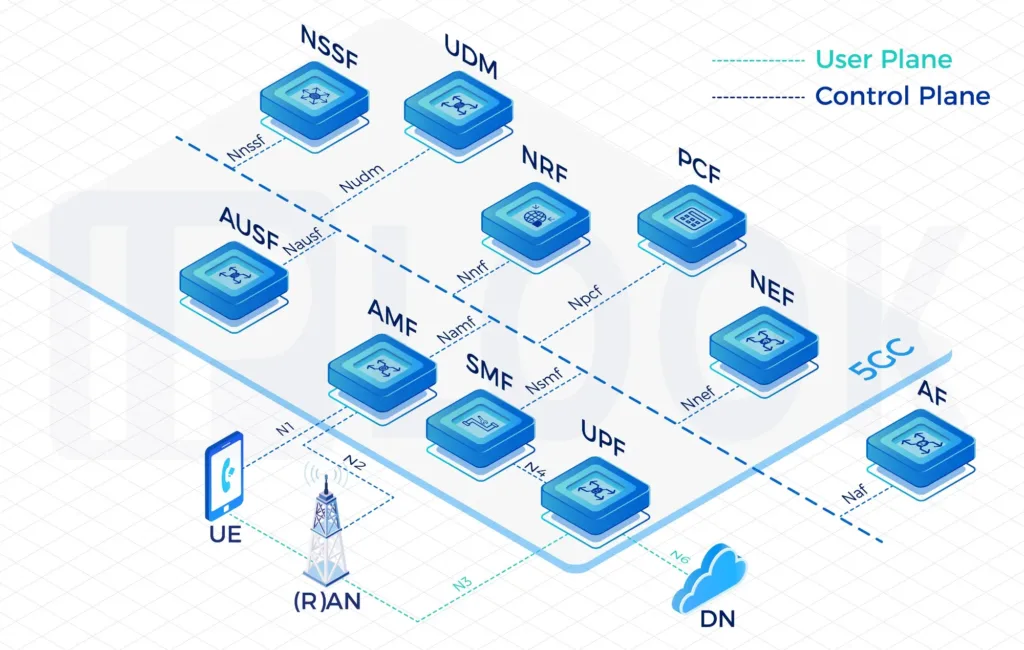
During the deployment of 5G SA networks, with the increasing complexity of policy control, BSF has become a critical component to ensure policy consistency in multi-PCF environments. By centrally managing the binding relationships between UEs and PCFs, BSF ensures that policy requests are quickly and accurately routed to the appropriate PCF instance. BSF supports network slicing, roaming, and cross-domain policy control, and works in coordination with core network elements such as UDM and NEF to achieve flexible and scalable policy distribution capabilities. This architecture is a key part of the 5G core network policy control system, providing strong support for operators to reduce operational complexity and improve network policy management efficiency.
5G NETWORK ELEMENT INSIGHTS
IPLOOK BSF Video Series: Smart 5G Policy Binding & Routing
Session 01: What is BSF & Its Core Role in Policy Control?
Discover the Binding Support Function (BSF) as the traffic director for policy control: managing UE-to-PCF bindings, NRF service discovery, and smart PCF load balancing.
Understand how BSF operates behind the scenes via NBSF, NRF, and PCF interfaces to handle binding creation, queries, real-time updates, and resource removal.
Explore why BSF is the invisible coordinator: maintaining policy consistency, routing to slice-specific PCFs, streamlining multi-PCF scaling, and ensuring seamless roaming.
Features
Interfaces/Protocols
NBSF
Network Protocols: IPv4/IPv6
Management and Maintenance Protocols: HTTP, HTTPS, SFTP, SSH
Signaling Protocols: HTTP 2, Diameter
Reliability
Distributed Deployment: Supports distributed deployment; service failure at a single point does not affect other nodes; service nodes support load balancing and dynamic scaling; service nodes support 1+1 hot standby or N+M cold standby; supports service migration upon node failure.
Supports Active-Standby Disaster Recovery: When a single BSF node fails, the system automatically switches to the standby BSF to provide services, with a switchover time of no more than 10 seconds.
Supports security features such as DOS/DDOS attack protection and SQL injection prevention.
Supports encrypted transmission of message data.
Supports overload protection.
Deployment Methods
Supports bare-metal server deployment.
Supports KVM virtual machine deployment.
Supports Kubernetes and OpenStack.
Network Management
Signaling Tracing
Topology Management
Log Management
Alarm Management
System Resource Monitoring
FAQ
What is the primary role of the BSF in a 5G network?
The BSF acts as a binding middleware between PDU sessions and Application Functions (AF). Its main job is to store and manage the binding information that links a specific PDU session to the correct Policy Control Function (PCF) instance, ensuring that policy requests are routed accurately.
Why is the BSF critical for deployments with multiple PCFs?
In a multi-PCF environment, different PCFs may handle different sessions. Without a BSF, an Application Function (AF) or Network Exposure Function (NEF) might not know which specific PCF is managing a user's session. The BSF centrally manages these relationships to ensure policy consistency across the network.
Which network functions can query the BSF for session information?
The BSF allows various entities to query session-specific information, including:
PCF (Policy Control Function)
NEF (Network Exposure Function)
AF (Application Function)
NWDAF (Network Data Analytics Function)
MBSF and TSCTSF
What signaling protocols does the IPLOOK BSF support?
To ensure compatibility with both 5G and legacy systems, the BSF supports:
HTTP/2: The standard protocol for 5G Service-Based Architecture (SBA).
Diameter: Used for interworking with 4G/IMS components and supporting Rx-based interfaces.
What are the key benefits of BSF for network operators?
The BSF helps operators reduce operational complexity and improve management efficiency by providing:
Dynamic policy coordination.
Support for network slicing and roaming.
Cross-domain policy control.
Seamless interaction between different 5G core network elements.
How does the BSF handle high-availability and disaster recovery?
The BSF is designed for high reliability with multiple redundancy models:
Distributed Deployment: Supports load balancing and dynamic scaling.
Redundancy: Supports 1+1 hot standby or N+M cold standby.
Disaster Recovery: Supports Active-Standby (with a switchover time of less than 10 seconds) and Active-Active configurations.
What security features are integrated into the BSF?
The BSF includes carrier-grade security protections, such as:
DOS/DDOS attack protection.
SQL injection prevention.
Encrypted transmission of all message data.
Overload protection to prevent system crashes during traffic spikes.
What are the deployment options for the IPLOOK BSF?
The BSF is highly flexible and can be deployed using several methods:
Bare-metal server deployment.
Virtual Machines (KVM).
Cloud-native orchestration via Kubernetes and OpenStack.
Does the BSF support Rx redirection and proxying?
Yes. The BSF provides Rx Redirection and Proxy Support. This is particularly important for supporting legacy application functions that use the Rx interface (Diameter) to interact with the 5G policy framework.
What management and monitoring tools are available?
The platform provides comprehensive Operation and Maintenance (O&M) features, including:
Signaling Tracing: For real-time troubleshooting.
Topology & Log Management: To visualize and audit network states.
System Resource Monitoring: Tracking CPU, memory, and disk usage to ensure optimal performance.