Fully virtualizable on VMware, K8S, Docker and OpenStack containers
Short Message Service Function(SMSF)
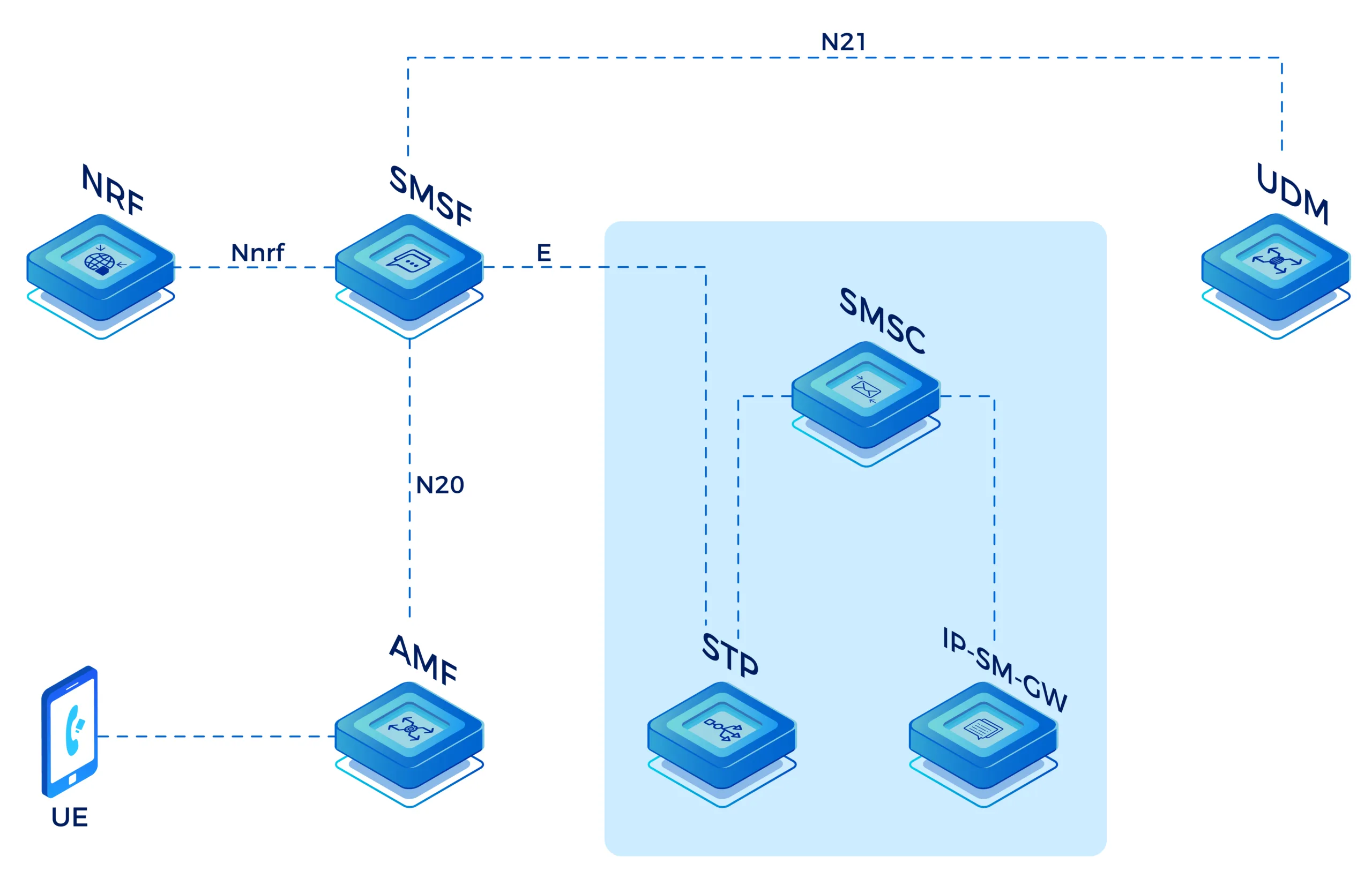
It receives and routes SMS messages, queries the UDM to obtain user subscription data and service-related AMF information, and forwards the SMS to the AMF via the N20 interface. The AMF then delivers the SMS to the UE based on NAS signaling without the need to establish a user plane data session.
OAM Management: Configuration Management, Alarms, Performance Data, and Other Services
Emergency Session Service
SMSF Solution
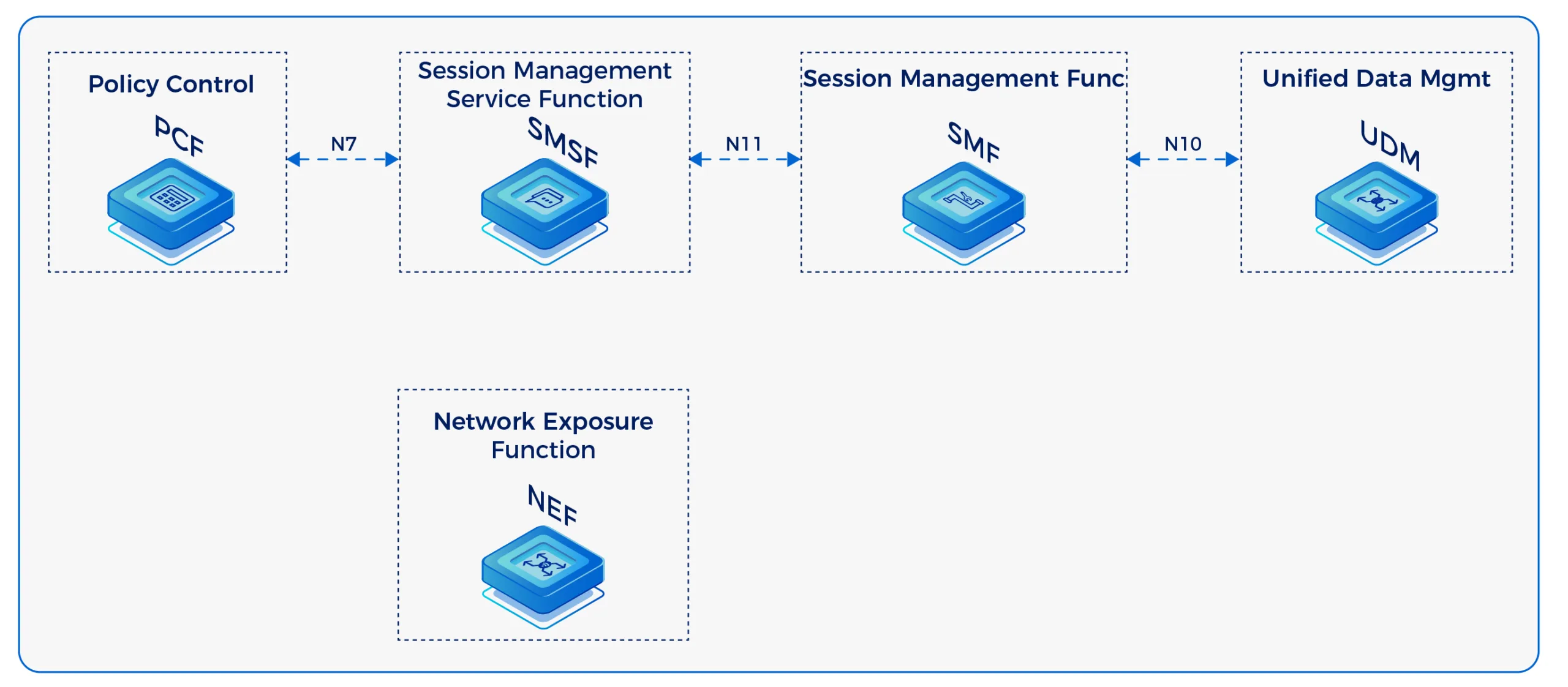
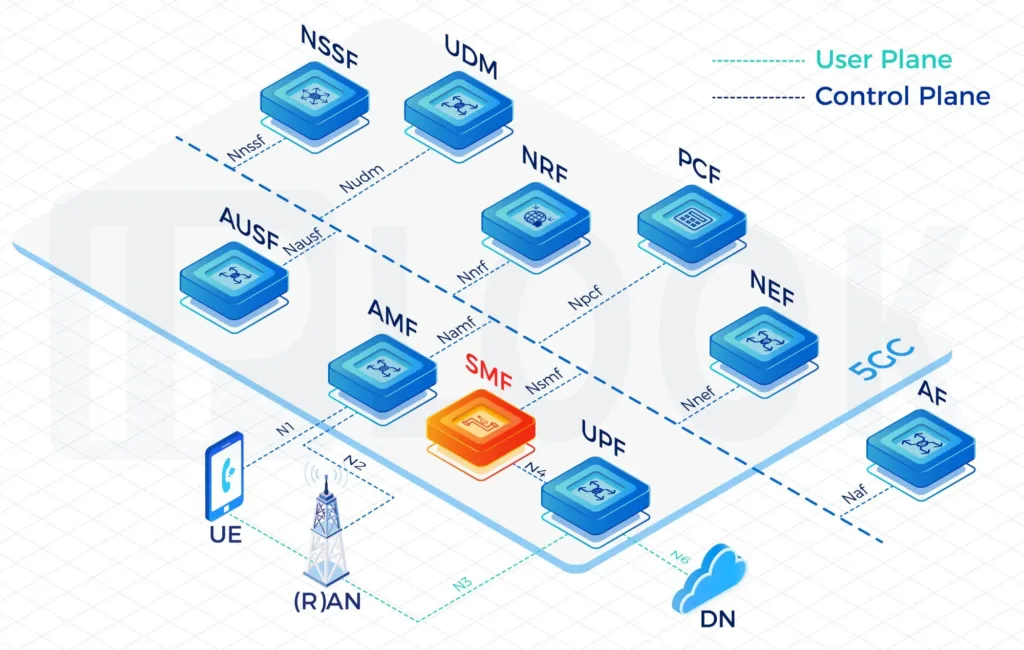
Supports session management and slice policy control. In 5G SA network deployment, with the increasing complexity of session control and network slicing requirements, SMSF has become a critical component to ensure session policy consistency. By centrally managing the interaction between UE and SMF , SMSF ensures that session requests are quickly and accurately routed to the appropriate SMF instance.
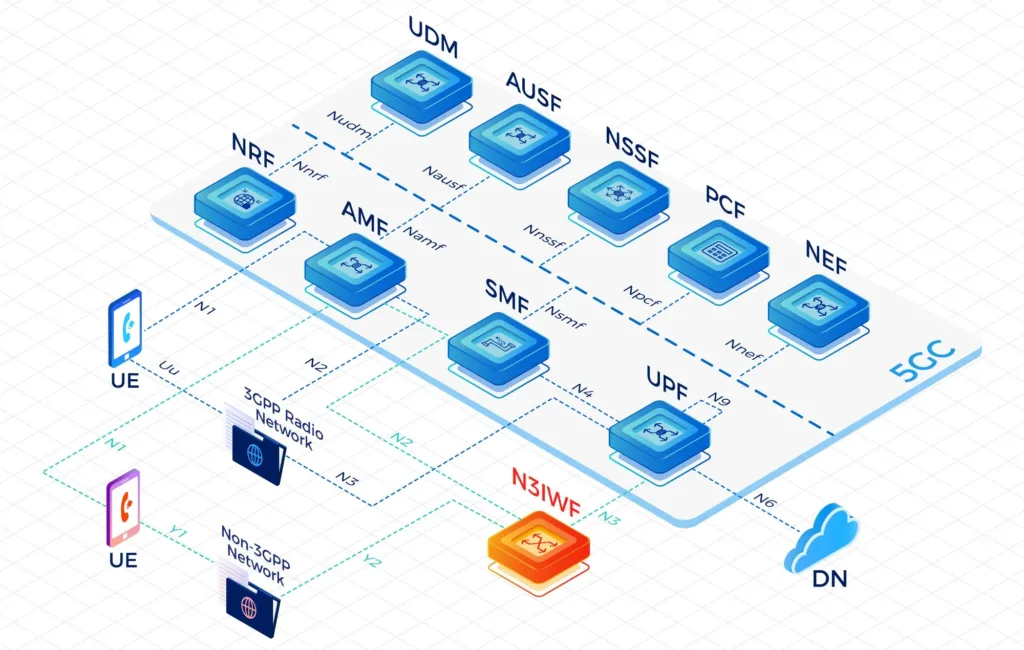
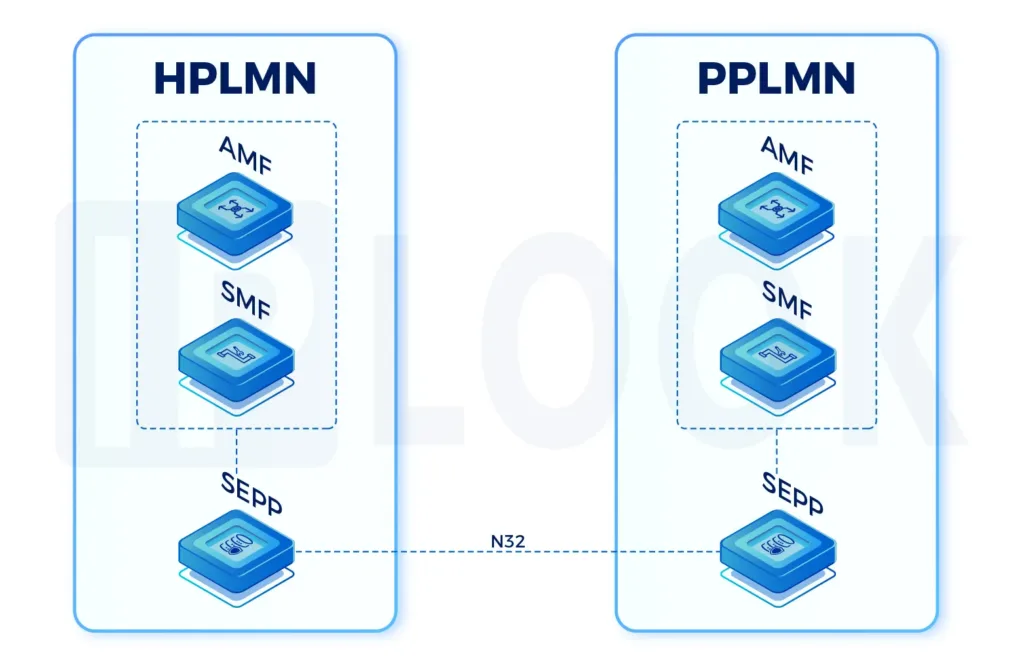
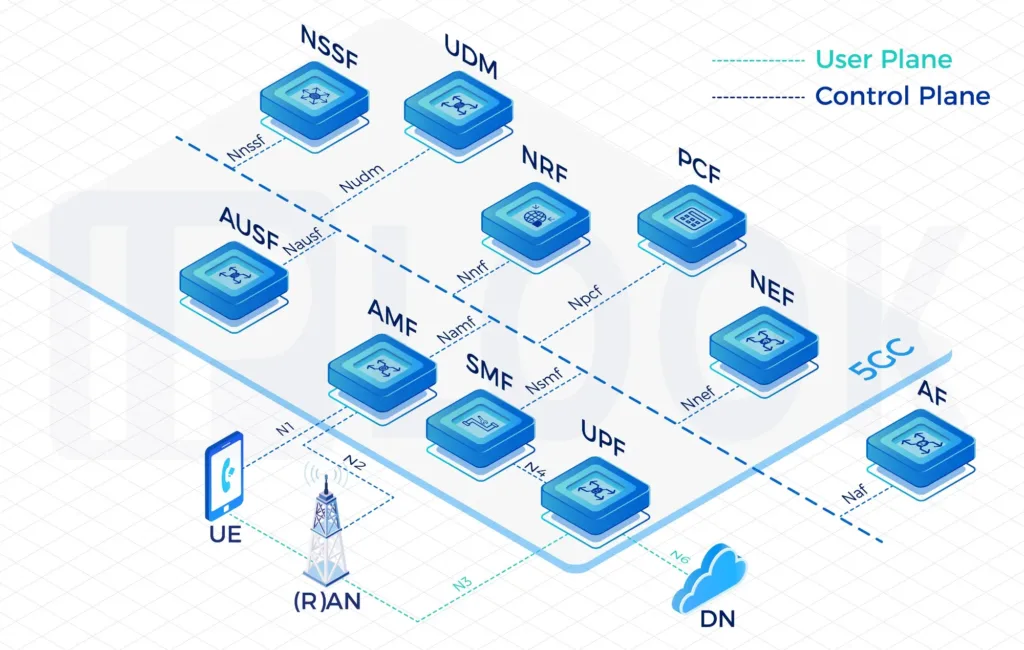
SMSF supports network slicing, roaming, and cross-domain session management, and works in coordination with core network elements such as UDM, NEF, and PCF to achieve flexible and scalable session policy distribution capabilities. This architecture is a key part of the 5G core network session and policy control system, providing strong support for operators to reduce operational complexity and improve network service quality.
5G NETWORK ELEMENT INSIGHTS
IPLOOK SMSF Video Series: Reliable 5G SMS & IoT Messaging
Part 01: What is SMSF & Its Core Roles in 5G Messaging?
Discover the Short Message Service Function (SMSF): enabling SMS over NAS without IMS/VoLTE requirements, interfacing with legacy SMSCs, message authentication, and policy enforcement.
Part 02: SMSF in Action – Key Interfaces (N20, N21) & Signaling
Understand SMSF message flows: NAS transport via N20 (AMF), gateway delivery via N21 (SMSC/IP-SM-GW), NRF discovery, and bi-directional message routing security.
Supports active-active disaster recovery: Multiple SMSFs provide services through load balancing mode.
Multi-process design: If one service process fails, other service processes can continue to provide services.
SMSF supports active-standby disaster recovery: When one SMSF fails, the system automatically ensures continuous service from another SMSF, with a switchover time of no more than 10 seconds.
What is the primary role of the SMSF in a 5G Core network?
The SMSF (Short Message Service Function) is responsible for routing and protocol conversion of traditional SMS messages between 5G User Equipment (UE) and the external SMS network. It allows SMS delivery over the 5G control plane using NAS signaling without requiring a user plane data session.
How does the SMSF communicate with the 5G Core and the UE?
The SMSF interacts with several key components:
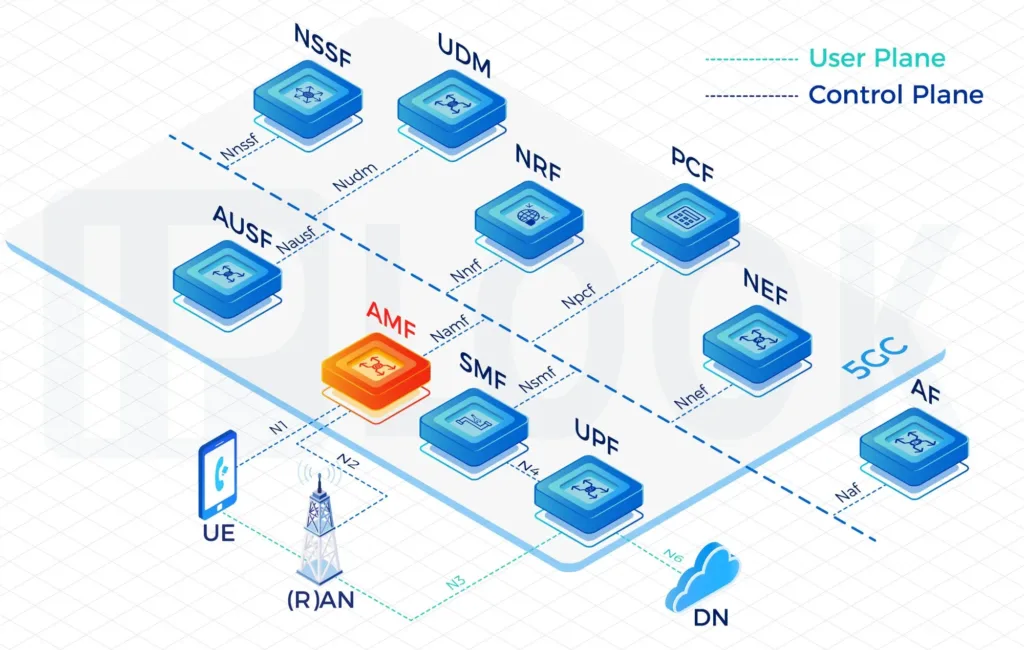
AMF (Access and Mobility Management Function): It uses the N20 interface to forward SMS messages to the AMF, which then delivers them to the UE via NAS signaling.
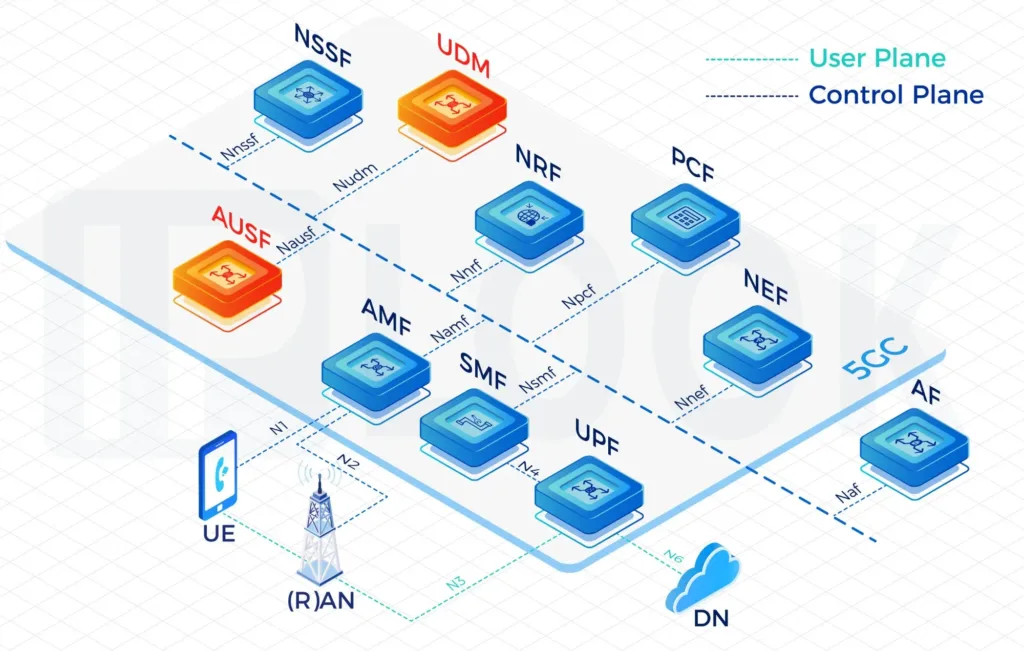
UDM (Unified Data Management): It queries the UDM to retrieve user subscription data and discover which AMF is currently serving the user.
Does the user need an active data session to send or receive SMS?
No. According to the document, the SMSF transmits messages via NAS (Non-Access Stratum) signaling. This means SMS can be sent or received without the need to establish a PDU session (user plane data session).
What are the key functional highlights of the SMSF?
The key functions include:
SMS activation and deactivation.
Support for MO (Mobile Originated) and MT (Mobile Terminated) SMS.
Support for SMS transmission when the UE is in both IDLE and CONNECTED states.
OAM (Operations, Administration, and Maintenance) services.
Emergency session support.
What is the difference between MO and MT SMS in the context of SMSF?
MO (Mobile Originated) SMS: The message is sent from the UE to the network. The SMSF receives it via the AMF and routes it to the external SMS network.
MT (Mobile Terminated) SMS: The message is sent from the external network to the UE. The SMSF identifies the correct AMF and routes the message to the user.
What kind of OAM management functions does the SMSF provide?
The SMSF supports standard OAM (Operations, Administration, and Maintenance) services, including:
Configuration Management: Adjusting system parameters.
Alarm Management: Real-time monitoring of system faults.
Performance Data: Collecting statistics on success rates and traffic volume.
What are the hardware requirements for deploying SMSF?
The hardware configuration is highly scalable based on the number of users:
Small scale (100–1,000 users): 4 vCPUs and 8GB RAM.
Medium scale (50,000 users): 20 vCPUs and 32GB RAM.
Large scale (2 million users): 8 nodes, each with 40 vCPUs and 128GB RAM.
What are the key performance indicators (KPIs) for the SMSF?
The document defines several performance metrics, such as:
Registration Capacity: For example, 50-500 requests per second depending on configuration.
Success Rates: The system targets high success rates for both MO and MT SMS services.
Can the SMSF handle SMS while a user is moving?
Yes. By interacting with the AMF, the SMSF stays updated on the user's mobility status. Even if the UE moves between different tracking areas, the SMSF can correctly route MT SMS to the serving AMF.
Why is the SMSF important for 5G transition?
The SMSF ensures backward compatibility. It allows 5G users to continue using traditional SMS services (which are still critical for authentication codes, notifications, and legacy communication) while utilizing the new 5G core architecture.