Mobile Network Coverage and Digital Inclusion in Africa and the Middle East
Free Whitepaper: Comprehensive analysis of 3G, 4G, and 5G coverage trends across Africa and the Middle East.
Africa and the Middle East are experiencing divergent mobile network trajectories—driven by urban-rural divides, spectrum policy gaps, affordability barriers, and stark contrasts between GCC leadership and continental catch-up efforts.
Download the full whitepaper
28 pages of country-level coverage data, network quality benchmarks, regulatory insights, and strategies to bridge the digital divide.


Why policymakers and telecom stakeholders need this guide ?
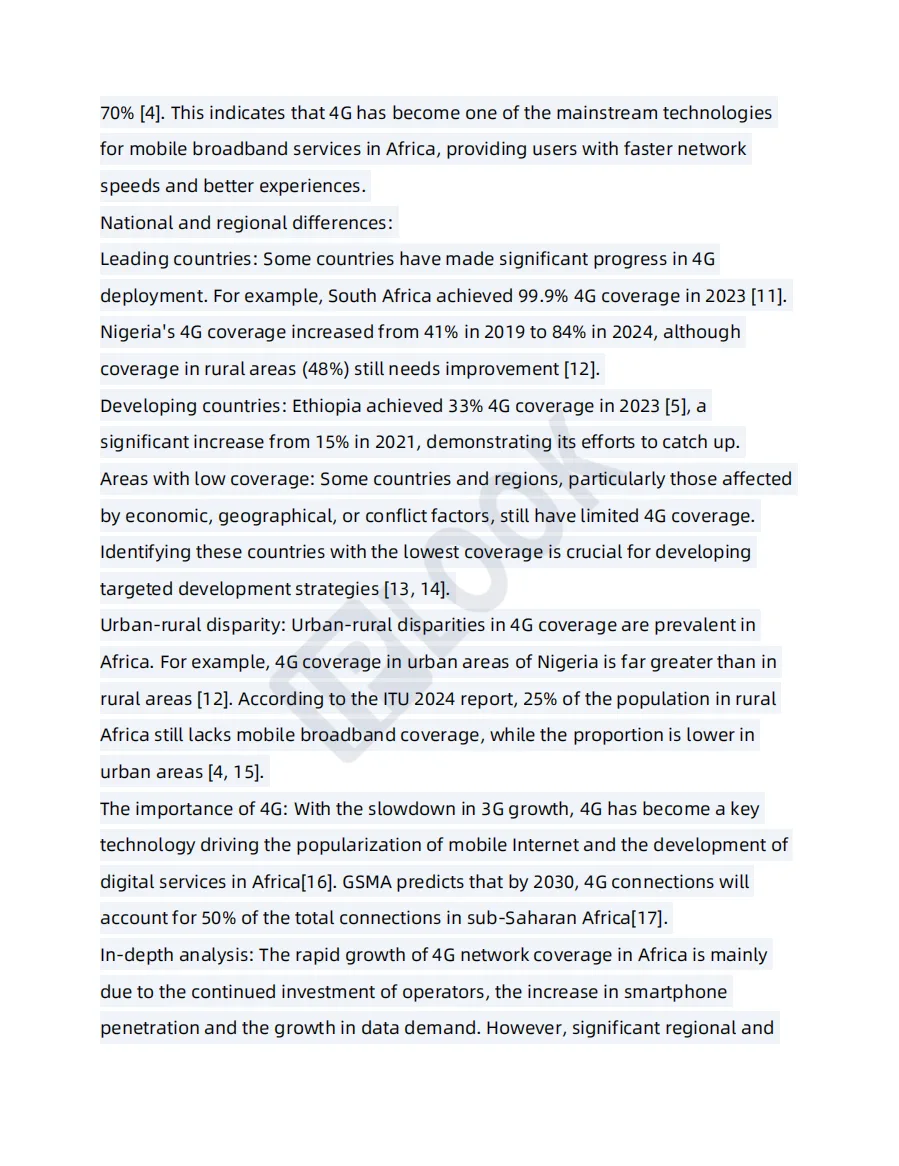
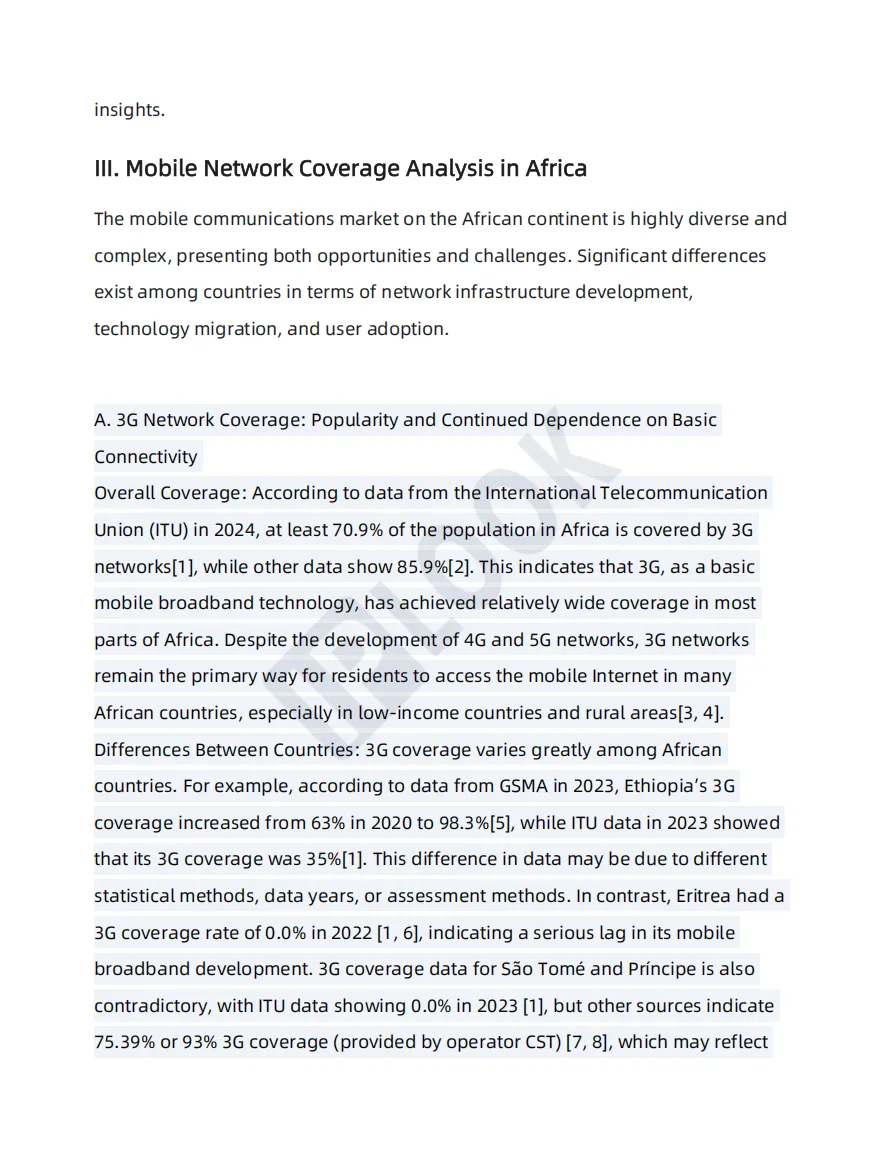
- 3G remains the primary internet gateway for millions in rural Africa, while GCC countries are already sunsetting it. 4G coverage reaches 70% continent-wide—but rural penetration lags below 50% in Nigeria and Ethiopia.
- 5G is live in Johannesburg, Lagos, and Nairobi—but population coverage in Africa stands at just 11%, versus over 26% in GCC cities like Dubai and Riyadh.
- The “usage gap” affects 41% of sub-Saharan Africans—people within coverage but not using mobile internet due to device cost, digital literacy, or lack of local content.
- Conflict, power instability, and high infrastructure costs block network expansion in fragile states like Sudan and Eritrea. Meanwhile, Egypt and Morocco invest heavily in fixed broadband to backhaul future mobile quality.
- Conflict, power instability, and high infrastructure costs block network expansion in fragile states like Sudan and Eritrea. Meanwhile, Egypt and Morocco invest heavily in fixed broadband to backhaul future mobile quality.
This guide reveals where coverage ends, why adoption stalls, and how public-private partnerships can turn connectivity into inclusive growth.
What’s Inside This Mobile Coverage Guide
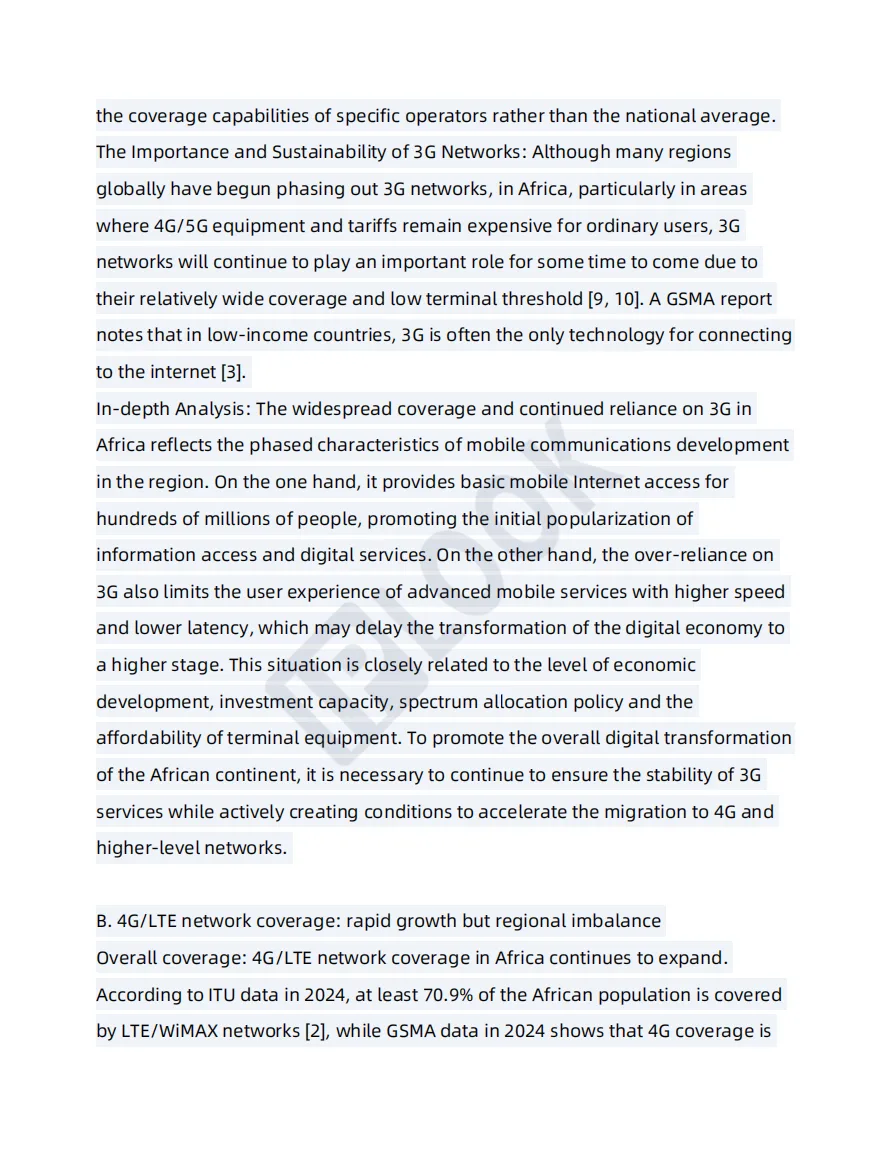
- 3G’s enduring role as Africa’s digital lifeline—and why shutdowns are premature:
In many low-income and rural regions, 3G remains the only viable access to mobile internet; premature sunsetting risks deepening the digital divide. - 4G expansion progress vs. persistent urban-rural divides in Nigeria, Ethiopia, and beyond:
While national 4G coverage averages 70%, rural penetration falls below 50% in key countries—highlighting infrastructure inequity. - 5G deployment hotspots: from GCC megacities to African wholesale networks:
Riyadh, Dubai, and Doha lead with commercial 5G; in Africa, early 5G is concentrated in Johannesburg, Lagos, and Nairobi via shared or wholesale models. - Network quality benchmarks: median speeds in Cairo (33 Mbps) vs. Dubai (647 Mbps):
Performance gaps reflect backhaul limitations, spectrum allocation, and investment disparities across the region. - The true barrier isn’t coverage—it’s the “usage gap” driven by affordability and skills:
41% of sub-Saharan Africans live within mobile broadband range but remain offline due to device cost, data pricing, and digital literacy. - How green energy and infrastructure sharing can cut rural deployment costs:
Solar-powered base stations and tower/co-location agreements reduce CAPEX by up to 40% in off-grid areas.
Coverage Gap
25% of rural Africans still lack any mobile broadband signal
Usage Gap
41% of sub-Saharan Africans live within coverage but don’t use mobile internet
Quality Divide
Median 4G speed in GCC exceeds 200 Mbps; in most of Africa, it’s below 40 Mbps