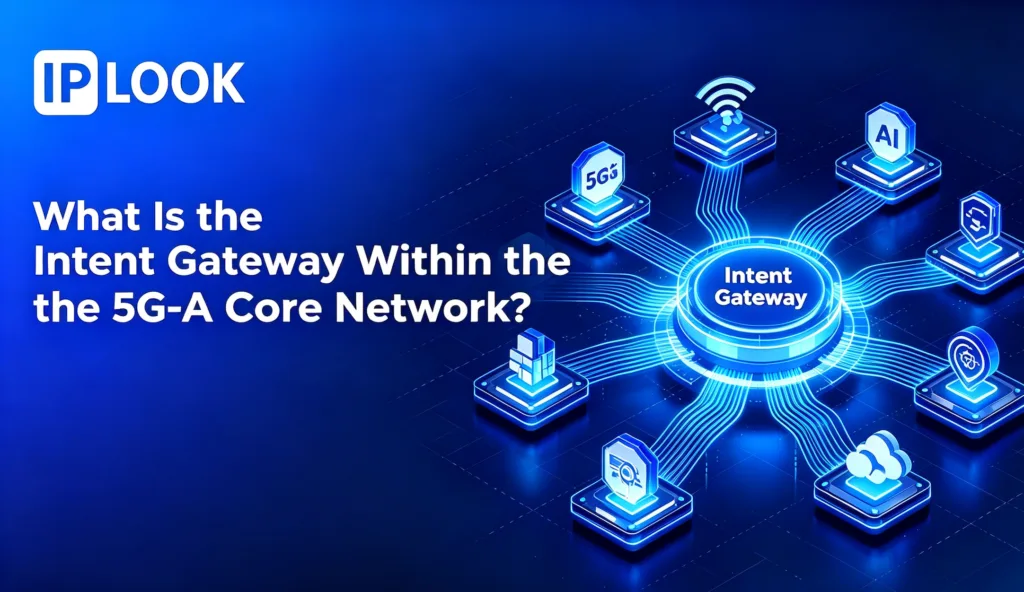
The evolution toward 5G‑Advanced brings new requirements for mobile core networks. Operators and enterprise customers no longer only expect stable connectivity. They want to define network behaviour through high‑level business requirements, instead of adjusting dozens of discrete configuration parameters manually. This is exactly the problem that the Intent Gateway, a key component inside the 5G‑A core network, is designed to solve.
From manual configuration to intent‑driven networking
Traditional network operation follows a device‑centric model. When an enterprise needs a network slice for smart manufacturing, technicians must configure session management, quality of service rules, access control and security policies across multiple network functions. The whole workflow is time consuming, error prone and requires deep specialist knowledge. When business demands change, repeated manual adjustments create heavy operational burdens.
The Intent Gateway acts as a translation and interaction hub between business applications and the underlying 5G‑A core network. It accepts high‑level business intent inputs from upper‑layer platforms. Typical inputs include requirements such as guaranteeing 99.999 percent service availability for factory equipment, limiting maximum end‑to‑end latency for logistics terminals, or isolating specific industrial service traffic. The gateway converts these descriptive business goals into standardized, executable configuration instructions for core network functions. Operators do not need to handle low‑level parameter settings one by one.
Core capabilities of the Intent Gateway
First, it provides intent parsing and translation. It converts abstract business requirements into policies that NFs within the 5G‑A core can recognise. Second, it carries out intent validation. Before delivering configurations, it checks whether requirements conflict with existing network resources and running policies, and returns actionable feedback. Third, it supports real‑time status feedback. After the intent is deployed, it collects network runtime data and reports whether actual network performance matches the original business expectation. Fourth, it offers open northbound interfaces, allowing enterprise platforms, operation support systems and third‑party AI agents to submit intent requests programmatically.
Real‑world value for operators and enterprises
For telecom operators, the Intent Gateway lowers the threshold for delivering differentiated network services. New enterprise service instances can be deployed within minutes rather than days. It helps operators monetize network capabilities beyond simple data traffic sales. For enterprise clients, technical staff can focus on business objectives instead of network engineering details. Private 5G deployments for smart factories, medical institutions and logistics fleets become more agile to adapt to changing production scenarios.
As 5G‑A commercial deployment accelerates globally, IPLOOK integrates mature Intent Gateway capability into its cloud‑native converged core network portfolio. The solution seamlessly combines intent translation, policy validation and open northbound interfaces, fitting both public operator networks and enterprise private 5G environments. It helps service providers reduce operational complexity, shorten enterprise service launch cycles and unlock new revenue streams from intent‑driven network services.