
You see a bottleneck in 5G networks when traffic growth outpaces digital infrastructure and bandwidth. AI applications require a significant amount of data to be transmitted. An increase in urban populations and the proliferation of IoT devices contribute to rising data traffic. Networks must provide better connections and maintain strong performance. If network solutions cannot accommodate this traffic growth, connections will deteriorate. Monitoring network performance and enhancing infrastructure can mitigate these issues.
-
By 2030, 5G networks will carry 80% of all mobile data traffic, which is an increase from more than 34% in 2024.
-
5G networks utilize 90% less energy for each bit, which supports traffic growth and reduces strain on the system.
Key Takeaways
-
Bottlenecks in 5G networks happen when too much traffic uses the network. This makes connections slow and can cause calls to drop.
-
By 2030, 5G networks will carry most mobile data traffic. It is important to improve bandwidth and infrastructure now.
-
High latency and dropped connections show network congestion. Watch your connection for these problems.
-
Cities have special problems because many devices are close together. More small cells are needed to handle all the traffic.
-
AI applications and IoT devices use more uplink. This puts stress on network bandwidth and can make things slow.
-
Building better infrastructure and adding more spectrum can help fix bottlenecks. This will make the network work better.
-
Using traffic management, like load balancing and QoS policies, helps important apps get the bandwidth they need.
-
Edge computing lowers latency and moves data processing away from the main network. This helps keep networks fast even when busy.
Bottleneck Warning Signs
When you use 5g, you want fast connections. Sometimes, network congestion causes bottlenecks and slows things down. It is important to spot warning signs so you know why your experience changes.
Latency Issues
Causes
You notice higher latency when many people use the same network. This happens in places with limited bandwidth. 5g networks promise low latency, but congestion can make delays worse. Not enough bandwidth means the network cannot handle all requests. When you stream, play games, or video call, the network must move lots of data fast. If congestion happens, the network cannot keep up.
Effects
High latency affects your experience in several ways. You see delays in video calls, slow online games, and lag when loading web pages. These problems happen because the network cannot send and receive data quickly. When bandwidth is stretched, everyone feels the slowdown. You may think your device is slow, but often the real problem is network congestion.
Dropped Connections
Patterns
Dropped connections show there is a bottleneck. You notice this during busy hours or in crowded places. When too many devices use limited bandwidth, the network cannot keep every connection stable. This causes sudden disconnects, especially when you move between cells or use high-demand apps.
Table: How Bottlenecks Affect Dropped Connections and Delay
|
Configuration |
Bottleneck Point |
|
|---|---|---|
|
1.A |
Radio Interface |
Increased delays due to traffic load excess from PL #1 |
|
1.B |
Significant increase in E2E mean packet delay for all PLs due to traffic excess from PL #1 |
|
|
2.B |
UPF |
Traffic excess from PL #1 significantly increases E2E mean packet delay for all PLs |
Impacted Services
You see dropped connections most in services needing steady data flow. Video streaming, online gaming, and cloud apps suffer the most. When the network faces congestion, these services lose packets or disconnect. This happens because the network cannot give enough bandwidth to every user at once.
Throughput Reduction
Download Speeds
Throughput shows how much data you send or receive in a set time. When congestion happens, download speeds drop. You notice slower app updates, longer video buffering, and delays loading images. The network tries to share bandwidth with all users, but congestion makes this hard.
Upload Speeds
Upload speeds also drop during congestion. You may have trouble sending photos, uploading videos, or backing up files to the cloud. The network cannot give enough bandwidth for fast uploads. This is a common bottleneck in 5g, especially when many users send data at the same time. Prioritizing network traffic can help, but without more bandwidth or better management, performance will suffer.
Traffic Growth Triggers
You might ask why 5g networks get bottlenecks as traffic grows. There are three main reasons: AI and uplink demand, urban density, and IoT device expansion. Each reason puts different stress on network infrastructure, bandwidth, and performance. Knowing these reasons helps you understand bottlenecks and find ways to fix them.
AI and Uplink Demand
Application Impact
AI apps have changed how you use 5g. You use real-time video, smart assistants, and cloud tools. These need to send lots of data from your device to the cloud. This uses uplink bandwidth. When many people use AI apps, the network must handle more data. This big increase in uplink traffic can use up bandwidth fast.
AI services like autonomous vehicles and remote healthcare need ultra-low latency and high bandwidth. If the network cannot keep up, you see delays and worse performance. More people use AI every day, so the need for advanced connectivity keeps growing.
Uplink Bottlenecks
You notice uplink bottlenecks when uploading videos, sharing files, or live streaming. The network must split bandwidth between many users. If too many people send data at once, there is not enough bandwidth for everyone. This causes slower uploads and congestion.
AI apps often need constant data exchange. When the network faces heavy uplink demand, it struggles to give smooth experiences. You may see lag in video calls or delays in cloud AI responses. These problems show why uplink demand is a main cause of bottlenecks in 5g networks.
Urban Density
High-Demand Areas
Cities have lots of people in small spaces. You find many users and devices close together. Urban 5g networks use small cells, Massive MIMO, and beamforming to give enough bandwidth. These help manage high traffic but also bring new challenges.
In busy areas, more devices fight for the same bandwidth. This can cause congestion, especially during peak hours. The network must balance bandwidth for streaming, gaming, and business apps. If the infrastructure cannot grow, you get slow speeds and dropped connections.
Infrastructure Strain
Urban networks need strong infrastructure for advanced connectivity. You see more base stations and fiber links in cities. But fast growth in users and devices can strain this infrastructure. When the network hits its limit, it cannot give enough bandwidth to everyone.
Speedtest® data shows user growth and network performance are different in cities and rural areas. Urban networks must handle more traffic and higher expectations. If the infrastructure cannot keep up, bottlenecks happen. You notice this during events, rush hours, or crowded neighborhoods.
IoT and Device Expansion
Mission-Critical Use Cases
More IoT devices change how you use 5g networks. Smart meters, sensors, and connected vehicles all need bandwidth. Mission-critical uses, like emergency services and industrial automation, need reliable network performance. If too many devices connect at once, the network faces signal overlap and interference.
Bottlenecks form when IoT devices flood the network. Each device needs some bandwidth. As more devices connect, the network must handle more connections and data. Without careful planning, mission-critical services may fail during busy times.
Security and Reliability
IoT growth brings new security and reliability problems. More devices mean more chances for interference and data loss. Countries with advanced 5g networks, like South Korea and Japan, show strong infrastructure gives better performance and reliability. In China, ongoing 5g deployment shows the need for strong solutions to support IoT growth.
You must manage interference and optimize bandwidth to keep the network safe and reliable. High beam width helps communication between many devices. If the network cannot handle the load, you see more latency and less throughput.
Note: In the future, 5g networks must grow to support ultra-low latency, high bandwidth, and massive connectivity. These features are needed for smart cities, autonomous vehicles, and big IoT projects.
|
Capability |
Description |
|---|---|
|
Ultra-low latency |
Gets response times under 1 millisecond, important for things like autonomous vehicles. |
|
High bandwidth |
Supports speeds up to 20 Gbps, good for real-time HD video. |
|
Massive connectivity |
Lets up to one million devices connect in one square kilometer, needed for smart cities. |
|
Network slicing |
Makes virtual networks for mission-critical uses, giving dedicated bandwidth. |
|
Energy efficiency |
Improves energy use by up to 90%, making big sensor networks cheaper. |
You see that future 5g networks will need more bandwidth, stronger infrastructure, and smarter management to stop bottlenecks. As AI, city growth, and IoT expansion continue, you must watch for these triggers and plan for future needs.
Technical Bottleneck Factors

You might ask why 5g networks sometimes get slow. The reason is often technical bottleneck factors. These factors limit how much bandwidth your network can give. They also affect your experience. Let’s see the main reasons for a bandwidth bottleneck in 5g.
Spectrum Limits
Bandwidth Allocation
5g networks use radio spectrum to send and get data. Each network operator only gets a set amount of spectrum. When too many people use the same spectrum, you get a bandwidth bottleneck. The network cannot give enough bandwidth to everyone at once. If you stream videos or play games, you may notice slower speeds. Not enough bandwidth means your connection cannot work as well as it should.
Interference
Other devices and networks can cause interference. In cities, many signals mix together. This overlap makes a bandwidth bottleneck because the network must work harder to separate signals. You may get dropped calls or slow downloads. Prioritizing network traffic can help, but interference still limits bandwidth. Managing and optimizing bandwidth is important in these cases.
Backhaul Constraints
Data Transport
Cell towers need strong links to the core network. This part is called backhaul. If the backhaul cannot carry enough data, you get a bandwidth bottleneck. Even if your cell tower has enough bandwidth, the network slows down if the backhaul is weak. You may notice this during busy times or in crowded places.
Infrastructure Gaps
Infrastructure gaps happen when there are not enough fiber links or high performing infrastructure. These gaps make a bandwidth bottleneck because the network cannot move data fast enough. Adding more bandwidth and better infrastructure helps fix this. Without upgrades, you will keep seeing slow speeds and bad connections.
Hardware Capacity
Base Station Load
Base stations connect your devices to the network. If too many people connect at once, the base station hits its limit. This causes a bandwidth bottleneck. The network cannot give enough bandwidth to all users. You may see this at concerts or sports games.
Device Processing
Your device matters too. If your phone or tablet cannot process data fast, you get worse performance. Hardware capacity, like CPU and memory, can limit 5g network performance. When more people connect, aggregate uplink throughput can drop a lot. This happens because the network faces I/O starvation, not just physical layer saturation.
Tip: Upgrading hardware and using bandwidth optimization can help you avoid these problems.
|
Evidence Description |
Key Findings |
|---|---|
|
Hardware capacity, especially CPU and memory, can limit 5g performance because of how they work with operating systems. |
|
|
Bottlenecks in architecture |
Moving from CPU-based to accelerator-backed architectures shows bottlenecks can move from compute limits to I/O limits. |
|
Performance degradation |
Aggregate uplink throughput can drop a lot as more user devices connect, showing I/O starvation instead of just physical layer saturation. |
You need to know about these technical factors to find better ways to fix bandwidth bottleneck problems. By managing bandwidth and adding more bandwidth, you can make your network better and support more devices in the future.
Network Design Challenges
Designing a network for 5g is hard. There are many problems to solve. These problems can cause a bandwidth bottleneck. You need to know why cell density and core scalability are important. They help your network work well and manage bandwidth.
Cell Density
Small vs. Macro Cells
5g networks use two types of cells. Small cells cover short distances and serve fewer people. Macro cells cover big areas and support more devices. You need both types to balance bandwidth. Small cells boost bandwidth in crowded places. Macro cells give coverage in wide spaces.
Why do you need both? Small cells add bandwidth where demand is high. Macro cells reach users in less busy areas. If you only use macro cells, busy places may have a bandwidth bottleneck. Small cells help scale bandwidth and make the network better. You must optimize and prioritize network traffic to use bandwidth well.
Urban vs. Rural
Cities have lots of users and devices. You need more small cells to handle traffic. Rural areas have fewer users, so macro cells work best. Cities can get a bandwidth bottleneck if there are not enough small cells. Rural areas may have a bottleneck if the infrastructure is weak.
You must plan your network for each area. Urban networks need more bandwidth and good management. Rural networks need strong coverage and reliable bandwidth. If you do not scale bandwidth, speeds will be slow and connections may drop.
Core Scalability
Centralized vs. Distributed
You must choose how to build your network core. Centralized cores keep everything in one place. Distributed cores spread functions across many spots. Distributed cores help manage bandwidth and avoid bottlenecks during traffic bursts.
Why does this matter? Traffic volume will be five times bigger by 2025. You need low latency and good sync. Distributed cores handle changing traffic and different network needs. Centralized cores may get a bottleneck when traffic spikes.
Efficient auto-scaling helps manage resources during traffic bursts. You must keep high availability and avoid using too many resources. Data consistency and integrity are important when you auto-scale network functions.
Virtualization
Virtualization lets you run network functions on shared hardware. You can scale bandwidth fast and use optimization. You must keep data consistent and reliable. Virtualization helps avoid a bandwidth bottleneck by making it easy to add bandwidth.
You need solutions that support auto-scaling and bandwidth management. Virtualization helps prioritize network traffic and improve performance. Without virtualization, you may get insufficient bandwidth and slow speeds.
📝 You must design your network to handle more bandwidth, scale bandwidth, and use smart management. This helps avoid a bandwidth bottleneck and keeps your network strong.
Real-World Bottleneck Scenarios
Urban Congestion
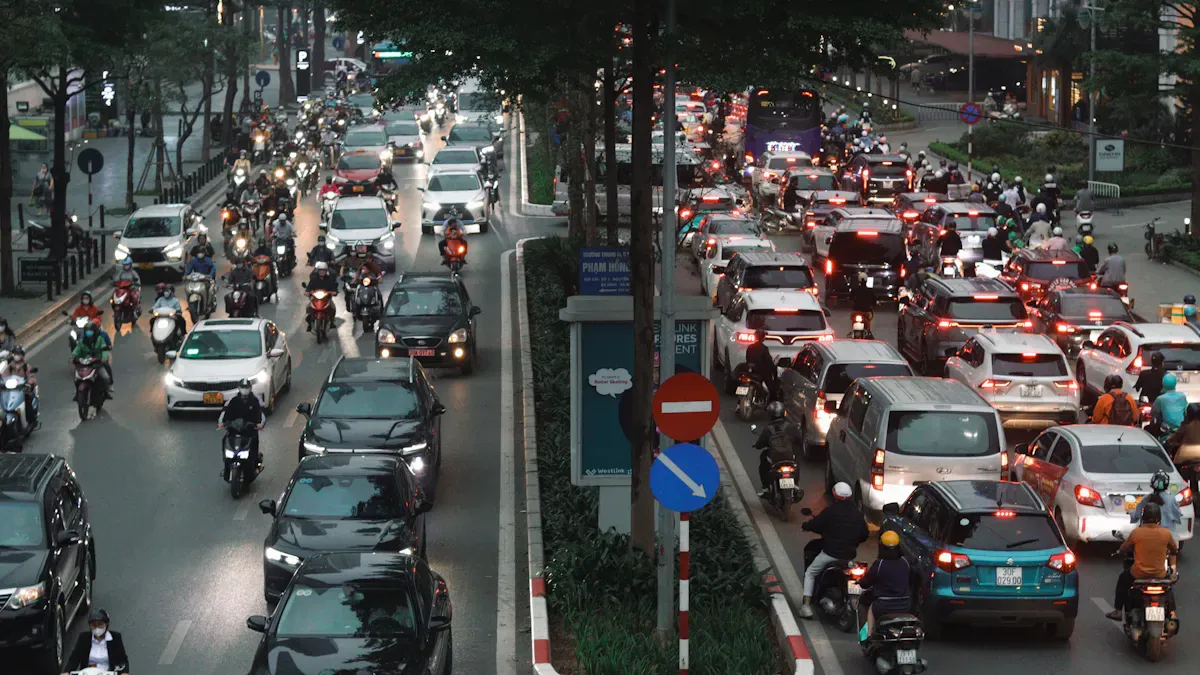
Cities make things hard for network operators. In crowded places, lots of people use the network at the same time. This happens most during busy hours or big business times. So, many people try to use the same bandwidth. When this happens, the network gets a bottleneck. More messages mean the network slows down. You see more delays and sometimes lose data. Apps and streaming services do not work as fast.
|
Aspect |
Description |
|---|---|
|
High Incoming Traffic |
When lots of messages come in fast, the network slows down. This makes it harder to process data. |
|
Latency Issues |
Delays can get very long, up to 800 ms. Sometimes, 18–20% of data is lost. This makes real-time traffic hard to manage. |
|
Mitigation Strategies |
Some ways to help are splitting Kafka topics and using backpressure on the consumer side. |
Big events, like concerts or sports games, make things worse. The network gets too busy and cannot keep up. You might have slow downloads or calls that drop. The network tries to share bandwidth, but it is not enough. Cities show how too many people and businesses can cause bottlenecks.
Special Event Surges
Special events can cause short-term network problems. When many people go to a concert or parade, the network gets crowded. The network cannot handle all the extra traffic. Even if your signal is strong, the network slows down. You wait longer to upload or download things. The network cannot give everyone enough bandwidth. These events show why networks need to grow fast to stop bottlenecks.
Rural Limitations
Rural areas have different network problems. Not many people live there, but the network is weak. It costs a lot to put fiber in these places. Small cells are not used much because there are not enough people. Big cell sites cost more because they need fiber to connect them.
-
Fiber is expensive to put in rural areas.
-
Small cells do not make sense where few people live.
-
Big cell sites cost more because they need fiber connections.
The network cannot give good coverage everywhere. You get slow speeds and weak connections. Rural places show it is hard to add more bandwidth when there is not much money for new equipment.
Note: City and country areas have different network needs. Cities need more bandwidth because more people and businesses use the network. Rural areas need less because fewer people use it.
|
Area Type |
Traffic Demand Characteristics |
|---|---|
|
Cities need lots of bandwidth because many people and businesses use the network. |
|
|
Rural |
Rural areas need less bandwidth because there are fewer people and businesses. |
These real-life examples show why bottlenecks happen in 5g networks. Crowded cities, big events, and rural areas all have their own problems. Watching the network and adding more bandwidth helps fix these issues.
Mitigating Bottlenecks
You want your 5g to stay fast and reliable. When you see a bottleneck, you need to fix it. You can upgrade your network, manage traffic smartly, and use edge computing. These steps help you use bandwidth better and make your network work well.
Network Upgrades
Spectrum Expansion
You need more spectrum for more users and devices. Spectrum expansion gives your network more space for data. Adding new frequency bands increases total bandwidth. This helps your network handle more traffic and avoid slowdowns. You get faster speeds and fewer dropped connections. Spectrum expansion is important for 5g because it supports high bandwidth needs.
Infrastructure Investment
You must build new towers, fiber links, and hardware. Strong infrastructure lets your network move data faster and reach more places. Upgrading base stations and backhaul boosts bandwidth and reduces congestion. You also prepare your network for future growth. Infrastructure investment means you can support more users and devices without losing speed.
Traffic Management
Load Balancing
You can use load balancing to share bandwidth across your network. This means your network sends traffic to less busy paths. You avoid overloading one part while others stay free. Load balancing helps you use all your bandwidth and keeps your connection stable.
QoS Policies
Quality of Service (QoS) policies help you decide which traffic is most important. Your network can give more bandwidth to video calls or emergency services. Less important traffic, like background downloads, gets lower priority. This keeps your most important apps running smoothly, even when the network is busy.
Here is how traffic management works to stop bottlenecks:
|
Step |
Description |
|---|---|
|
1 |
Application identification finds each service by its traffic pattern, so the right policy is used. |
|
2 |
Traffic classification gives priority to different types of traffic, like real-time video or background file sync. |
|
3 |
Policing and shaping control packet flow, dropping or slowing packets that go over limits to stop congestion. |
|
4 |
Packets are marked and put in priority queues, where algorithms like Weighted Fair Queuing decide processing order. |
|
5 |
Congestion management techniques give priority to important traffic during busy times, dropping lower-priority packets if needed. |
Traffic management uses these steps to keep your network running well. You get better bandwidth optimization and fewer slowdowns.
Edge Computing
Local Processing
You can use edge computing to process data closer to where it starts. Your network does not need to send all data to a far-away core. Local processing saves bandwidth and reduces delays. This is important for apps that need quick responses, like smart cars or remote surgery.
Core Load Reduction
Edge computing also helps your network core. By handling data at the edge, you reduce the load on the main network. This means you have more bandwidth for other users and services. You see less congestion and better optimization. Your network can support more devices and keep high performance.
-
Edge computing spreads out data processing, which helps manage data from IoT devices.
-
This setup lowers latency and uses bandwidth more efficiently.
-
By processing data near the source, you reduce backhaul congestion and keep critical apps running.
You need these strategies to keep your 5g network strong. By upgrading your network, managing traffic, and using edge computing, you can avoid bottlenecks and enjoy better bandwidth.
Monitoring and Management
You must watch your 5g network closely to keep it working well. More users and devices join every day. You have to look for problems before they get worse. If you do not check your network, you might miss early signs of trouble. This can make your network slow or cause dropped connections. Watching your network helps you find issues early. Good management lets you fix things fast and keep your bandwidth strong.
Analytics Tools
Modern analytics tools help you learn about your network. These tools use machine learning and AI to study network data. They spot patterns and can guess where problems might show up. You can use these tools to keep your bandwidth steady and stop bottlenecks.
-
Better diagnostic tools show how your network is doing. You can find weak spots and fix them quickly.
-
Automation and self-healing features fix problems on their own. This helps your network stay strong and keeps bandwidth high.
-
Congestion detection tells you where traffic is heavy. You can move bandwidth to busy places and keep users happy.
-
Interference management finds out where signal problems come from. You can act fast to protect your bandwidth.
-
Cyber threat detection keeps your network safe. It finds strange traffic and blocks attacks that could hurt your bandwidth.
Metrics
You should watch important metrics to see how your network is doing. Look for changes in bandwidth use, latency, and dropped packets. If you see bandwidth going down or latency going up, you might have a bottleneck. Metrics help you act before users notice problems. You can set alerts to warn you when bandwidth is low. This lets you fix things quickly and keep your network strong.
Predictive Maintenance
You need predictive maintenance to stop problems before they start. This uses AI to look at network data and find signs of trouble. You can fix things early and keep your bandwidth strong.
|
Evidence Description |
Impact on 5G Networks |
|---|---|
|
Predictive maintenance uses AI to analyze data and identify potential failures. |
Helps in proactively addressing issues, thus preventing service disruptions and reducing downtime. |
|
AI can improve network efficiency by 30-40%. |
Enhances overall network performance and reliability, crucial for managing 5G complexities. |
Prevention
AI looks at lots of data from your network. It finds patterns that show when something might go wrong. By acting early, you can stop failures that would lower your bandwidth. Fixing things before they break means less downtime and better use of your bandwidth. Your network stays ready for new users and devices. This helps you avoid bottlenecks and keeps your bandwidth strong.
Tip: Use predictive maintenance to plan repairs and upgrades. This keeps your bandwidth high and your network reliable.
You need to watch and manage your 5g network to keep bandwidth high. Analytics tools and predictive maintenance help you find and fix problems early. This keeps your network fast and ready for the future.
You notice more traffic in 5g networks when AI, city growth, and IoT devices need more data. These things can cause a bottleneck and make the network slower. Look for signs like slow speeds or losing your connection.
-
Adding more network sites and small cells brings new problems.
-
More IoT devices and faster data use make your network work harder.
Watching your network and planning ahead helps you avoid problems. Use tools that balance traffic, check the network all the time, and plan for the future to keep your network working well.
FAQ
Why do 5G networks slow down during busy hours?
You see slow speeds because many people use the network at the same time. The network cannot give enough bandwidth to everyone. This causes congestion and makes your connection slower.
Why does adding more devices cause bottlenecks?
You add more devices, and each one needs bandwidth. The network must share its resources. When too many devices connect, the network cannot keep up. This leads to bottlenecks.
Why is uplink speed important for AI apps?
You use AI apps that send lots of data to the cloud. Uplink speed matters because it affects how fast your device can send information. Slow uplink means AI apps respond slowly.
Why do cities face more 5G bottlenecks than rural areas?
You find more people and devices in cities. The network must handle higher traffic. This puts more strain on the infrastructure. Cities often see more bottlenecks because demand is higher.
Why does network monitoring help prevent bottlenecks?
You use monitoring tools to watch network performance. These tools find problems early. You can fix issues before they get worse. This keeps your network running smoothly.
Why is edge computing useful for 5G networks?
You process data closer to where it starts. Edge computing reduces the load on the main network. This lowers delays and helps prevent bottlenecks.
Why do special events cause temporary network problems?
You see many people using the network at once during events. The network cannot handle the sudden spike in traffic. This causes slow speeds and dropped connections.
Why should you care about bandwidth allocation?
You need enough bandwidth for your apps to work well. Good allocation means the network gives the right amount to each service. This helps you avoid slowdowns and keeps your experience smooth.