Our High-Performing Core Network
Fully virtualizable on VMware, K8S, Docker and OpenStack containers
Policy and Charging Rules Function(PCRF)
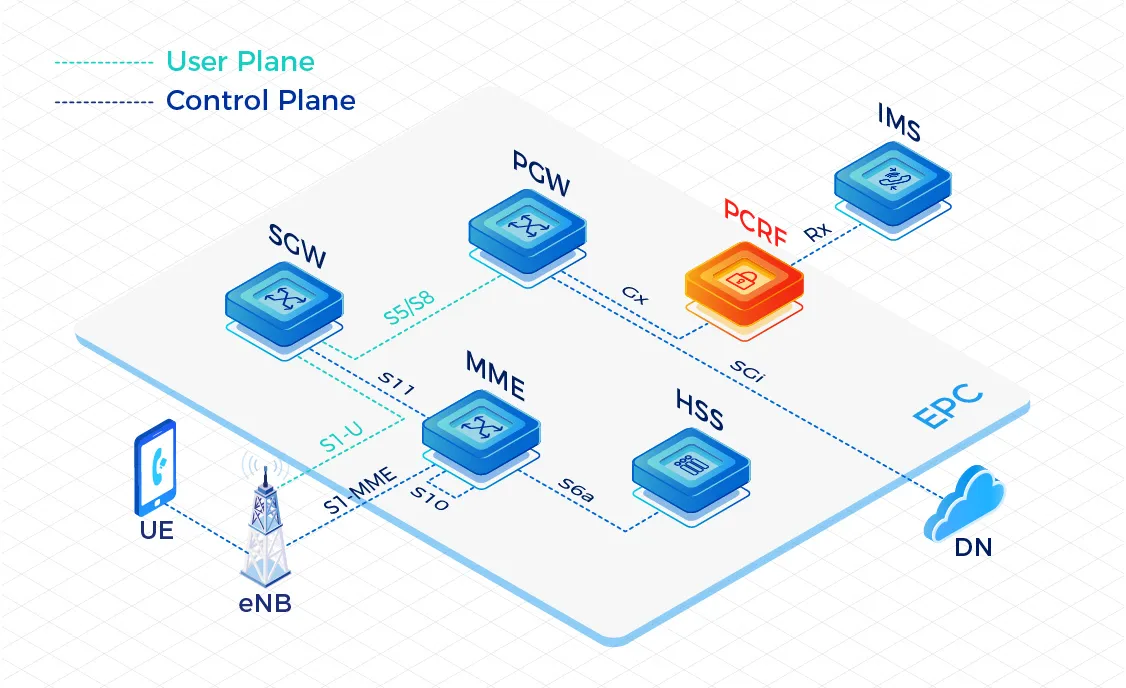
Policy and Charging Rules Function (PCRF), is the part of the Evolved Packet Core (EPC) that supports service data flow detection, policy enforcement and flow-based charging. It offers a comprehensive solution that enables a new generation service provider to offer multiple use cases that allow them to better control their services and align their revenue with their resources.
Key Benefits

Distributed structure Modular design

In-memory data management Multi-level data backup

Flexible strategy control abilities

Seamless geographic redundancy solution

Large capacity and high degree of integration

Opening data access interfaces

Fully integration of fixed and mobile services

BE(End Back) and FE(End Front) Separation
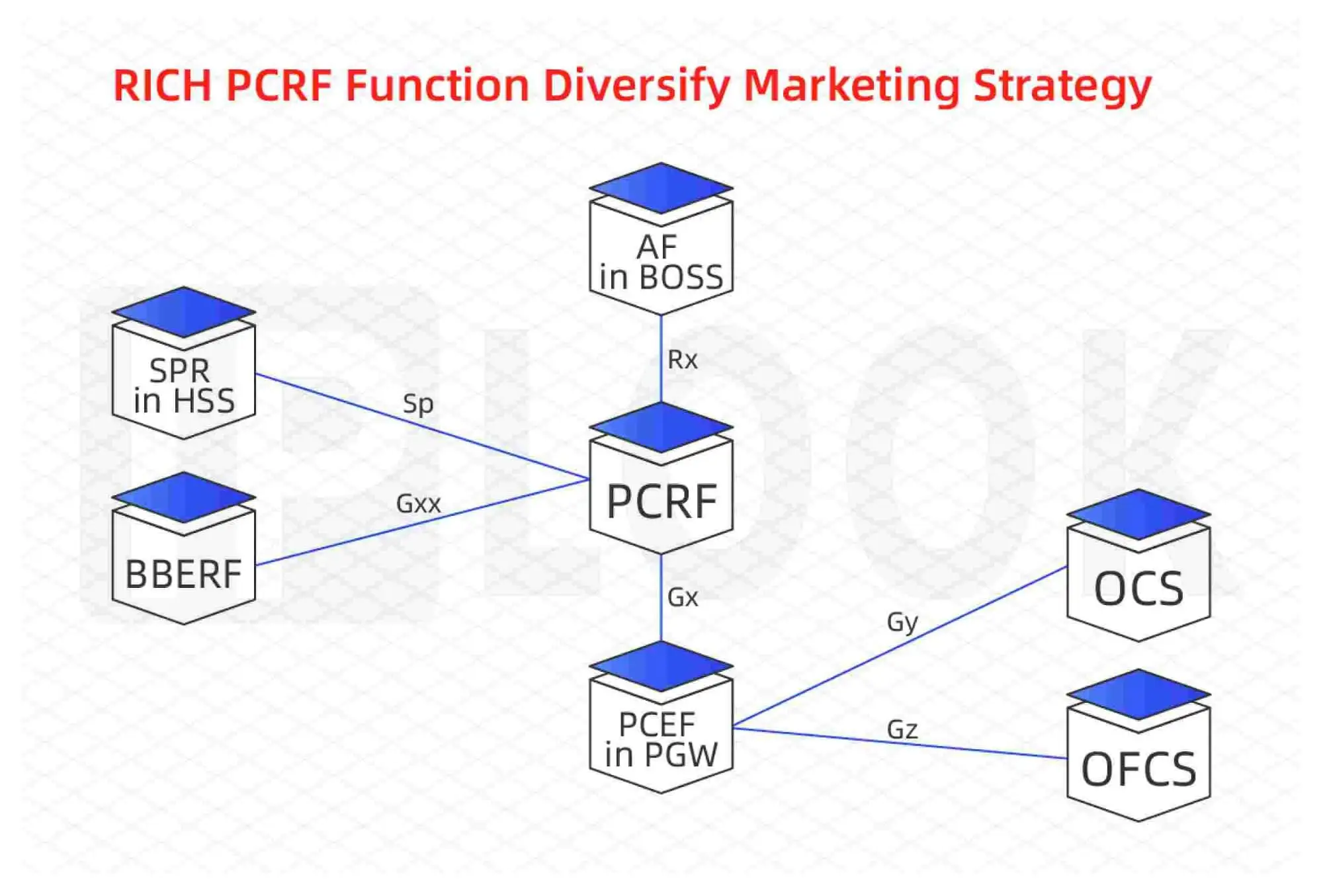
IPLOOK's Virtualized PCRF Generate higher revenue on fixed and mobile networks
- IPLOOK PCRF determines the allowed traffic types in real-time. It also checks how to account for the traffic. Operators use this information for billing purpose.
- The User Data and Server Process of IPLOOK PCRF are separated to BE (End Back, subscriber data storage and operations) and FE (End Front, process the signal and service logic).
- IPLOOK can provide a fully integrated of fixed and mobile networks PCRF solution which helps in creating a lucrative and innovative platform for operators. PCRF can also be integrated with different platforms like billing, rating, charging, and subscriber database or can also be deployed as a standalone entity.
▫ Rich data, voice and SMS service
▫ Support group short number service for enterprise
Features
SPR Data Management
- SPR supports remote disaster recovery
- SPR Network element configuration Management
- SPR user and subscription information storage and management
- SPR supports restful Service configuration and user signing Interface
Dynamic policy control
- Dynamic Policy Control based on APN
- Dynamic Policy Control based on usage
- Dynamic Policy Control based on time period
- Dynamic Policy Control based on Service area
- Dynamic Policy Control based on shared usage
- Dynamic Policy Control based on Terminal Type
High performance Policy Engine
- Overload control function
- Multiple PCEF access support
- PCRF redundant backup Design
- Subscriber area roaming restriction
- PCRF Network element Fault alarm report
Modular design
- PDI:PCRF Diameter Interface
- PSC:PCRF Session Control
- PPC:PCRF Policy Control
- DRU:Data routing unit
- DPU:Data Processing unit
- PE:Policy Engine
- DSG:Data Service Gateway
- DBMS:Data Base Management System
Interface comply to 3GPP R13 release
- Rx: between the PCRF and IMS
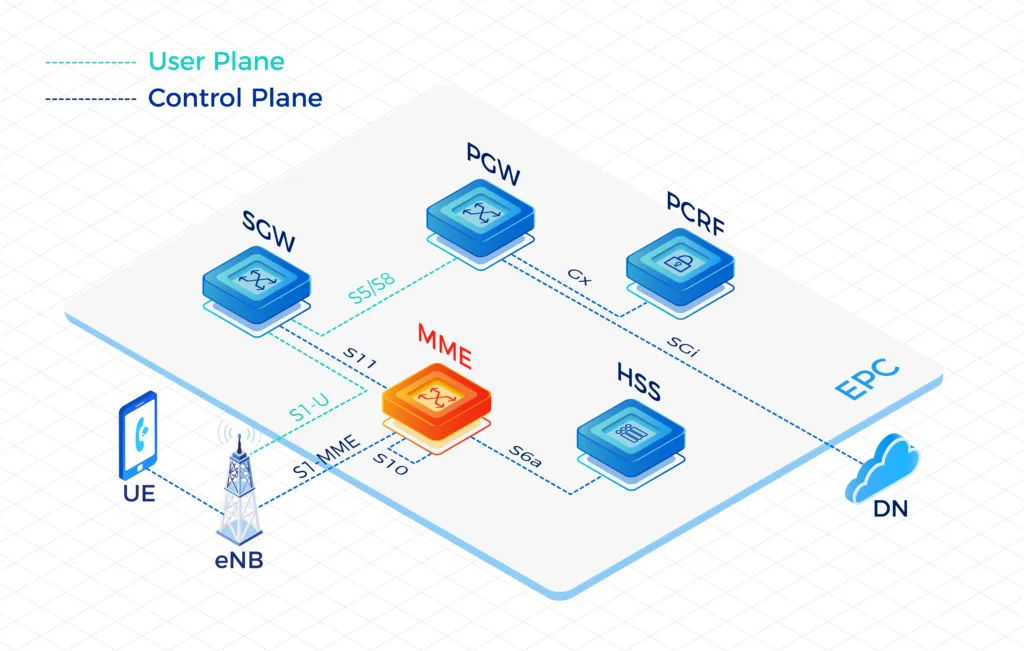
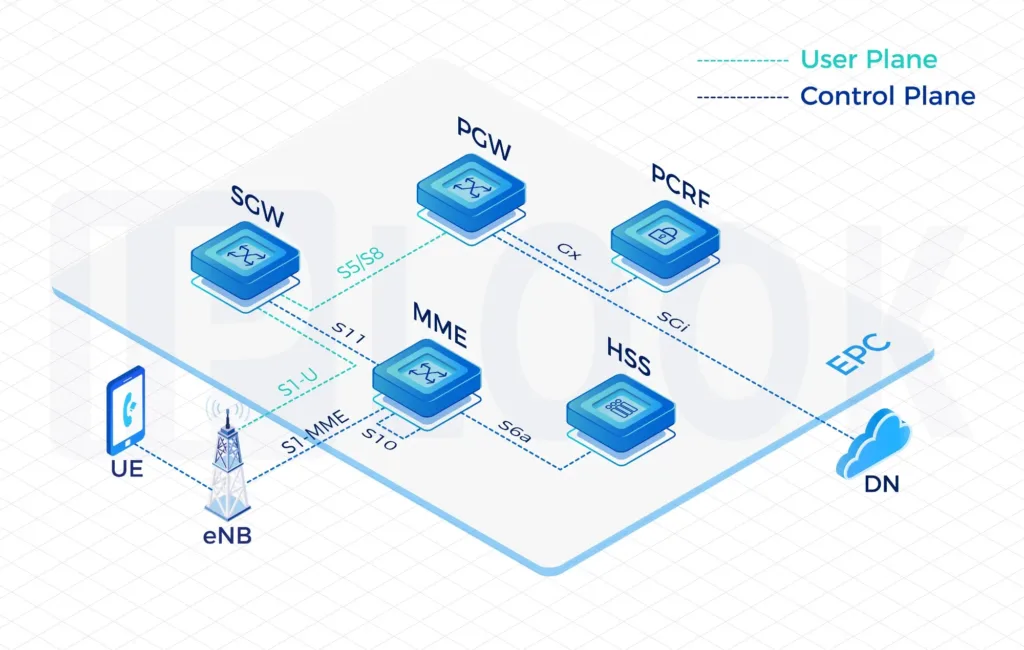
- Gx: between the PCRF and PGW, allowing the PCRF direct control over the policy enforcement functions of the PGW
Operation and Management
- Web Client
- OMC Client
- Open Northbound interface and graphical web based management interface
Support Geo redundancy
FAQ
What is the primary role of a PCRF in the Evolved Packet Core (EPC)?
The PCRF (Policy and Charging Rules Function) is the "policy decision engine" of the LTE network. It is responsible for service data flow detection, flow-based charging, and policy enforcement. It ensures that network resources are allocated dynamically based on subscriber profiles, service types, and real-time network conditions.
How does IPLOOK PCRF help operators increase revenue?
IPLOOK’s PCRF enables flexible strategy control, allowing operators to move beyond "one-size-fits-all" data plans. By using dynamic policies, operators can offer:
- Tiered Services: Different speeds or data caps for various price points.
- Usage-Based Plans: Shared data plans or time-based promotions.
- Enterprise Services: Specialized features like group short numbers and dedicated APNs for corporate clients.
What are the benefits of the BE (Back End) and FE (Front End) separation?
IPLOOK utilizes a distributed architecture where the Back End (BE) manages subscriber data storage and the Front End (FE) processes signal and service logic.
Does the PCRF support Fixed-Mobile Convergence (FMC)?
Yes. IPLOOK provides a fully integrated PCRF solution for both fixed and mobile networks. This allows operators to manage policies and charging for broadband and cellular services through a single, unified platform.
How does the PCRF ensure carrier-grade reliability and uptime?
To prevent service interruptions, the solution includes:
- Seamless Geographic Redundancy: Ensuring service continuity even in the event of a regional site failure.
- In-Memory Data Management: For ultra-fast data access and processing.
- Remote Disaster Recovery: Protecting the Subscription Profile Repository (SPR) data across multiple levels.
Can I implement dynamic policies based on location or device type?
Absolutely. Our Policy Engine supports a wide range of dynamic triggers, including:
- Service Area: Varying policies based on where the subscriber is located (e.g., roaming vs. home).
- Terminal Type: Adjusting quality of service (QoS) based on whether the device is a smartphone, IoT sensor, or tablet.
- Time Period: Implementing "happy hours" or off-peak data discounts.
How compatible is IPLOOK PCRF with existing IMS and Core Network elements?
The solution is fully compliant with 3GPP R13 standards, supporting critical interfaces:
- Gx Interface: For direct communication with the PGW (Packet Data Network Gateway) to enforce policies.
- Rx Interface: For integration with the IMS (IP Multimedia Subsystem) to manage VoLTE and video service policies.
- Open Northbound Interfaces: Facilitating easy integration with third-party Billing (BSS) and Rating systems.
What management tools are provided for network administrators?
IPLOOK PCRF features a graphical Web-based management interface and an OMC (Operations and Maintenance Center) client.