The Evolution of SMS Across Mobile Network Generations
With the rapid advancement of mobile networks, SMS—once a primary communication tool—is now used less for casual messaging. Yet, it remains indispensable for critical functions like account registration, password resets, and two-factor authentication (2FA) via verification codes. Below is how SMS architecture has evolved from 2G to 5G.
2G/3G Era: Circuit-Switched SMS
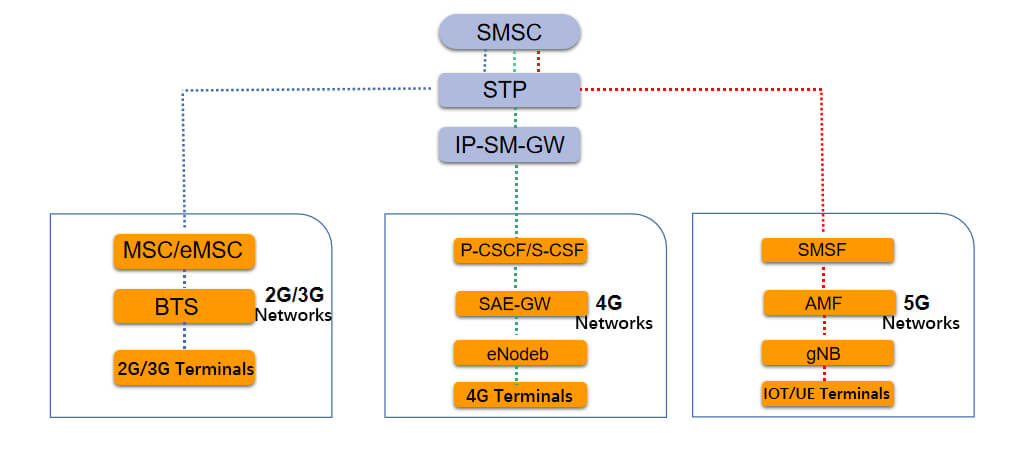
In the 2G and 3G networks, SMS relied on the Short Message Service Center (SMSC), which handled message storage and forwarding over the circuit-switched domain.
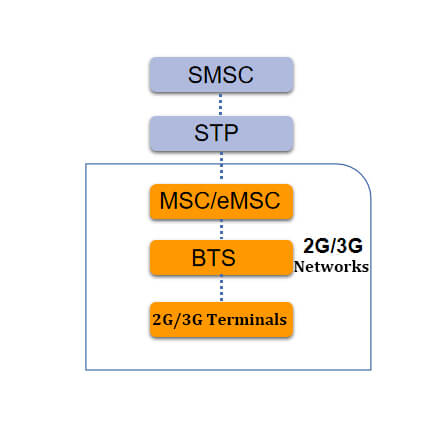
Key Components:
SMSC: Short Message Service Center
STP: Signaling Transfer Point
MSC: Mobile Switching Center
eMSC: Enhanced Mobile Switching Center
BTS: Base Transceiver Station
4G Era: SMS over IMS with IP-SM-GW
To avoid costly upgrades to legacy circuit-switched infrastructure, 4G introduced the IP-SM-GW (IP Short Message Gateway). This element bridges the gap between the packet-switched LTE network and the traditional SMSC, enabling 4G UEs to send/receive SMS without modifying the core SMS infrastructure.
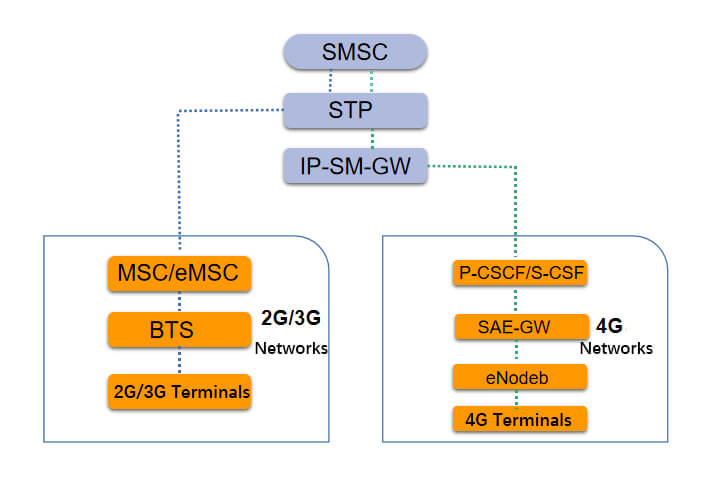
Key Components:
IP-SM-GW: IP Short Message Gateway
P-CSCF / S-CSCF: Proxy and Serving Call Session Control Functions (IMS)
SAE-GW: System Architecture Evolution Gateway
eNodeB: Evolved Node B
5G Era: Two Paths for SMS
In the 5G era—characterized by massive IoT and ultra-reliable connectivity—SMS support continues through two main approaches:
1. SMS over IP (Backward-Compatible Solution)
This approach leverages the existing IP-SM-GW deployed in 4G networks, requiring minimal changes to the 5G core. It’s ideal for early-stage 5G deployments where operators seek cost efficiency and rapid service continuity.
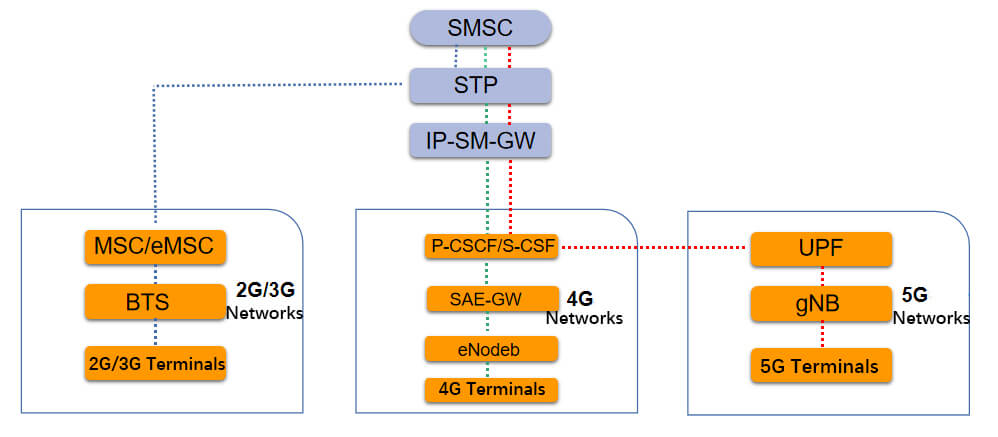
The IP-SM-GW acts as an intermediary between the 5G device (via IMS) and the legacy SMSC:
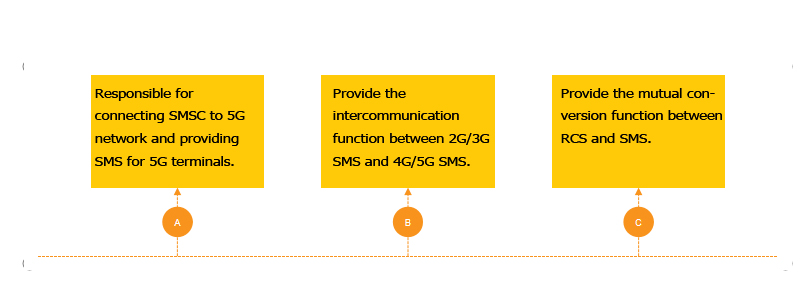
IP-SM-GW Network Element Function
2. SMS over NAS (Native 5G Solution)
This method introduces a new 5G-native network function: the SMSF (Short Message Service Function), integrated directly into the 5G Core Network (5GC). SMSF enables direct SMS delivery over the Non-Access Stratum (NAS), supporting both smartphones and IoT devices without relying on IMS or legacy components.
This solution is best suited for mature 5G networks with full standalone (SA) deployment:
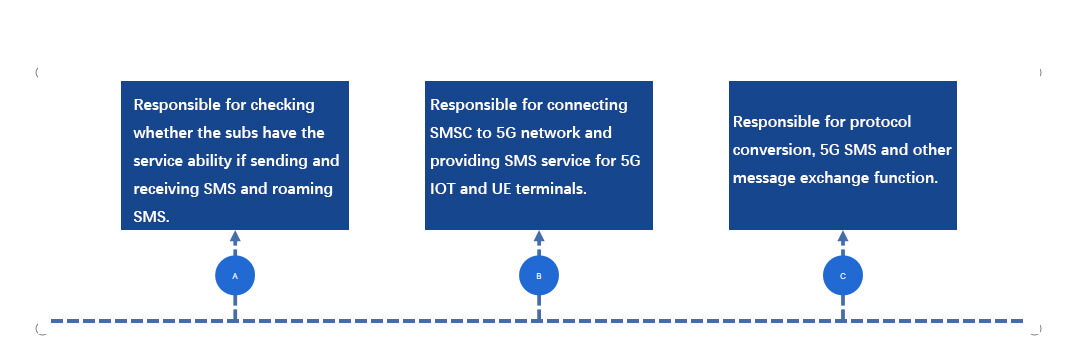
SMSF Element
Unified SMS Support Across Generations
Regardless of the chosen 5G SMS path, the legacy SMSC remains central and can simultaneously support 2G, 3G, 4G, and 5G terminals. Most importantly, the required upgrades to existing SMSCs and overall network architecture are minimal.
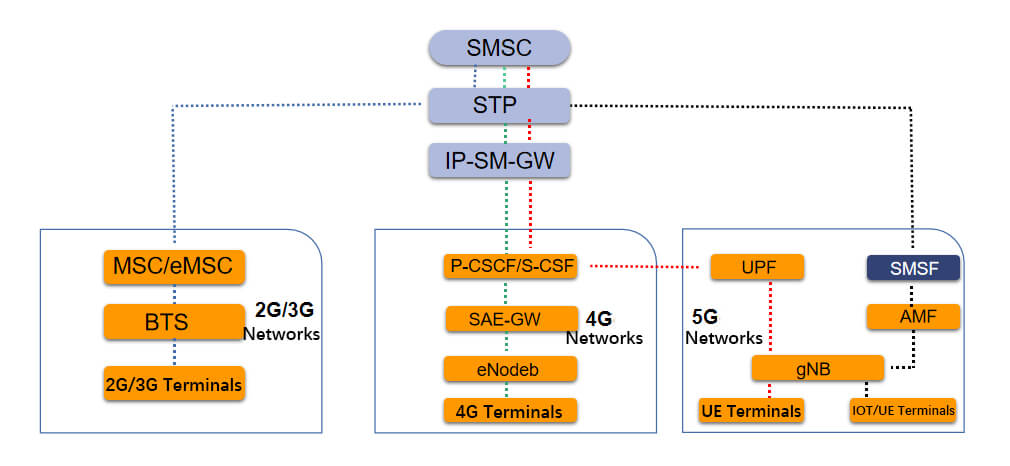
As 5G coverage expands, operators can flexibly select the most appropriate SMS solution based on terminal types, use cases (e.g., consumer vs. IoT), and network maturity—ensuring seamless, secure, and reliable messaging well into the future.