Understanding Wireless Communication Channels and Their Impact on Network Performance
In wireless communication, a “channel” refers to a specific subdivision within a frequency band that serves as a dedicated pathway for wireless signals. Think of it like a lane on a highway, where each lane accommodates different vehicles (or signals) to ensure smooth traffic flow.
Role of Channels in Reducing Signal Interference
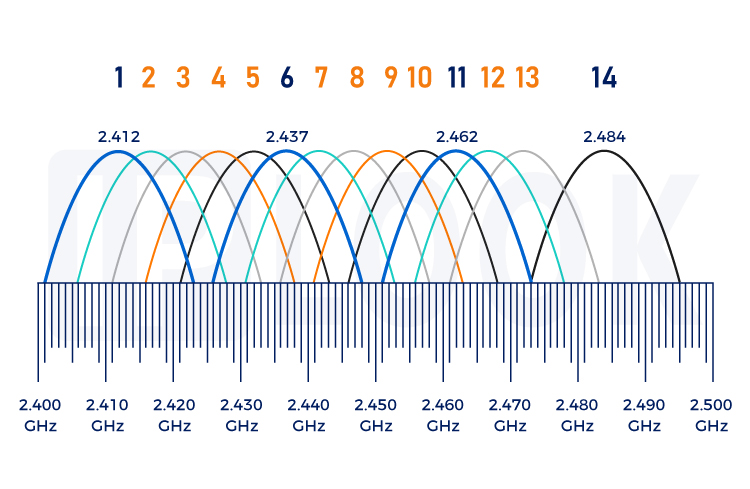
Wireless communication channels are essential for reducing interference between signals from various devices. For example, Wi-Fi routers typically operate within the 2.4 GHz frequency band, which is divided into 14 channels. However, only a few of these channels (such as 1, 6, and 11) are non-overlapping and can be used simultaneously without interference.
Comparison of 2.4 GHz and 5 GHz Frequency Bands
The 5 GHz frequency band, in contrast, offers more channels and is less prone to congestion, making it suitable for higher bandwidth applications that require faster data transfer and more reliable connections. However, the 5 GHz band has a shorter range compared to the 2.4 GHz band, so it may not be ideal for areas with thick walls or physical barriers that could block the signal.
Importance of Channel Selection for Optimal Performance
Selecting the right channel is crucial for optimal network performance, especially in environments with multiple wireless networks. If too many devices use the same channel, network speed can decrease due to congestion. To mitigate this, users can utilize tools that analyze the wireless environment and help identify the least crowded channels.
Additional Factors Influencing Wireless Performance
In addition to channel selection, factors such as signal strength, interference from other devices, and the physical layout of the space can influence wireless communication performance. Thus, it’s important to account for these elements when designing and optimizing a network.
Summary: Key Takeaways for Wireless Network Optimization
In summary, understanding the role and significance of wireless communication channels is essential for ensuring reliable and high-performance networks. By selecting the appropriate channel and considering other environmental factors, users can create more efficient and stable wireless connections.