Our High-Performing Core Network
Fully virtualizable on VMware, K8S, Docker and OpenStack containers
Mobility Management Entity(MME)
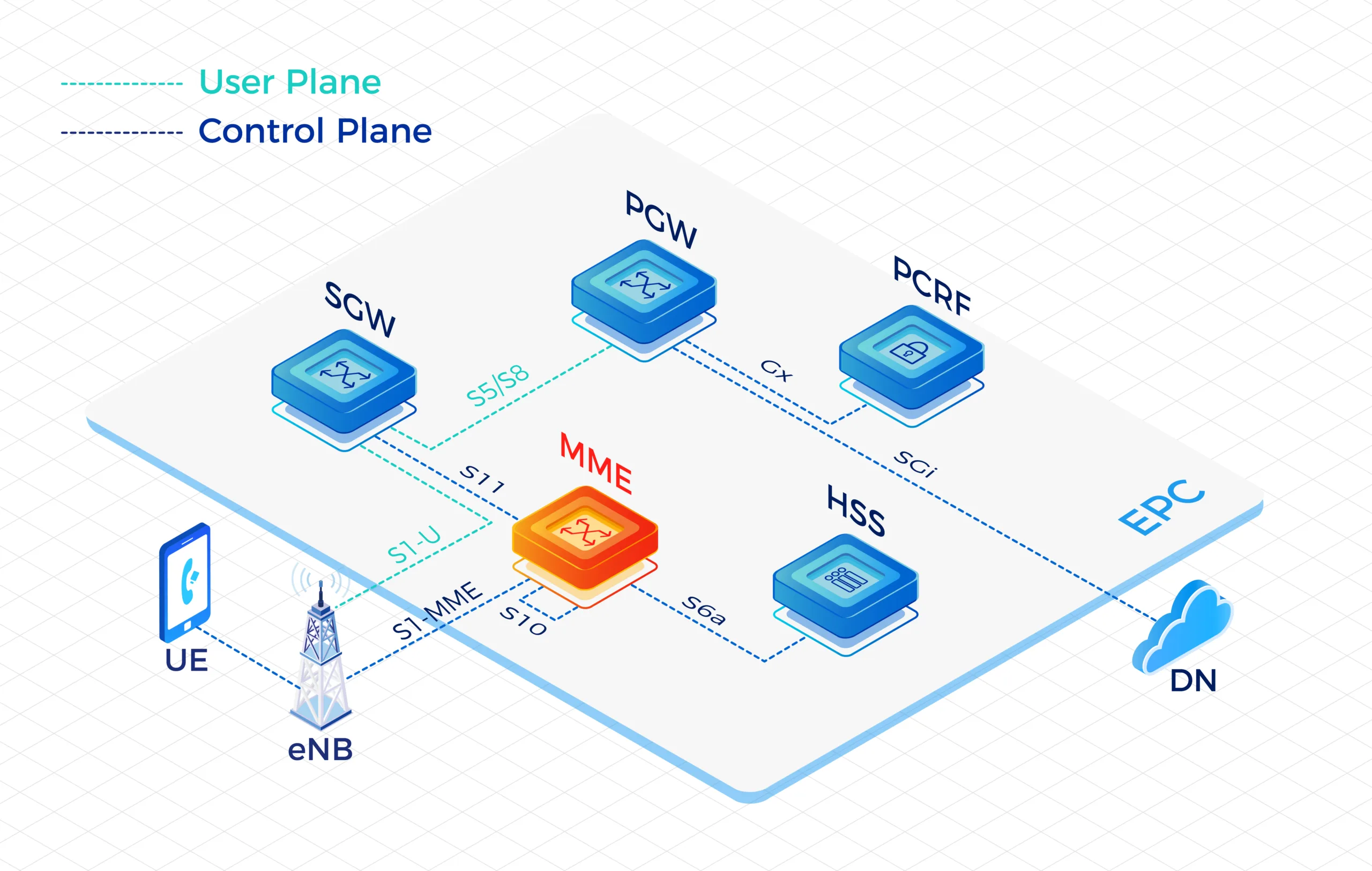
Mobility Management Entity(MME) is a key component of the standards-defined Evolved Pack Core (EPC) for LTE. It provides mobility session management for the LTE network and supports subscriber authentication, roaming and handovers to other networks.
Key Benefits

Up to 500 eNodeBs per instance

From 500 to 10M Subscribers

Support redundancy Deployment

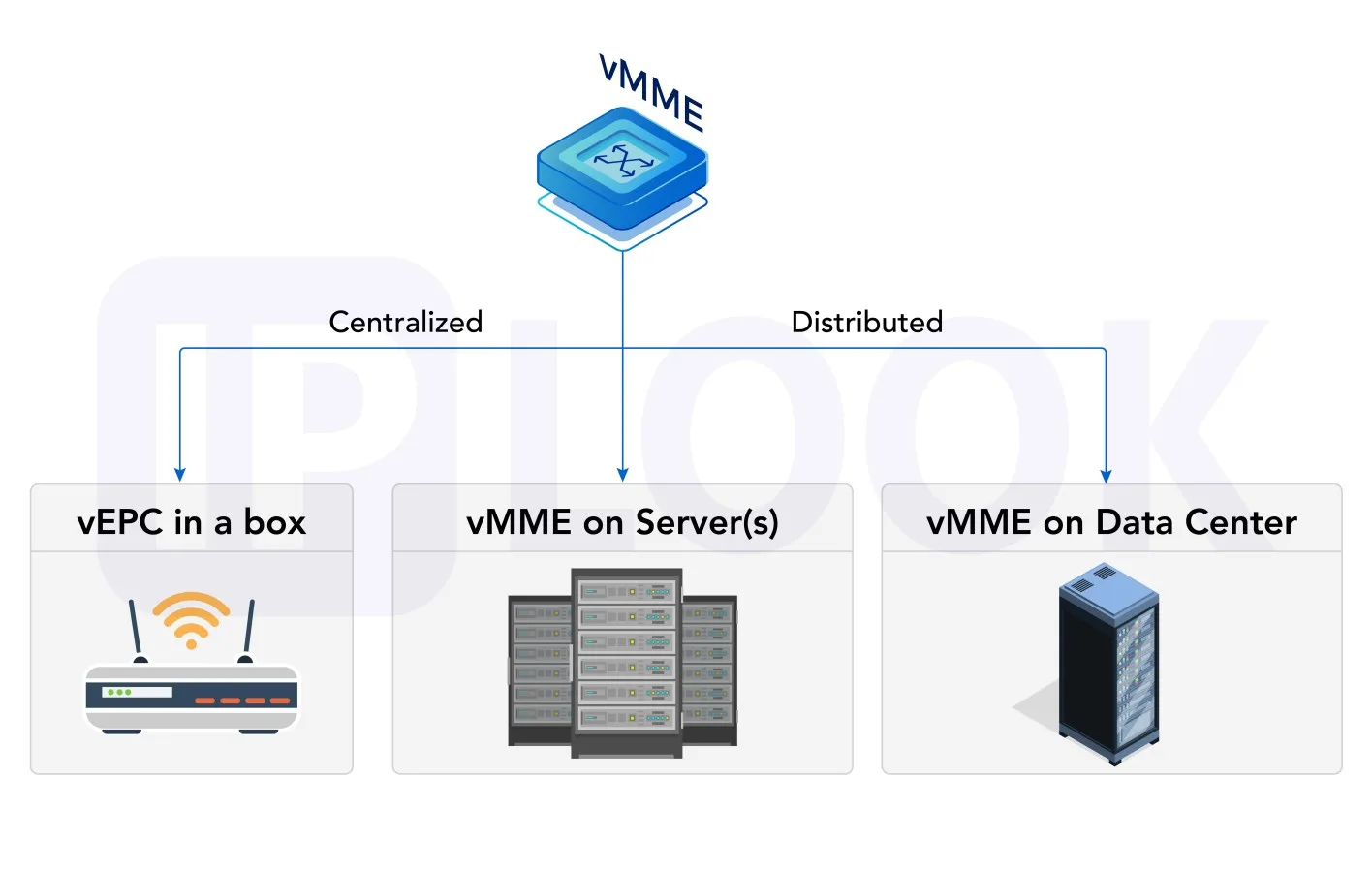
NFV Deployment on COTS and Cloud
IPLOOK's Virtualized MME Fully standards-compliant MME in service in many operator networks around the globe
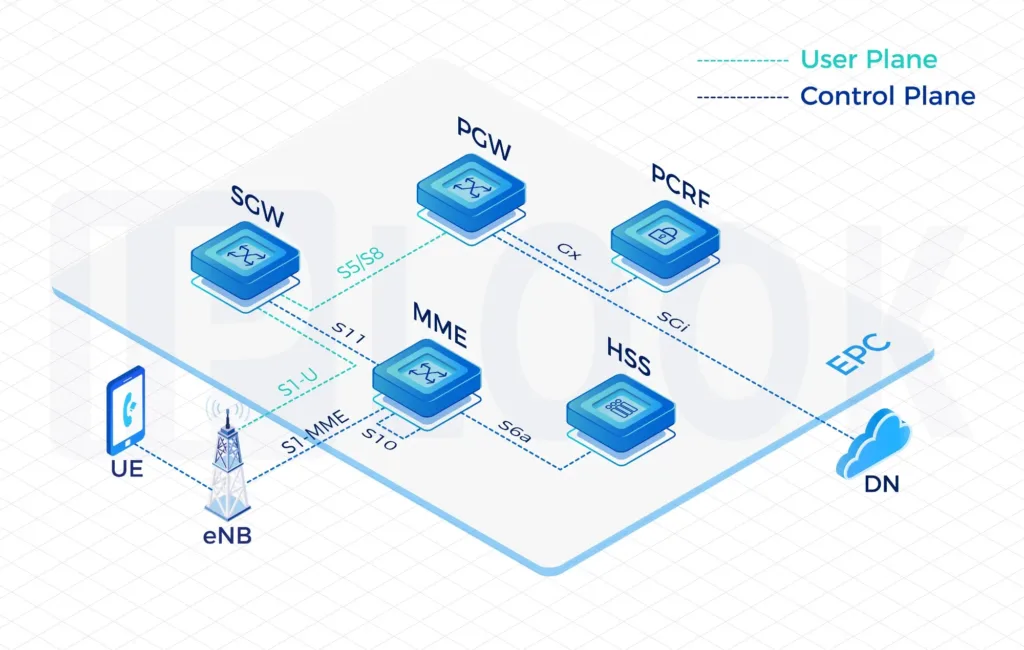
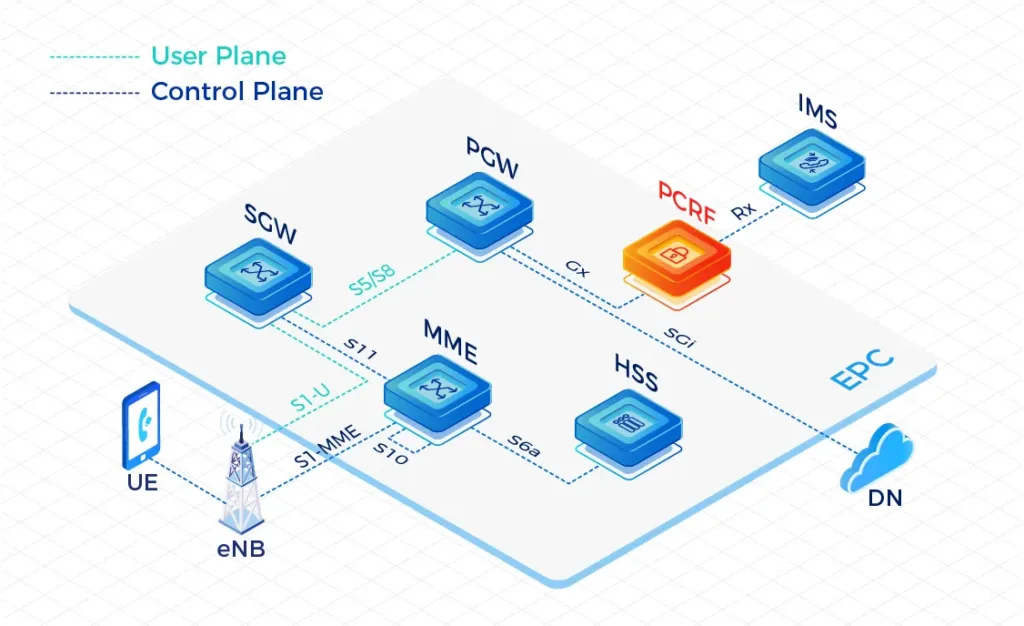
- The IPLOOK’s vMME is a fully standards-compliant core network product and has been integrated with the hardware and software of all telecom suppliers. It is the control plane node of EPC and deals with the signaling plane and completes the authentication with HSS.
- Our Carrier Grade MME adopts COTS server as the platform. The MME function can be NFV element and deployed in the data center environment. The MME application can also be directly deployed in a server to make full use of the hardware capability.
IPLOOK MME Video Series: The Brain of LTE Mobility & Control
Features
Access Control
- Security
- Authentication
- GUTI allocation function
- User equipment identification function
- AS security context distributed function
- Confidentiality and integrity protection of the NAS signaling
- 3G security parameters and EPC security context mapping function
- Admission control
- On the capacity of system
- On the CPU and Memory resource consumption
Mobility Management Functions
- TAU
- Attach
- Detach
- Purge UE
- Handover
- State model
- ODB function
- Tracking area update
- Multi-PDN connection
- Access Restriction function
- Tracking area management
- Paging and service request
Roaming Management
Support CSFB function
5GS interworking
- EPS bearer activation
- UE AMBR management
- EPS bearer deactivation
- EPS bearer modification
Control selection of NE for the UE
- PDN GW selection
- Serving GW selection
- MME selection function
- SGSN selection function
Interfaces comply to 3GPP R14
- S13: Between EIR and MME
- S10: Connect the MME Pool
- S6a: Between MME and HSS
- S3/Gn: Between MME and SGSN
- S1-MME: Between eNodeB and MME
- S11: Between MME and SGW; transmit signal of Control Plate
- SGi: Between MME and MSC; handling the CSFB process
Network management function
- Overload control
- MME Pool function with Load balancing between MMEs
APN correction function
FAQ
What is the role of the MME in an LTE Evolved Packet Core (EPC)?
The Mobility Management Entity (MME) is the primary control-plane node of the EPC. It is responsible for managing subscriber sessions, authenticating users in coordination with the HSS, and handling mobility—ensuring a seamless connection as users move across different cell sites or networks.
How scalable is the IPLOOK vMME for growing networks?
IPLOOK’s virtualized MME is built for massive scale. A single instance can support up to 500 eNodeBs and scale from 500 up to 10 million subscribers.
Can the IPLOOK MME be deployed on existing cloud infrastructure?
Yes. Our MME is a Carrier Grade NFV (Network Functions Virtualization) element. It can be deployed on standard COTS (Commercial Off-the-Shelf) servers, in private data centers, or within public cloud environments. This flexibility allows operators to maximize hardware utilization and reduce CAPEX.
How does the MME handle the transition from 4G to 5G?
The IPLOOK MME supports 5GS (5G System) interworking. This allows for smooth handovers and interoperability between 4G LTE and 5G networks, protecting your current investment while providing a clear path for 5G Standalone (SA) migration.
What security mechanisms are in place for subscriber data?
Security is a core feature of the IPLOOK MME. It provides:
- NAS Signaling Protection: Confidentiality and integrity protection for Non-Access Stratum signaling.
- Authentication: Seamless integration with HSS for subscriber verification.
- GUTI Allocation: Uses Globally Unique Temporary Identifiers to protect subscriber identity over the air.
Does the MME support legacy voice services like CSFB?
Yes. The MME supports Circuit Switched Fallback (CSFB) via the SGs interface (referenced as SGi process in technical documentation). This ensures that LTE subscribers can still receive high-quality voice calls by temporarily switching to 2G or 3G legacy networks when VoLTE is not available.
How does the MME optimize network resource selection?
The MME performs critical Network Element (NE) selection. It intelligently selects the most appropriate Serving Gateway (SGW) and PDN Gateway (PGW) for each user session based on location and load. This ensures optimal routing, reduced latency, and efficient use of the data plane.
Is IPLOOK’s vMME compatible with third-party RAN and Core vendors?
Absolutely. Our MME is fully 3GPP R14 compliant and has been successfully integrated with hardware and software from all major global telecom suppliers. This interoperability eliminates vendor lock-in and allows for a "best-of-breed" network architecture.