Our High-Performing Core Network
Fully virtualizable on VMware, K8S, Docker and OpenStack containers
Home Subscriber Server(HSS) / Home Subscriber Register(HLR)
Key Benefits

Users: From 500 subs to 10 million subscribers

Compatibility with 2G/3G/4G/5G mobile core, one set of profile for all

One instance with EPC-HSS, IMS-HSS, 5G UDM, 3G HLR functionality

Seamless support for multiple identities per subscriber

Support Redundancy Deployment

Support GSM, UMTS, LTE, NR, IMS, Wi-Fi and M2M networks

Run on bare-metal, virtual platform or Cloud

Field-proven with main stream vendors
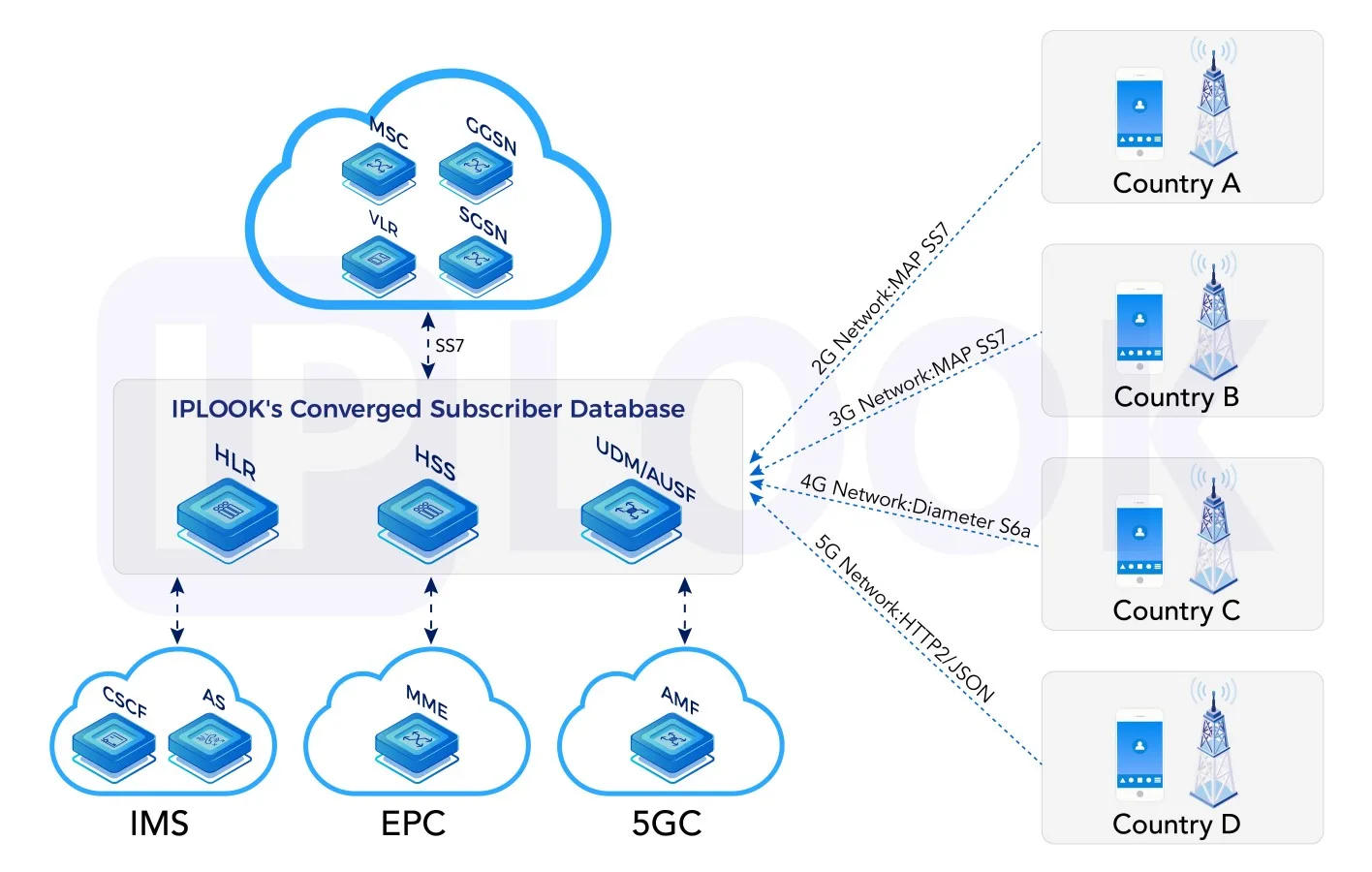
IPLOOK's Virtualized HSS/HLR Support 2G, 3G, 4G, IMS and 5G
- IPLOOK offers a complete solution through our HSS/HLR. Our HSS/HLR solution is ideally suited for MNO, MVNO/MVNE and M2M market. It is designed to overcome the limitations and disadvantages of traditional HSS products regarding flexibility, virtualization, cost of scaling and vendor lock-in.
- Our carrier-grade HSS/HLR software is flexible and adaptable to the needs of the customer, that allows seamless migration and interworking and delivers significant feature and cost advantages over traditional products to both small and large service providers.
Features
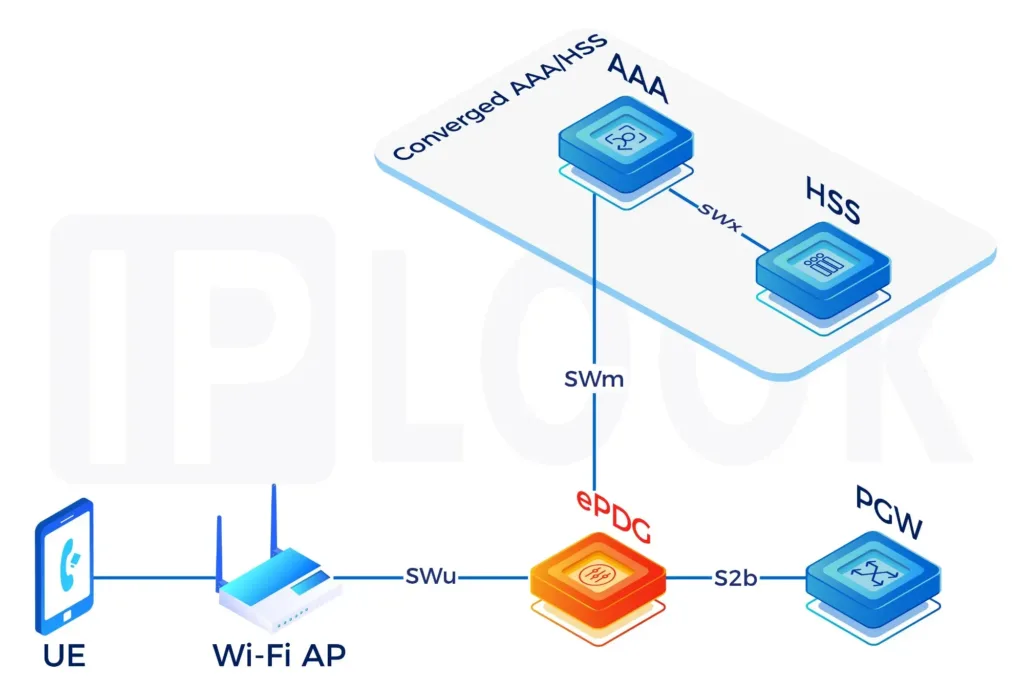
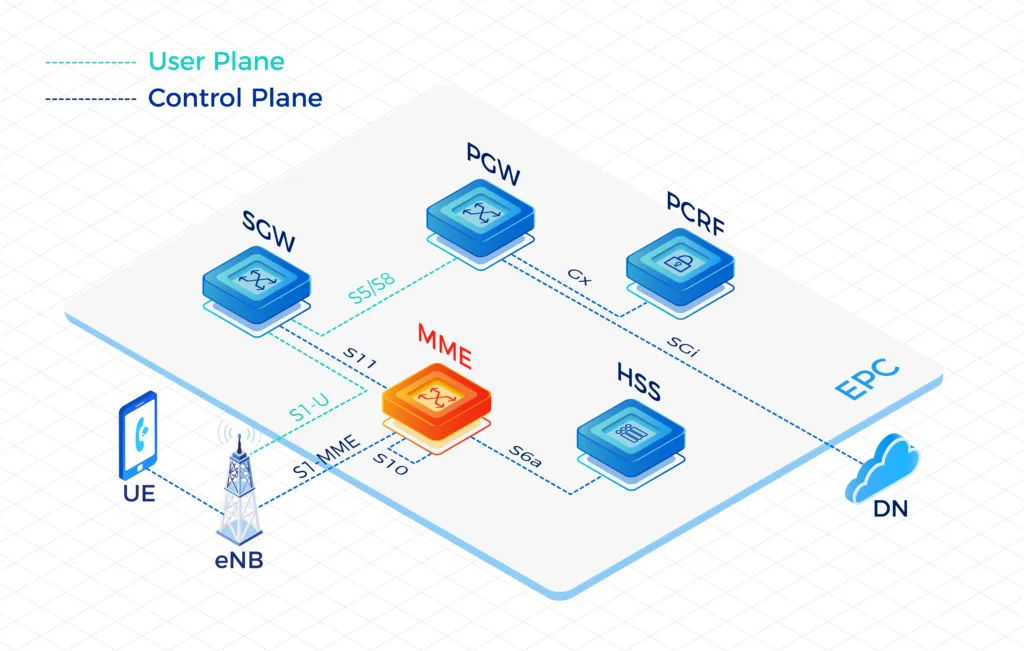
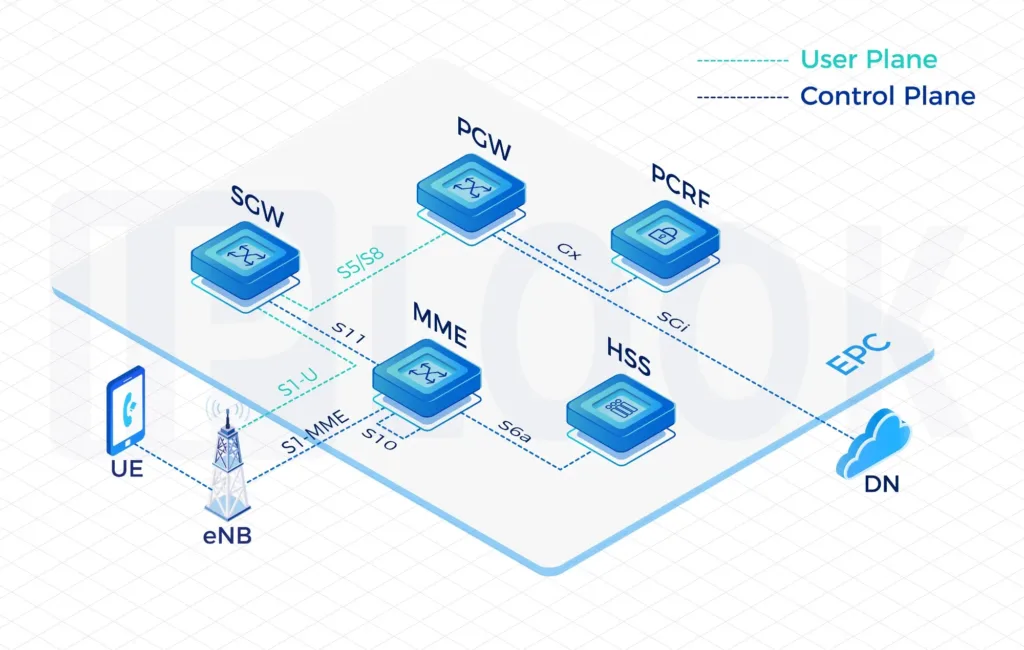
Interfaces comply to 3GPP R14: Cx/S6a
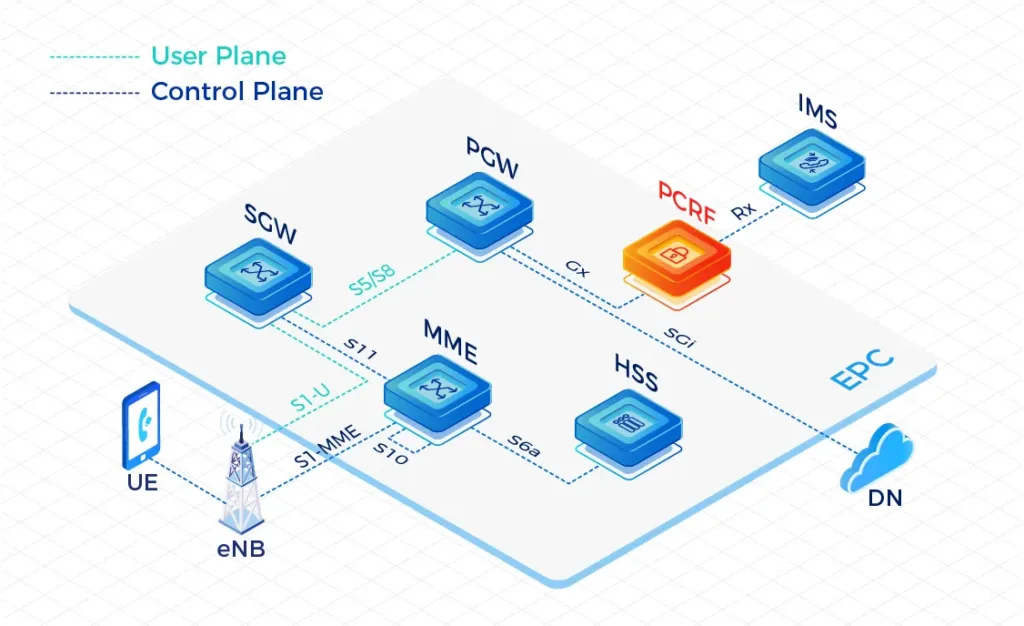
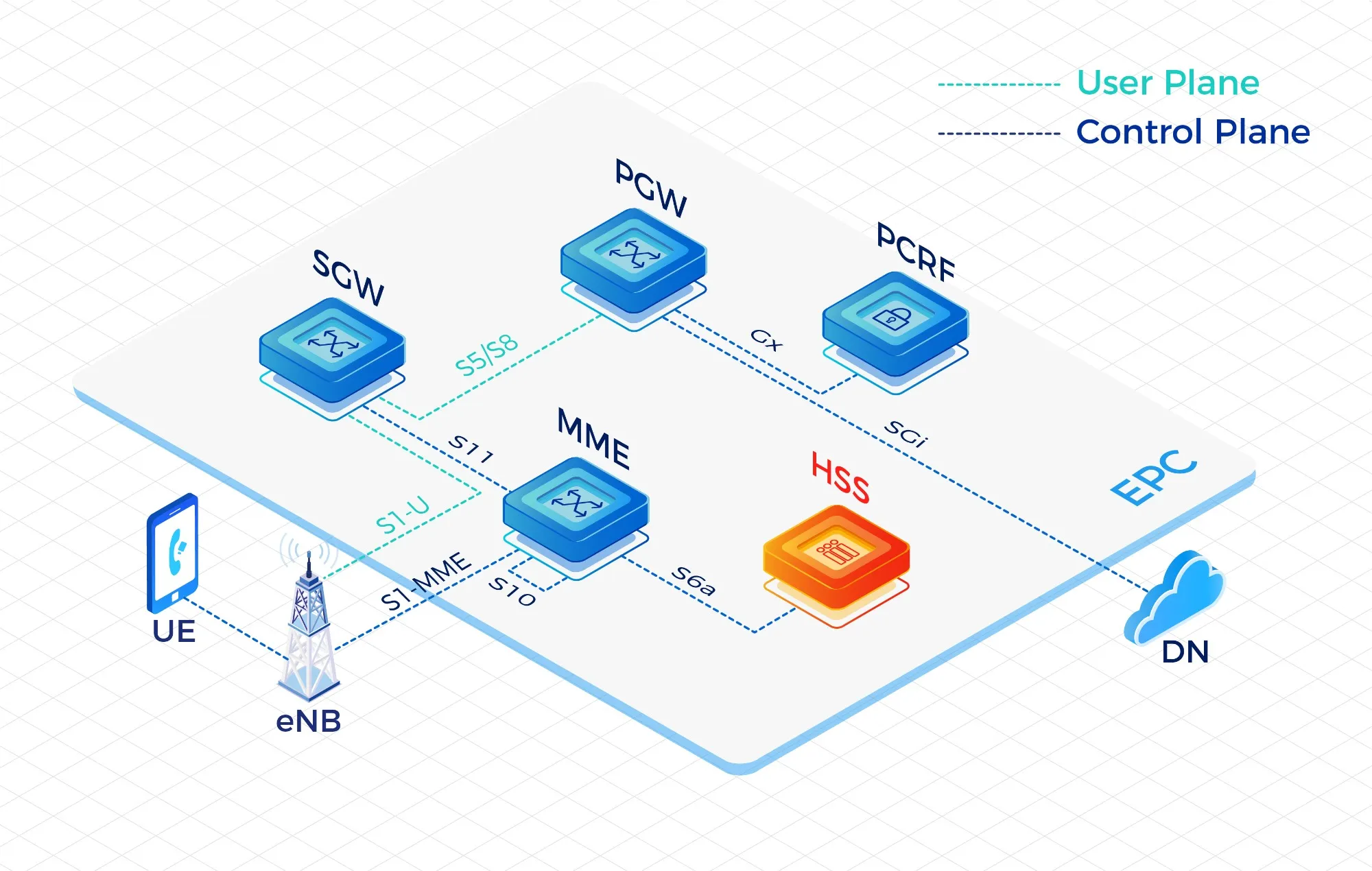
- Cx: Between CSCF and HSS
- Gr: Between SGSN and HLR
- S6a: Between MME and HSS
- C/D: Between GMSC/MSC and HLR
Basic subscriber Data Management:
- Create a Subscriber
- Delete a Subscriber
- Define and Manage a subscriber’s templates Modify a subscriber
Authentication Center
- EPS-AKA function
- KI/OP/OPC management
Distributed System
- High Reliability
- Smoothly Expansion
- HCM: HSS Connection Module
- HSC: HSS Subscriber Control
- DSM: Data service Module
- UDM: Data Management Module
- OMM: Operation Management Module
Operation and Management
- Web Client
- OMC Client
- Open Northbound interface and graphical web based management interface
Mobility Management
- UE reachable management
- Local Breakout for Roaming
- Subscriber area roaming restriction
- LTE subscriber mobility management
Multi-protocol interworking
- SS7
- Diameter
- RADIUS
- IT protocols
Multi-level backup mechanism
- Level 1: 2N or N+1 redundancy solutions are applied in backup user data stored in cache. The user data from the main unit will be synchronized to the backup unit in real time.
- Level 2: Database backup mode using 1+1 redundancy mode.
- Level 3: The data is saved to a disk array in RAID1 mode
Store mobility and service data for every subscriber
Contain the Center Authentication(AuC) functionality
Admission control with Access Type
FAQ
What is the difference between an HLR and an HSS in a modern network?
While both serve as the central database for subscriber information, the HLR (Home Subscriber Register) is used in 2G/3G legacy networks (SS7-based), while the HSS (Home Subscriber Server) is the primary database for 4G LTE and IMS networks (Diameter-based).
How does a converged HSS/HLR reduce operational complexity?
Instead of maintaining separate databases for 2G, 3G, 4G, and 5G, IPLOOK offers one set of profiles for all. This means a single subscriber identity can seamlessly roam between different network generations without data synchronization issues.
What is the subscriber capacity and scalability of the IPLOOK HSS/HLR?
Our solution is designed to be highly elastic, supporting everything from small-scale deployments of 500 subscribers to massive carrier-grade networks of 10 million+ subscribers.
Does the IPLOOK HSS support 5G migration?
Yes. The platform includes 5G UDM (Unified Data Management) functionality. This ensures that your investment today in 4G LTE infrastructure is future-proofed, as the system already understands 5G NR (New Radio) profiles and can interwork with the 5G Core.
How is subscriber data protected against system failures?
IPLOOK employs a Multi-level Backup Mechanism to ensure 99.999% reliability:
- Level 1: Real-time cache synchronization (2N or N+1 redundancy).
- Level 2: Database 1+1 redundancy mode.
- Level 3: Physical disk-level protection using RAID1.
Can this HSS/HLR be deployed in a cloud-native environment?
Absolutely. Our HSS/HLR is "field-proven" and designed for NFV (Network Functions Virtualization). It can run on bare-metal servers, virtual platforms (VMware/KVM), or private/public cloud environments. This eliminates "vendor lock-in" associated with traditional, proprietary hardware-based HLRs.
Which 3GPP interfaces are supported for multi-vendor interoperability?
The IPLOOK HSS/HLR is 3GPP R14 compliant and supports all standard interfaces for seamless integration:
- S6a: Connecting to the MME (4G).
- Cx: Connecting to the CSCF (IMS/VoLTE).
- Gr/C/D: Connecting to SGSN and MSC (2G/3G).
- Multi-protocol support: Diameter, SS7 (MAP), RADIUS, and modern IT protocols.
How does the HSS/HLR handle subscriber authentication and security?
The system includes a built-in Authentication Center (AuC). It manages sensitive security data such as EPS-AKA, KI, OP, and OPC keys. It also features Admission Control based on access type, ensuring that only authorized devices can register on specific network types (e.g., restricting a certain M2M SIM to LTE only).