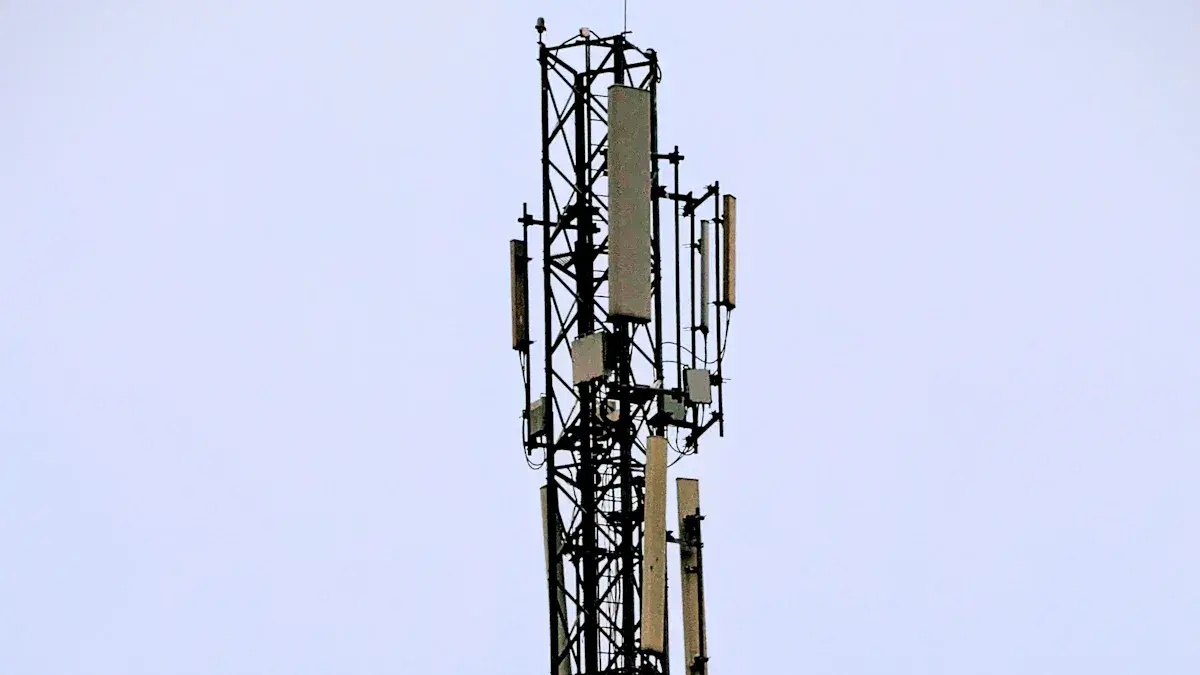
Core network architecture decides how fwa handles more users in 5g. SDN and NFV help operators change things as user numbers grow. They also help with more data traffic. Modularity and strong VM performance make the network safer. They also help the network work better. These network choices let more users join. They also make data faster and help cover more places. Good resource management, flexibility, and adaptability help the network grow.
Key Takeaways
- Core network architecture is very important. It helps manage more users and faster data in FWA networks. Operators can pick centralized or distributed models. Each model has its own good points and problems for scaling up. Modular design lets networks upgrade in small steps. This makes it easier to change for new user needs without big changes. SDN and NFV make networks more flexible. They help operators control resources quickly and well. Data-plane VM performance is very important. It helps handle more traffic and keeps users happy. Good load balancing and congestion control are needed. They keep service good in crowded places. Automation helps give out resources fast. This lets operators meet network needs and work better. Security must get better as FWA networks grow. It should protect user data and keep the system safe.
Core Network Architecture for FWA
Centralized vs Distributed Models
Choosing between centralized and distributed models changes how FWA networks grow. Each model has its own good points and problems for more users and faster data.
Pros and Cons of Centralized
A centralized core network architecture puts most processing in one place. This makes it easier to manage and helps with security. Operators can watch and update the network from one spot. Centralized models work well for small networks or places with few users. But, when more people join the FWA network, problems can happen. Too many users and lots of data can overload the central core. Operators must test if the network can handle lots of users and data. They also need enough computers and storage for the load. If the core cannot keep up, users may get slow speeds or lose connection. Centralized processing can also make it hard to change quickly when demand goes up.
Benefits of Distributed
A distributed core network architecture spreads processing across many places. This helps FWA networks support more users and faster data. Distributed processing lets the network grow as more people connect. It also makes the network stronger if one part stops working. In busy areas, where Distributed Units and Centralized Units are placed matters a lot. Good placement keeps delays low and speeds high. Distributed models make it easier to add new parts to the network. Operators can put more resources where they are needed most. This helps keep connections fast and reliable for FWA users.
Tip: Operators should check if their licensing models fit the size they want. This keeps things running well as the network gets bigger.
Modular Design in Core Networks
Modular design lets FWA networks grow and change over time. By splitting the network into smaller parts, operators can upgrade or add without big problems.
Incremental Growth
A modular core network architecture lets operators add new features step by step. They do not have to rebuild the whole network for more users or data. They can add new modules when needed. This makes it easier to test if the network can handle more devices and speed. Operators can also make sure the network fits FWA needs in different places.
Adaptability to Technology Changes
Modular design helps FWA networks keep up with new technology. Service-based architecture lets each network function work alone. Operators can upgrade one part without changing the rest. Network slicing lets them make separate virtual networks for different services on the same hardware. Virtualization gives even more flexibility, so it is easy to add new things as they come out.
This flexibility is important for 5g core network environments. As user needs change and new services show up, a modular network architecture helps FWA networks keep up. Operators can support more users, give faster speeds, and keep the network strong.
Note: Core network dimensioning is very important. Operators must test and plan for how many devices and how much traffic the network will get. This planning helps keep the network working well for all FWA users.
5G Technologies Enabling FWA Scalability
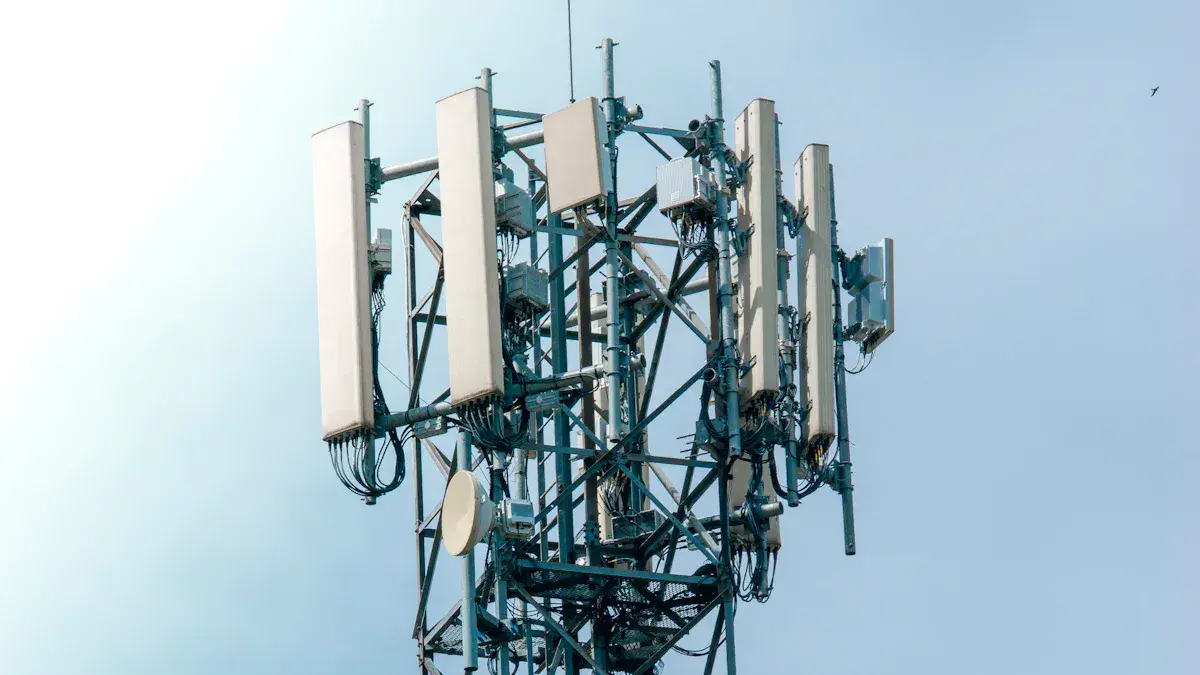
SDN and NFV in Core Networks
SDN and NFV change how operators set up and run FWA networks. These tools help networks get bigger and handle new needs. They also make it easier to add more users and services. Operators use SDN and NFV to make networks flexible and save money.
Dynamic Resource Management
SDN and NFV give operators ways to control resources right away. Networks can send resources where they are needed most. This helps FWA networks work well during busy times and with new users. Operators do not have to buy new hardware each time the network grows. They can use software to add or move network functions.
- SDN and NFV let networks change fast when things happen.
- NFV makes it easy to set up and take care of network services.
- SDN splits control and data planes, so things work better and there are fewer mistakes.
This way, operators can react quickly when more people join. It also helps them keep service good for everyone.
Efficient Network Adaptation
SDN and NFV help operators change networks without waiting a long time. They can add new services or fix problems in hours, not months. This speed helps FWA networks keep up with what users want. Operators can also support many types of devices and services on one network.
| Benefit | Description |
|---|---|
| Cost Reduction | 40-60% CAPEX reduction, 50% OPEX reduction |
| Agility | Deploy in hours instead of months |
| Scalability | Scale on demand, pay-as-you-grow |
| Flexibility | Multi-vendor support, easier software updates |
NFV lets network functions run on regular servers. SDN gives operators one place to control the network. These changes make it simple to grow the network and keep costs down.
Tip: Operators can use SDN and NFV to try new services before giving them to everyone. This lowers risk and helps them pick the best ideas for FWA.
Data-Plane VM Performance
Data-plane VMs are important in FWA networks. They handle user data and keep the network working well. Good VM performance means the network can handle more traffic and users.
Handling Increased Traffic
FWA networks need to support many users at once. Data-plane VMs help by moving lots of data fast. Operators use analytics to check how well the VMs do their job. They look at:
- Quality of Service (QoS) to see if users get what they need.
- Quality of Experience (QoE) to check how users feel about the service.
- Traffic analytics to see how much data goes through the network.
These checks help operators find and fix problems before users notice. They also help plan for more users in the future.
Supporting More Connections
When more people use FWA, the network must handle more devices. Data-plane VMs help by making it easy to add new connections. Operators use analytics to watch how devices and the network are doing. They look at:
- Customer analytics to see how users use the network.
- Device analytics to check if customer equipment is healthy.
- Capacity analytics to make sure the network does not get too full.
These tools help operators keep the network strong as it gets bigger. They also help plan upgrades and stop slowdowns.
Note: Good VM performance is very important for 5g core network environments. It helps operators support more users and give better service.
Operators pick SDN, NFV, and strong VM performance because these tools make FWA networks bigger and more flexible. They help networks grow, change, and serve more people without losing quality.
Scalability Challenges in FWA Networks
User Density and Traffic Management
Load Balancing
FWA networks have problems when many people connect in one place. Too many users can make the network slow and hurt service quality. Operators need to spread out traffic to stop overloads. They use load balancing to send data to different network parts. This keeps speeds steady and stops slowdowns. AT&T puts FWA where there is extra 5G space to lower overload risk. FWA needs more careful management than fiber networks for more customers. FWA subscribers use much more data than mobile users. Each FWA subscriber uses about 324GB every month. Mobile users only use 26GB each month. This heavy data use puts stress on the network. Operators must plan for this so the network works well.
- Signal propagation gets worse in crowded places because things block signals.
- Network capacity can get full in very busy areas unless operators use carrier aggregation and dynamic bandwidth management.
- FWA setups are not a top choice in places with lots of homes because fiber-optic networks work better.
Congestion Control
Congestion happens when too many people use the network at once. Operators use congestion control to fix this problem. They watch traffic and move resources to keep connections strong. Dynamic bandwidth management sends resources where they are needed most. Carrier aggregation mixes different frequency bands to give more capacity. These methods help FWA networks serve more users without losing quality. New FWA subscribers can change how the network works. Careful planning helps keep service quality high.
Tip: Operators should guess how much demand there will be and build networks that can grow. This stops congestion and keeps FWA networks working well.
Latency and Throughput
Reducing Bottlenecks
Bottlenecks slow down data and make users wait longer. Operators use different ways to stop bottlenecks in FWA networks. Frequency planning finds less busy bands for better performance. Advanced antennas, like directional antennas and beamforming, make signals better. Capacity planning helps operators build networks for busy times. Quality of Service (QoS) rules make sure important traffic gets enough bandwidth. Load balancing and SD-WAN help route traffic and stop congestion.
| Strategy | Benefit |
|---|---|
| Frequency Planning | Finds less crowded bands |
| Beamforming Antennas | Enhances signal quality |
| Capacity Planning | Supports more users |
| QoS Mechanisms | Prioritizes critical traffic |
| SD-WAN | Optimizes routing |
Optimizing Data Paths
Core network architecture changes latency and throughput in FWA networks. The number of hops in the network changes how long data takes. More hops mean higher latency. Operators use shortest path algorithms to lower hops and cut latency. Edge devices help connections and make speeds faster. These steps help FWA networks give better speeds and service. Operators must make data paths better to meet growing demand.
Note: FWA networks need strong core network architecture to grow. Operators must plan for enough capacity and use new technology to solve problems in crowded places.
Ensuring Reliability and Quality of Service
Network Availability
Redundancy and Failover
Network reliability is important for every fwa user. Core network architecture uses different ways to keep services working, even if something breaks. Operators use power supply redundancy with two power units. If one stops, the other keeps things running. This setup helps during repairs or when a power source fails. Control board redundancy means there are backup boards ready to help. If the main board fails, a backup takes over. Network interface redundancy sends traffic to backup links if a main connection breaks. These methods help operators stop long outages and keep fwa services on.
A converged core makes network management easier. It lets operators grow the network and put User Plane Function nodes where needed. Sending fwa subscriber traffic to the closest edge point helps reliability and lowers delays. End-to-end observability helps operators find problems fast and fix them before users notice.
Fault Detection
Operators must find and fix faults fast to keep fwa networks strong. End-to-end observability tools help them watch the whole network. These tools show where problems are and how they affect users. Operators use real-time analytics to check network health and spot trouble early. Fast fault detection means fewer service failures and less chance of losing users. T-Mobile used a converged core to move from 4G to 5G fwa without problems. This helped them double their customers and become a top internet provider.
Service Consistency
SLAs and Monitoring
Service consistency means users get the same quality every time they use fwa. Operators use Service Level Agreements (SLAs) to promise certain uptime and reliability. Rules require SLAs, so providers must meet these or get penalties. Monitoring tools help operators keep these promises. They use real-time analytics and smart alerts to find problems before users notice. User plane monitoring and deep packet inspection show how the network works and what users experience.
| Engineering Solution | Description |
|---|---|
| QoS Customization | Makes sure network performance stays good for applications. |
| Proactive Monitoring | Helps find and fix issues fast to make things better. |
Operators use many wireless technologies and strong fiber networks to keep speeds steady and latency low. These choices make sure fwa coverage stays strong, even in hard places. Proactive monitoring and SLAs work together to keep service quality high for every user.
Tip: Operators should always test and watch their networks. This helps them keep fwa services strong and meet what users want.
Best Practices for Scalable Core Networks
Automation and Orchestration
Automated Resource Allocation
Operators need to use automation for resource allocation in fwa core networks. Manual work cannot keep up when the network grows fast. Automation helps the network change when users need more. Cloud-native, API-based systems let operators manage resources quickly. These systems make things faster and easier. Real-time data analytics and machine learning help operators make smart choices. These tools move resources to where they are needed most. Automation also finds problems and fixes them before users notice. This keeps fwa services working well and helps networks grow without waiting.
- Cloud-native APIs make automation and network work better.
- Real-time analytics and machine learning help with resource choices.
- Automation finds and solves problems fast, keeping service good.
Streamlined Operations
Streamlined operations are important because they stop mistakes and save time. Operators break down data silos to make things work better. They put data from all parts of the network together. This helps them see everything and fix problems faster. It also keeps fwa running smoothly. Automation helps operators find and fix problems before they get big. Operators can grow their broadband reach and meet what customers want. They use 360° assurance to connect problems across the network and make service better.
Tip: Operators should use data intelligence and orchestration to keep fwa networks working well as they get bigger.
Security at Scale
Protecting User Data
Security gets harder as fwa networks grow. Operators must keep user data safe from new dangers. Identity-based access controls give access to users, not just devices or networks. This means there is no need for static IPs or open ports, which attackers like to use. Micro-segmentation keeps important things apart, so if there is a breach, the core stays safe. Operators use cloud-native consoles to manage security everywhere. This makes it easy to grow security as the network gets bigger.
- Identity-based access removes weak spots like static IPs.
- Micro-segmentation keeps important things safe if there is a breach.
- Cloud-native consoles make global security easy to manage.
Securing Virtualized Environments
Virtualized environments bring new security problems to fwa. Operators must keep privacy in virtual networks and stop bottlenecks from central control. Standard trust systems help providers work together without one weak spot. Operators also need fair scheduling to stop fights between providers. Two-sided security lets operators see both mobile networks and customer LANs. Zero-trust frameworks protect the edge and the core. Real-time monitoring finds threats fast, even when traffic is hidden.
| Security Practice | Why It Matters |
|---|---|
| Network Privacy | Stops bottlenecks and keeps user data safe |
| Standardization | Builds trust between providers |
| Fair Scheduling | Makes services work well and saves money |
| Zero-Trust Monitoring | Protects edge and core infrastructure |
Note: Operators must use real-time monitoring and zero-trust plans to keep fwa networks safe as they grow.
Future Trends in FWA Core Network Architecture
AI and Machine Learning
Predictive Network Management
AI and machine learning are changing how operators run fwa networks. These tools help networks grow and handle new needs. Operators use AI to find problems before users see them. This keeps services working well and fast.
- RADCOM uses AI and machine learning with heuristic modeling to make core network management better. This is important for making fwa bigger.
- AI-powered SD-WAN watches traffic patterns all the time. It guesses where problems might happen and helps operators fix them early.
- AI-enhanced SD-WAN also handles bandwidth and fixes issues by itself. This means less manual work and smoother network operations.
Operators pick AI and machine learning because these tools make fwa networks smarter. Networks can see trends, move resources, and fix problems before users notice. This way of managing helps more users and faster data speeds. It also helps operators keep up with what users want.
Tip: AI-driven predictive management helps operators get ready for busy times and stop outages. This keeps fwa services strong as networks get bigger.
Preparing for Next-Gen FWA
Anticipating User and Data Growth
Next-generation fwa networks need to support more users and much more data. Operators look for new ways to build networks that can grow easily. They use new designs and technology to meet these needs.
- 5G Standalone (SA) architecture uses a modular, API-driven design. This makes networks work better and support more users.
- This new design helps fwa give faster speeds and better service.
- Satellite-based networks and Wi-Fi offloading are also getting important. These trends help operators reach more places and serve more people.
Operators get ready for the future by picking flexible and scalable core network designs. They use modular systems so they can add new features without rebuilding everything. They also use APIs to connect network parts quickly. These choices help fwa networks stay ready for new devices and more data.
| Trend | Why It Matters for FWA Scalability |
|---|---|
| 5G Standalone Architecture | Supports more users and better performance |
| Modular, API-driven Design | Makes upgrades and scaling easier |
| Satellite & Wi-Fi Offloading | Expands coverage and reduces congestion |
Operators who plan for growth can meet higher demand and keep service quality high. They use new technology to make fwa networks stronger and more flexible.
Core network architecture decides how fwa can grow to meet new needs. SDN, NFV, modularity, and strong VM performance help fwa handle more users and faster speeds. Networks that can change and stay safe keep fwa working well as things change. Network planners use fast setup, moving less important traffic, and flexible spectrum to make fwa ready for the future:
| Practical Steps for FWA Core Networks | Description |
|---|---|
| Rapid Deployment | Mimosa’s systems are set up in just hours. This gives quick broadband without needing lots of equipment. |
| Offloading Non-Critical Traffic | Using Wi-Fi bands helps control traffic better. It lowers stress on mobile networks. |
| Spectrum Flexibility | Using 5 GHz and 6 GHz bands helps networks grow. One tower can serve many people with these bands. |
New research helps fwa get better with 5G, AI management, new antennas, satellites, and green ideas. Checking networks often makes sure fwa stays strong as technology and user needs change.
FAQ
Why does core network architecture matter for FWA scalability?
Core network architecture decides how many users can join. It controls how fast data moves in the network. A good design lets operators add more users easily. It also keeps the service strong and steady.
Why do operators choose SDN and NFV for FWA networks?
Operators use SDN and NFV to change the network quickly. They can add new services or fix problems fast. This helps networks grow without spending a lot of money.
Why is modularity important in core network design?
Modularity lets operators upgrade or expand the network step by step. They do not have to rebuild everything at once. This saves time and money. It also keeps the network ready for new technology.
Why do FWA networks face congestion in busy areas?
Lots of users in one place can overload the network. FWA networks must handle heavy data use. If there is no good planning, speeds drop and service gets worse. Operators use load balancing and smart tools to fix these problems.
Why is VM performance critical for FWA scalability?
Strong VM performance helps the network handle more data and users. If VMs run slowly, users see delays and dropped connections. Good VM performance keeps the network fast and reliable.
Why do operators use automation in FWA core networks?
Automation helps operators manage resources without manual work. The network can react to changes right away. This keeps service smooth and supports more users as the network grows.
Why is security harder as FWA networks scale?
More users and devices mean more ways for attackers to get in. Operators must protect user data and network systems. They use identity controls, micro-segmentation, and real-time monitoring to keep the network safe.
Why will AI and machine learning shape the future of FWA networks?
AI and machine learning help networks find problems before they happen. These tools let operators fix issues early and manage resources better. This makes FWA networks smarter and more reliable.