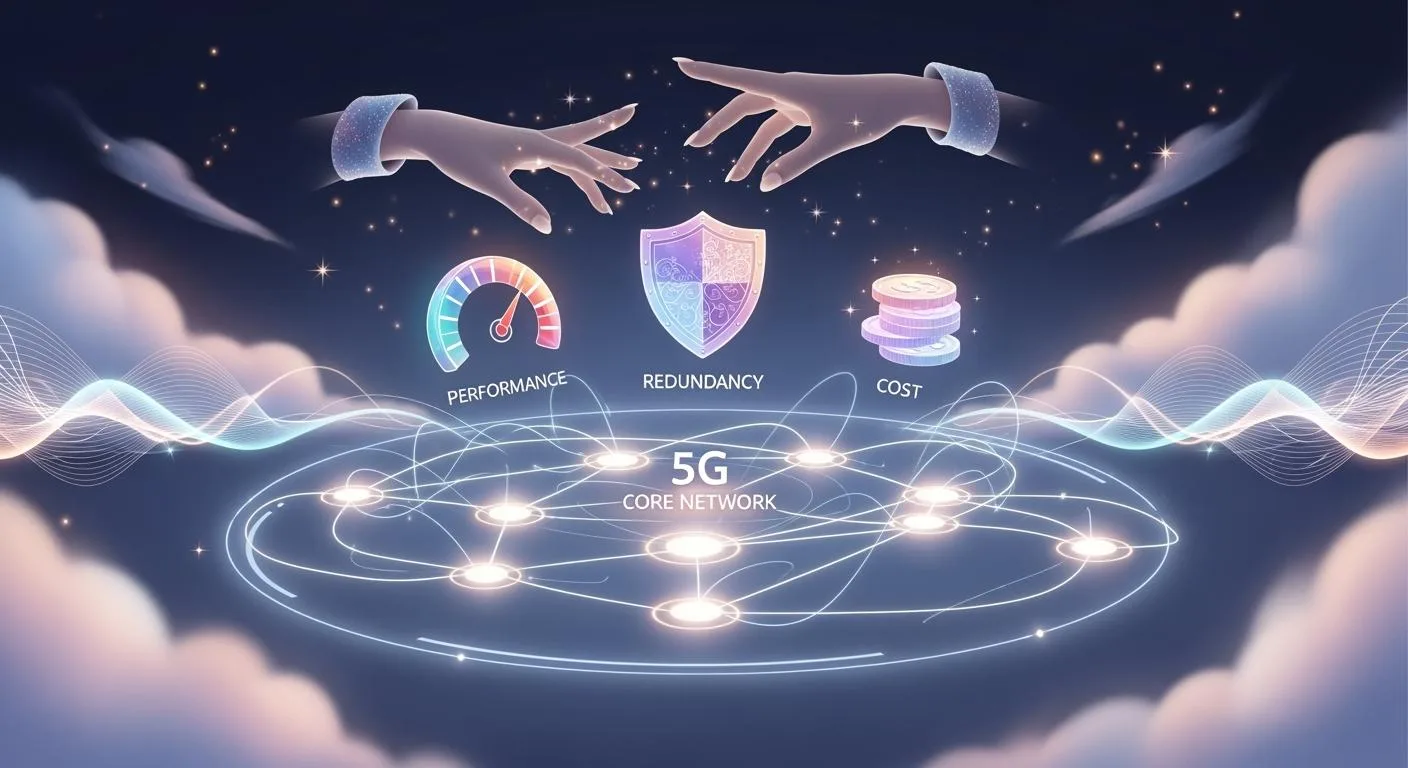
Balancing performance, redundancy, and cost in 5g core network design is a big challenge for you as a network architect. You must give smooth 5g service. You also need to keep the network reliable and not spend too much money. Recent industry reports show this balance affects user experience, reliability, and budget. Many sectors have trouble with these needs:
-
Organizations must handle fast data access and redundancy costs.
-
The telecommunications sector needs smart redundancy management for huge 5g data streams.
-
Financial services need good metrics for rules and fast transactions.
-
Healthcare makes big datasets, so it needs smart redundancy to save storage money.
-
Content streaming platforms change redundancy based on how popular and engaging content is.
You may ask how to get the right mix without losing quality or spending too much. This article will give you useful strategies and real examples to help you find that balance.
Key Takeaways
-
It is important to balance performance, redundancy, and cost in a 5G network. If you ignore any part, users may be unhappy and money could be lost.
-
Performance is important. Make sure the network has low latency and high throughput. Fast speeds are needed for things like remote surgery and gaming.
-
Redundancy helps the network stay reliable. Add backup systems to stop outages and keep service running during failures.
-
Managing costs is very important. Watch capital and operating expenses to keep the network efficient and sustainable.
-
Use auto-scaling to handle changing traffic needs. This keeps performance strong without spending too much on resources.
-
Talk to stakeholders early when planning. Their ideas help match the network design to user needs and business goals.
-
Test backup systems and network paths often. This makes sure the network is reliable and ready for surprises.
-
Choose cloud-native and service-based architectures. These methods make the network flexible and scalable while keeping costs low.
Why Balance Is Critical in 5G Core Network
Designing a 5g core network is hard. You need to balance performance, redundancy, and cost. This balance matters because it keeps the network working well and reliable. If you forget one part, you can have problems. These problems can hurt users and your business.
Risks of Imbalance
Performance vs Cost
You want fast 5g speeds and low delays. If you only care about cost, you might pick cheaper hardware or software. This can make the network slow. Users want quick downloads and smooth streaming. Cutting costs too much can make customers unhappy. You might lose money if users leave.
Tip: Always check how saving money changes speed and reliability. You need both good performance and strong reliability.
Redundancy vs Cost
Redundancy keeps your network running during failures. If you cut redundancy to save money, you risk outages. Without backup systems, one problem can stop the whole network. You need backup routes and extra hardware. This keeps the network up and reliable.
|
Risk |
Result |
|---|---|
|
Low redundancy |
More outages |
|
High cost focus |
Less reliability |
|
No failover |
Lost availability |
Impact on 5G Network Reliability
You must keep 5g network reliability high. If you do not balance performance and redundancy, you risk downtime. Users want stable connections. If the network fails, you lose trust and business. Reliability is important for healthcare and finance. These sectors need strong latency and reliability for important jobs.
Business and Regulatory Pressures
You face business and regulatory pressures. Companies want to save money but must follow rules for reliability and availability. Regulators check if your network can handle emergencies. If you do not balance cost, performance, and redundancy, you may get fined or lose your license. You must show your 5g core network can give high performance and strong reliability.
Note: Balancing these parts helps you reach business goals and follow rules. You protect your network and your reputation.
Balancing performance, redundancy, and cost is not just a technical job. It is a business need. You must keep the network reliable, fast, and affordable. If you ignore any part, you risk complaints, lost money, and trouble with regulators.
Key Pillars of 5G Core Network Design
When you build a 5g core network, you need to think about three main things: performance, redundancy, and cost. Each one helps the network work well and gives users a good experience. Let’s see why these things are important.
Performance Essentials in 5G
Latency and Throughput
You want your 5g network to be fast. Low latency means users get quick feedback when they watch videos or play games. High throughput lets lots of people use the network at once without it slowing down. If you forget about performance, users will notice delays and buffering. This can make your company look bad and people might leave for other providers. Fast speeds and high data rates are important for new services like remote surgery and smart factories.
Scalability
5g brings more devices and more data. Scalability lets your network grow as more people join. You need to handle sudden traffic spikes, like during big events or emergencies. If your network cannot scale, it will slow down or stop working. Good scalability keeps your services running well, no matter how many people connect.
Redundancy for 5G Network Reliability
Hardware and Software Redundancy
Redundancy keeps your network safe from failures. You need backup systems for both hardware and software. For example, a warehouse lost both routers because one battery failed. This shows you must have separate backup power for each device. If you use two routers with smart failover, your network stays online even if one fails. Regular checks and maintenance help you find problems before they cause outages.
-
Use two routers with smart failover.
-
Give each router its own backup power.
-
Test backup systems often.
Redundant Network Access Routes
You need more than one path for data to travel. If one path fails, another can take over. This keeps your network available and reliable. Redundant access routes are very important for places like healthcare and finance, where downtime is not allowed. You make your network stronger by planning for these backup paths.
Cost Factors in 5G Core Network
CAPEX and OPEX
You need to manage both capital expenses (CAPEX) and operating expenses (OPEX). Buying new equipment costs money. Running and fixing the network also costs money. If you spend too much, you may not get your money back. If you spend too little, your network might not work well.
|
Cost Type |
What It Covers |
Why It Matters |
|---|---|---|
|
CAPEX |
Equipment, setup |
Needed for new features |
|
OPEX |
Maintenance, support |
Keeps network running |
Long-Term Cost Management
You must plan ahead. Good cost management means you can upgrade your network as technology changes. You avoid waste and keep your services affordable. Smart planning helps you balance slicing, scalability, and reliability over time. This way, your 5g network stays strong and ready for new needs.
Tip: Always check your spending and look for ways to be more efficient without losing reliability or performance.
Trade-Offs in 5G Core Network Architecture
Performance vs Redundancy
When you design a 5g core network, you have a tough choice. You want your network to be fast. You also need it to stay up when things go wrong. If you only care about speed, you might skip backup systems. This makes your network quick, but it could go down during problems. If you add too much backup, your costs can get high. You need to find the right mix. This is important because users want both speed and a network that works all the time. If you forget backup, one problem can stop your network. If you forget speed, users will get slow service. You need both for a strong network and happy users.
Remember: Backup systems help your network keep working during trouble. Speed gives users the fast 5g they want.
Cost Optimization Strategies
You want your network to work well and be fast. You also need to watch your spending. Why does saving money matter? High costs can stop you from growing or making your network better. Smart plans help you save money and keep good service. For example, power management like C-states lets processors use less energy when not busy. This saves money but keeps things running fast. You can also start small and test before you grow bigger. Some companies build new networks with the newest tech. Others mix old and new systems to save money.
Here are some ways to save money in your 5g network:
-
Start small and grow slowly to save money.
-
Use cloud-native tools for easy growth and change.
-
Work with vendors to get new ideas and help.
-
Remove things you do not use to cut costs.
Tip: Check your network often and change how you use things. This keeps costs low and your network strong.
Decision-Making Frameworks
You need a simple way to make choices for your 5g core network. Why is this needed? Good plans help you look at speed, backup, and cost together. You can use lists or scores to compare your choices. For example, you can give points for things like how often the network goes down, how easy it is to add users, and how much it costs. This helps you pick what works best for you.
|
Factor |
High Score Means |
|---|---|
|
Reliability |
Fewer outages |
|
Availability |
Network stays online |
|
Scalability |
Easy to add users/devices |
|
Cost |
Stays within your budget |
You should check your choices often. 5g technology changes quickly. Looking at your network often helps you get ready for new things, like more users or new features. This protects your money and keeps your network strong.
Strategies for Balancing Performance, Redundancy, and Cost
Auto-Scaling and Resource Management in 5G
You must manage resources in your 5g core network. This helps you handle changing needs. Auto-scaling lets you add or remove resources fast. When more users join or traffic gets busy, auto-scaling helps. Your network stays available and reliable. It can grow or shrink as needed. You do not spend money on things you do not use. You also avoid slowdowns when lots of people connect.
Modern 5g networks use microservices and cloud setups. These help with dynamic scaling. You can add or remove network slices based on real-time needs. Automation cuts down on manual work. This makes resource use efficient. T-Mobile spent $500 million on cloud-native architecture. This helped them scale resources quickly. They handled busy times and kept connections strong for users.
Tip: Auto-scaling helps you deal with sudden traffic changes. Your network stays strong and users stay happy.
Dynamic resource allocation is very important today. The service-based architecture in 5g core networks gives flexibility. You can meet new service needs without hurting performance or reliability.
Cloud-Native and NFV Approaches
Cloud-native and NFV approaches help balance performance, redundancy, and cost. These let you run network functions in virtual spaces. This makes your network flexible and easy to grow. Edge computing lets you process data near users. This lowers latency and saves money.
Cloud-native design helps you use resources well. You can scale up or down as needed. Edge computing gives high throughput and better performance. Data does not travel far. You save money by using local processing and automation. You must plan how to use resources at the edge. This keeps performance high and makes sure network slices stay separate.
Note: Cloud-native and NFV help your network change for new needs. You get better reliability and keep costs low.
Service-Based Architecture for Flexibility
You need flexibility in your 5g core network. This helps you handle different traffic and services. Service-based architecture gives you this flexibility. Each network function is both a consumer and provider. This setup makes automation and orchestration easier.
Service-based architecture supports microservices and cloud-native scaling. Network functions use standardized APIs for flexible interactions. You can use network slicing and on-demand resources. This helps you adapt to changing service needs. Flexibility is key for high availability and reliability.
-
SBA supports microservices and cloud-native scaling.
-
Each network function is both a consumer and provider, which helps automation and orchestration.
-
SBA lets network functions use standardized APIs for flexible interactions.
-
It supports network slicing and on-demand resources, which are important for changing service needs in 5g.
You can change your network fast to meet new needs. This helps you keep high performance and reliability. Costs stay low. You also improve availability by planning for backup network routes.
Tip: Service-based architecture lets your network grow and change with your business. You are ready for new challenges and chances.
Cost-Effective Redundant Network Access Routes
You want your 5g network to work all the time. Redundant network access routes help with this. These routes give your network backup paths. If one path stops working, another path takes over. This keeps users happy and avoids downtime. Planning these routes well also saves money.
Why do you need cost-effective redundant network access routes? The answer is easy. Outages make you lose money and trust. Users want your 5g service to work every time. If your network fails, you lose customers. You could also break rules from regulators. You must add redundancy without spending too much.
There are many ways to build cost-effective redundancy:
-
Use two routers at important spots. Each router connects to a different provider. If one provider fails, the other keeps things running.
-
Pick different paths for your cables. Do not put all cables together. If one path breaks, the other still works.
-
Use cloud-native tools for routing. These tools help you manage traffic and switch paths fast. You do not need expensive hardware everywhere.
-
Use service-based architecture to control data movement. You can set rules for traffic. This helps you use backup routes only when needed.
-
Use network slicing to split traffic types. Important services get their own backup routes. Less important services share paths.
Here is a table that shows why these strategies help you:
|
Strategy |
Why It Works |
Cost Impact |
|---|---|---|
|
Dual routers |
Keeps network up if one fails |
Medium |
|
Diverse cable paths |
Stops single point of failure |
Low to Medium |
|
Cloud-native routing |
Fast, flexible, less hardware |
Low |
|
Service-based architecture rules |
Smart traffic control |
Low |
|
Network slicing |
Protects key services |
Medium |
Tip: Test your backup routes often. You want to know they work before a real problem happens.
Always ask why you need each backup route. Not every part of your network needs the same backup. Focus on the most important services first. This saves money and keeps your 5g core network strong.
Think about the future too. As your 5g network grows, you will add more users and devices. Cost-effective redundancy lets you grow without big new costs. Cloud-native tools and service-based architecture make changes easy.
You can keep your network reliable and affordable. You just need to plan your backup routes carefully. This protects your users, your business, and your budget.
Technologies Enhancing 5G Network Reliability
Robust IP Services Fabric
A strong base is important for your 5g core network. Robust IP services fabric gives this base. It helps your network handle more users and devices. You can use advanced architectures like SRv6 MUP. This makes data routing easier. SRv6 MUP lets you add features like network slicing and edge computing. You get more flexibility. You can support new services quickly.
Here is a table that shows how robust IP services fabric helps reliability in 5g networks:
|
Evidence Supporting 5G Network Reliability |
Description |
|---|---|
|
Enhanced Flexibility |
SRv6 MUP architecture makes data routing simple. It allows advanced features like network slicing and edge computing. |
|
Improved Efficiency |
The architecture saves money by using commercial IP routers. You do not need expensive custom hardware. |
|
Advanced Features |
Network slicing lets operators make different virtual connections. This improves network performance. |
|
Edge Computing |
Brings cloud services closer to users. It makes security better, lowers latency, and improves processing speed. |
Robust IP services fabric is important. It gives you tools to build a reliable and efficient 5g core network. You can support new apps and keep your network strong.
Multi-Path Connectivity
Multi-path connectivity keeps your 5g network online during problems. You use more than one path for data. If one path fails, another path keeps your network running. This protects you from outages. Users stay connected.
You need multi-path connectivity because 5g networks face many risks. Devices, cables, and routers can fail. You can use advanced network architectures with built-in redundancy. For example, you can add more amplifiers in transmitters. This makes your network more reliable. You can also use different cable routes and dual routers. These steps help you avoid single points of failure.
Tip: Test your backup paths often. You want to know your network will work when trouble comes.
Automation and Orchestration
Automation and orchestration make your 5g network smarter. You use software to control and manage your network. Automation helps you find problems before they cause outages. You can run reliability testing and device characterization. These tools let you predict failures and fix them early.
You need automation because 5g networks change fast. Manual work cannot keep up with new devices and services. Automation lets you scale resources and manage traffic quickly. Orchestration helps you set rules for how your network works. You can use these tools to keep your network reliable and efficient.
Here are some technologies that help with reliability in 5g networks:
-
Reliability testing
-
Device characterization
-
Advanced network architectures with redundancy
Automation and orchestration are important. They help you build a strong 5g core network. You keep your network running and protect your users.
Real-World Scenarios and Best Practices
Large-Scale 5G Deployments
When you look at big 5g networks, you see why balance is important. Many companies learned they must plan for growth. They also need to stop single points of failure. If they do not, the network can break and cause big trouble. Here are some main lessons:
-
Redundancy stops single points of failure and keeps things working.
-
Cost is always a worry. Building extra parts costs money, but downtime can cost more.
-
Scalability lets your system get bigger as more people join. You need this to meet demand.
-
Making backup systems work together stops problems in real-time services.
-
New tech like AI helps find problems early and makes fixing failures better.
Remember: You must plan for today and for the future. This keeps your 5g network strong and working well.
Lessons from Industry Leaders
Industry leaders show why best practices are important in 5g core network design. They use good planning and smart tools to keep networks fast and reliable. The table below shows some best practices they use:
|
Best Practice |
Description |
|---|---|
|
Capacity Planning |
Collect demand data and plan for extra bandwidth to avoid slowdowns. |
|
Failure Scenario Simulation |
Use tools to test what happens if parts of the network fail. |
|
Continuous Optimization |
Keep adjusting your network to save money and keep performance high. |
You see that leaders always adjust their radio, transport, and core networks. This helps them keep delays low and quality high. They know that making changes often keeps customers happy and saves money.
Common Pitfalls and Solutions
You may wonder why some 5g networks have problems. Common mistakes can cause issues if you do not fix them early. For example, not having standard monitoring tools makes it hard to watch encrypted traffic. The table below shows a common mistake and how to fix it:
|
Pitfall |
Description |
Solution |
|---|---|---|
|
Hard to monitor encrypted traffic without standard tools. |
Use mutual TLS for secure monitoring. |
Other mistakes include:
-
Network slicing makes things more complex and can cause errors.
-
More APIs and virtualization can make attacks easier.
-
Bad settings and weak security rules can cause outages.
To fix these problems, you need a strong security plan. Run risk checks, make threat models, and use tools like encryption and access control. Set clear rules and best practices. This keeps your 5g core network safe and protects your users.
Actionable Steps for Network Architects
Assessing Current 5G Core Network Design
You need to know where your network stands before you make changes. Start by reviewing your current 5g setup. Look at how your network handles speed, reliability, and cost. Ask yourself why your network performs well in some areas and not in others. Use network diagrams to show how everything connects. These diagrams help everyone understand the design, even if they are not engineers. You can spot weak points and see where you need more backup or better performance. This step gives you a clear picture and helps you plan your next moves.
Tip: A good network diagram makes it easier to explain your design to others.
Building a Roadmap for Reliability and Cost Efficiency
You need a plan to reach your goals. Build a roadmap that shows how you will improve reliability and manage costs. Start by setting clear goals for your 5g core network. Decide why you want to upgrade. Maybe you want to support more users or add new services. List the steps you need to take. For example, you might add more backup routes or use cloud tools to save money. Set a timeline for each step. Check your progress often. This helps you stay on track and adjust your plan if things change.
A simple roadmap might look like this:
|
Step |
Goal |
Timeline |
|---|---|---|
|
Add backup routers |
Improve reliability |
3 months |
|
Use cloud services |
Lower costs |
6 months |
|
Train staff |
Better network management |
2 months |
You need to know why each step matters. This keeps your team focused and helps you explain your choices to others.
Engaging Stakeholders
You cannot build a strong 5g network alone. You need to involve others in your plan. Start by gathering input from users, engineers, and managers. Each group has different needs. Users want fast and reliable service. Engineers care about how the network works. Managers focus on cost and business goals. When you listen to everyone, you find out why each part of the network matters.
Here is a table that shows why stakeholder engagement is important:
|
Factor |
Description |
|---|---|
|
Business Requirements |
Clear goals help you know what the network must do, like support new offices or improve user experience. |
|
Collaboration |
Working together from the start means you meet everyone’s needs. |
You should involve stakeholders early in the planning process. This helps you avoid problems later. Use diagrams and simple language to explain your ideas. This makes it easy for both technical and non-technical people to join the discussion.
-
Ask for feedback from users, engineers, and management.
-
Share your network diagrams to help everyone understand.
-
Make sure everyone knows why changes are needed.
Note: Good communication builds trust and leads to better decisions for your 5g core network.
You must balance performance, redundancy, and cost in your 5g core network. This keeps your 5g services strong and reliable for everyone. Using smart strategies helps users have a better experience. It also means less downtime and saves money.
-
Watching your network all the time helps you use resources well and makes things faster.
-
Using different links and backup systems lowers outages and saves money.
To keep improving, you should:
-
Put edge nodes in the best spots for low latency.
-
Add security at every edge.
-
Use automation to help with scaling and backup.
-
Make sure you can see everything happening in your network.
-
Plan your design to save money.
-
Test how your network works in real life.
Doing these things helps you build a better 5g network for the future.
FAQ
Why do you need to balance performance, redundancy, and cost in 5G core networks?
You need balance so your network is fast and works well. If you forget one part, you might get slow speeds or outages. You could also spend too much money.
Why does redundancy matter for 5G network reliability?
Redundancy keeps your network safe from problems. If something breaks, services keep running. This stops downtime and makes users happy.
Why should you use auto-scaling in your 5G core network?
Auto-scaling helps you change resources fast. You can handle busy times without wasting money. Your network stays strong and users get good service.
Why is cloud-native architecture important for cost management?
Cloud-native architecture helps you use resources the right way. You can add or remove things when needed. This saves money and gives you more options.
Why must you plan for long-term cost management in 5G networks?
You need to plan ahead as technology changes. Good cost management stops waste and keeps your services cheap.
Why do regulators care about redundancy and reliability in 5G networks?
Regulators want networks to work in emergencies. You must show your network can handle problems. This keeps users safe and follows the law.