
What hidden operational challenges do you face after 5G starts? In 2022, a big telecom company launched a 5G network across the country. Soon, users reported outages and slow speeds. You might think technical teams can identify most problems, but some only emerge with real traffic. These hidden operational challenges can degrade network performance, frustrate customers, and negatively impact business results.
Key Takeaways
- Hidden problems can show up after 5G starts. These problems can hurt how the network works and make users unhappy. Real use shows issues like crowding and security dangers. Testing may not find these problems. Mixing old systems with new 5G can cause trouble. It can lead to problems with working together and keeping things safe. Watching the network all the time helps find issues early. This lets people fix problems before users notice. AI can help manage the network better. It can guess and fix problems before they happen. Using data to predict issues helps keep things running. It lowers downtime and makes service better. Using both old and new ways helps move to 5G smoothly. It keeps the service strong and steady. It is important to think about energy use and being green. 5G needs more resources, so this matters a lot.
Visible vs. Hidden 5G Operational Challenges
Deployment vs. Live Operations
During deployment, you notice many challenges. These include planning, setting up hardware, and testing. You can find problems like broken hardware or software bugs before the network starts. But some issues only show up when real people use the network. You might not see these problems until there is real traffic and real-life use.
Here is a table that shows how visible and hidden operational challenges are different in 5g networks:
| Challenge Type | Description |
|---|---|
| Hidden | 5g networks move more data than ever before, so stopping congestion is harder. Small cells and higher frequency bands in 5g make congestion management even trickier. |
| Hidden | IoT devices bring big security risks to 5g networks. They cause over 78% of malware detection events in communication service provider networks. |
| Visible | Network slicing lets providers set up many virtual networks on shared equipment. This is a visible challenge because it makes managing resources harder. |
Visible challenges like network slicing are easier to spot during deployment. Hidden challenges, like congestion and security risks, often stay unnoticed until the network is live.
Overlooked Issues After Go-Live
After the network is live, you may face new problems. These issues can hurt network performance and business results. For example:
As more systems use wireless and clinical mobility grows, problems with capacity, consistency, and mobility are harder to ignore. These problems can delay care or mess up workflows. 5g brings benefits like more capacity, lower latency, and better reliability. But building a full private 5g network needs a lot of money and big changes to infrastructure.
“We knew about a 5g problem. . . . We did not know that antenna power in the United States is twice as high as in other places. We also did not know that antennas are now vertical instead of slanted. These changes hurt not just radio altimeter systems but also flight control systems on fly-by-wire planes.” —Emirates Airline President Tim Clark
You might also have trouble with coverage, slicing, and telecom rules. Technical complexity and high costs make these challenges even tougher to fix.
Why Hidden Challenges Persist
You may ask why hidden challenges keep happening after the network is stable. Here are some reasons:
- People care more about their experience than the technology, so they may not notice much change from 4g.
- Faster speeds and lower latency are good, but they do not always make the user experience better.
- The 5g icon does not make higher prices worth it for users, showing a gap between what the network can do and what people value.
You must fix these ongoing problems to make coverage, network slicing, and business results better. You need to watch the network closely after it goes live and be ready to handle new problems.
System Integration and 5G Standalone Transition
Legacy Network Integration
When you connect old systems to 5g standalone, you face many problems. Old telecom equipment uses different standards and ways to talk. This makes it hard for new 5g core parts to work well with old ones. You have to fix problems with how systems talk to each other and keep them safe. Old systems might have weak ways to send signals or unsafe connections. These weak spots can let bad people get around new 5g protections.
Some old system problems, whether by mistake or on purpose from bad suppliers, can still hurt 5g equipment and networks even if you add more security.
You need to upgrade old systems or use special tools to make sure they work with 5g standalone. If you do not do this, the network might break or people’s privacy could be at risk. You should think about why these problems keep happening. Old systems are not flexible enough for 5g core, so you have to spend money to make them better.
| Challenge Type | Description |
|---|---|
| Interoperability Issues | Different tech standards and ways to talk cause problems between systems. |
| Security and Privacy Concerns | Old systems might have weak spots that can hurt network safety. |
| Need for Upgrades | Big upgrades or special tools are needed to work with 5g standards. |
- Old system weak spots: 5g networks often need to work with old 4G LTE systems, so they get old problems like weak signals or unsafe connections. Bad people can use these weak spots to get past new 5g protections or make the network go back to old ways.
Service-Based Core Migration
To use all of 5g standalone’s power, you must move to a service-based core. This move is hard. Many telecom companies are not ready for cloud-native ways. You may see problems with how things are built and have to fix things over and over. These problems make 5g core take longer and cost more. You should ask why these problems happen. Moving to cloud-native 5g needs new skills and tools. If you are not ready for the cloud, you might fail and lose money.
Moving to service-based 5g cores brings many tech problems, mostly because you need cloud-native setups. Many companies are not ready for this, so things do not fit together well. Not being ready for the cloud means more costs, more risks, and more delays, since you may have to fix things again and again. These problems make it harder to make money from 5g, especially when people are watching how much you spend.
- Weak spots from using old systems.
- Supply chain risks if bad or careless people add weak spots.
- More ways for attackers to get in because of new tech and untrusted parts.
New Signaling Protocols
You need new signaling protocols to help 5g standalone and advanced 5g core work. These new ways bring new problems. You might see more signaling messages, which can slow down the network. Calls might take longer to start, sometimes up to six seconds. You have to set network rules just right to stop problems. Problems with how systems talk can make it hard to switch between 4G and 5g.
| Challenge Description | Impact |
|---|---|
| More signaling messages | Can make the network work less well. |
| Longer call setup times | Calls can take over 1 second to start, sometimes up to 5-6 seconds. |
| Problems with how systems talk | Switching between 4G and 5g can be hard to manage. |
| Need to set network rules just right | Needed for smooth changes and best performance. |
You should ask why these signaling problems keep happening. New ways need careful planning and lots of testing. If you go too fast, the network might not work well and users will not be happy. You have to work on making 5g core better so it works well all the time.
5G Optimization and RAN Challenges
Spectrum Efficiency Limits
You want your 5g network to be fast and handle lots of data. But you run into spectrum efficiency limits that slow things down. Spectrum is rare. You cannot make more of it, so you must use what you have wisely. This problem gets bigger as more devices connect and need more data.
- Not having enough spectrum means you must share it with many users and apps.
- Carrier aggregation and dynamic spectrum sharing help use spectrum better. These methods mix different frequency bands or let 4G and 5g use the same spectrum. These solutions are hard to manage because they make things more complicated.
- You must make many network parts work together. Compatibility problems can stop you from making things better and hurt performance.
Massive mimo and mimo help you send and get more data at once. You use lots of antennas for this. But you must deal with interference and high hardware costs. This is why spectrum efficiency limits are still a big problem for 5g optimization.
Small Cell Densification
You add small cells to your network to make it faster and lower latency. This is called small cell densification. You put many small cells close together, mostly in busy places. This helps you serve more users and apps. But you also face new problems.
- Interference can happen when small cells and macro cells are too close. You must fix these overlaps to stop drops in performance and sudden latency spikes.
- Backhaul and transport problems can slow your network. You need fast links between small cells and the main network. If fiber is not there or latency is high, you get bottlenecks that limit capacity.
- Mobility gets harder as you add more cells. You must plan how cells talk to each other. If you do not, handover failures can happen when users move.
You see that small cell densification is not just about adding more gear. You must fix these problems to really optimize 5g and give users reliable speed and low latency.
Real-Time Network Optimization
You need real-time network optimization to keep your 5g network working well. The network changes fast as users move and demand changes. You must act quickly to keep speed high and latency low.
| Technique | Description |
|---|---|
| Near-Real-Time Resource Slicing | Uses a regret-based goal. You change weights for speed, latency, and reliability to meet service needs. |
| Deep Reinforcement Learning Framework | Uses an actor-critic setup for online resource slicing. You make quick changes as the network changes. |
You use AI and machine learning to handle 5g optimization. These tools help you guess where congestion will happen and fix problems before users notice. Predictive congestion management lets you act before things get worse. Automated fault detection and self-optimizing networks (SON) help you keep things running well with less manual work.
You see why real-time network optimization is so important. Without it, you cannot give users the speed, low latency, and reliability they want from 5g. You must use smart tools and good planning to beat these hidden challenges.
Security and Privacy Risks in 5G
Expanded Attack Surface
When you run a 5g network, you face new security risks. The attack surface gets bigger because you add more antennas and connect more devices. There are more antennas now, and they collect lots of data. Directional beamforming changes how attackers try to break in. Encryption makes it harder to see passive attacks. These attacks are not as common, but they can still happen if you do not watch the network.
- More antennas give attackers more ways to get in.
- Directional beamforming stops some old attacks, but you must learn new ways to protect the network.
- Encryption hides attacks, so you need better tools to find them.
You wonder why these risks keep growing. You add more devices and antennas to make the network faster and cover more places. But this also makes the network more complicated. This complexity gives telecom teams more problems to solve. You must update your security plans as the network changes.
IoT Authentication Vulnerabilities
You connect many IoT devices to your 5g core. These devices often use weak ways to prove who they are. Attackers look for these weak spots to get into the network. Problems happen when devices use easy passwords or no encryption. You must fix these problems to keep the network safe.
- IoT devices use simple passwords that are easy to guess.
- Many devices do not use encryption, so attackers can steal data.
- You must check every device before you let it join the network.
You wonder why IoT authentication is still a big risk. You want to connect more devices to make services better, but you do not always check their security. This leaves holes in the network core. You must use strong ways to check devices and test them often to stop attackers.
Data Breaches and Privacy
You worry about data breaches and privacy when you run a 5g network. Many experts say 5g makes data breaches more likely. You must use strong encryption and controls to keep user data safe. Most cyberattacks on 5g networks use supply chain weaknesses. You must check every vendor and make sure they follow strict security rules. Many breaches happen because APIs are not safe. You must use strong ways to check who uses the network core.
65% of cybersecurity experts say 5g is a big risk for data breaches.
70% of attacks on 5g networks use supply chain weaknesses.
60% of breaches in 5g networks happen because APIs are not safe.
You wonder why these problems keep happening. You use new technology to make the network better, but you do not always update your security plans. You must stay alert and use strong controls to keep the network core and user privacy safe. You see that 5g security problems come from fast changes, more devices, and complex systems. You must act fast to fix these risks and keep the network safe.
Energy and Sustainability Concerns
High Energy Consumption
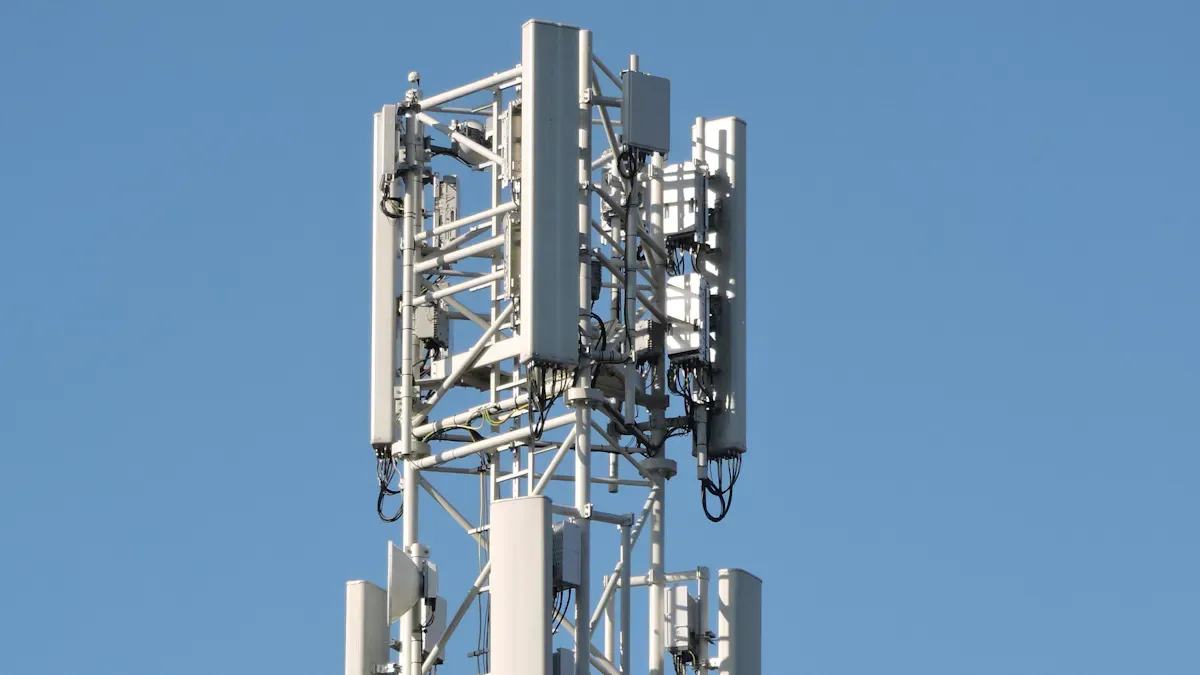
Running a 5g network uses much more energy than older networks. This happens because you need more base stations and advanced antennas. These parts work hard to handle more traffic and faster speeds. Over 70% of the energy comes from radio access network (RAN) antennas, radio units, and base station elements. Each 5g base station uses at least twice as much power as a 4G station. It manages five times more traffic. Massive MIMO antenna arrays add another 1000 watts per sector. Data centers also use a lot of energy. They can use up to 30% of the total energy for cloud computing and storage.
| Source of Energy Consumption | Description |
|---|---|
| RAN Antennas, Radio Units, Base Station Elements | Over 70% of energy used in 5g comes from these parts. |
| Base Station Power Consumption | Each 5g base station uses at least twice the power of a 4G base station and handles five times more traffic. |
| Massive MIMO Antenna Arrays | These need an extra 1000 watts per sector, which increases energy use. |
| Data Center Operations | Data centers can use up to 30% of 5g energy because of cloud computing and storage. |
You ask why energy use stays high. The reason is the need for speed and reliability. More devices and more data mean more power. You must find ways to manage this energy use or risk higher costs and environmental harm.
Non-Renewable Resource Use
You depend on non-renewable resources to keep your 5g network running. This creates problems for sustainability. More demand for bandwidth, especially for virtual reality and IoT, leads to higher carbon emissions. The current infrastructure uses non-renewable energy sources like diesel generators. This makes the problem worse. You need to fix these emissions to help sustainability.
- More bandwidth for virtual reality and IoT leads to higher carbon emissions.
- Using non-renewable energy sources makes the issue worse.
- Fixing these emissions is important for better sustainability in 5g.
Mobile network operators are starting to use renewable energy. They try solar or wind power, but local climate and grid abilities affect how much they can use these sources. You must plan carefully to use fewer non-renewable resources and support greener operations.
5g technology comes at an important time for energy efficiency. You can help industries reach sustainability goals by changing processes and behaviors.
Environmental Impact
Deploying 5g at scale causes several environmental impacts. You need many base stations, which increases energy use and greenhouse gas emissions. You see more e-waste as old devices get replaced without recycling. New infrastructure can disrupt ecosystems, especially wildlife like birds, because of radiation from cell towers. Higher energy needs mean you need a denser network, which adds to the environmental footprint.
- Adding many base stations increases energy use and greenhouse gas emissions.
- Switching to 5g creates a lot of e-waste when old devices are thrown away without recycling.
- Infrastructure can disrupt ecosystems and affect wildlife, especially birds, because of radiation from cell towers.
- 5g networks need more energy than older technologies, so you need more base stations.
You wonder why these impacts keep happening. The push for faster and more reliable connections means you need more equipment and energy. You must balance network growth with caring for the environment. You can help by starting recycling programs and using renewable energy sources.
Business and User Experience Impacts
Cost Overruns and ROI
You might think 5g will make lots of money. But costs often go up after launch. You have to buy new hardware and update software. You also need to hire skilled workers. These costs can add up quickly. Many telecom companies pay more because of surprise problems. As the network grows, you spend more on energy and fixing things. When costs rise, you might not make as much profit. You want to earn money, but hidden problems can slow this down. Careful planning and watching your spending helps keep your business strong.
SLA and Performance Gaps
You promise customers a certain level of service. This is called a Service Level Agreement, or SLA. In 5g networks, you must check many things to keep this promise. You need to watch signal quality and interference. You also check how many users the network can handle. If you do not track these, you might miss problems that hurt performance. For example, interference from other places can lower service quality. You need tools to show when something goes wrong. Standardized KPIs help you measure and compare performance. When you find gaps, you must fix them quickly. If you do not, customers may stop trusting your service.
Note: If you watch your network all the time, you can find problems early. Then you can fix them before users notice anything wrong.
Inconsistent User Experience
You want every user to have a good experience. But many things can make this hard. Inconsistent user experience happens for many reasons:
- Coverage gaps can cause dropped calls and slow data.
- Metal walls and other things can block signals inside.
- Weather and land can weaken outdoor signals.
- Interference from public networks can hurt private networks.
- Crowded cities can cause more dropped calls and slow speeds.
- Bad antenna placement or broken hardware can lower performance.
- Tall buildings can block signals.
- Many IT workers know Wi-Fi but not enough about RF for 5g problems.
These problems make it hard to give everyone the same good experience. You must train your team and check your hardware often. Careful planning is important for your network. If you do not do these things, users may notice and switch to another company.
Tip: Test your network often and train your team well. This can help you give users a better 5g experience.
Industry Solutions for 5G Operational Challenges
AI-Driven Optimization
After you launch a 5g network, you find many hidden problems. AI-driven optimization helps you fix these issues. AI can spot faults and guess problems as they happen. This lets you fix things before users notice. You need this because 5g networks are hard to manage and change fast. AI looks at traffic and finds strange patterns people might not see. You see this in smart cities and industrial IoT, where quality is very important.
AI-driven network management helps you use resources better. Self-organizing networks use AI to handle new traffic and user needs. You can control traffic and fix faults with AI tools. These tools help your network work well. You also use AI to make performance better. This helps data move faster and cuts down on delays.
AI-driven automation lets you change resources and energy use as needed. Companies like Ericsson show this lowers problems and makes service better.
Here is a table that shows how AI helps you improve your 5g core:
| Solution Type | Description |
|---|---|
| Network Slicing | AI frameworks using CNN and RNN boost throughput and optimize resource allocation. |
| Traffic Management | DRL models enable dynamic access to spectrum and improve channel selection. |
| Resource Allocation | AI techniques improve routing and reduce delays compared to traditional methods. |
| Interference Management | Neural networks enhance performance in Massive MIMO systems by approximating costly algorithms. |
| Automation | AI adapts to changing traffic patterns and improves overall network efficiency. |
You need AI because people cannot manage 5g networks fast enough. AI helps you fix problems quickly and keeps your core strong.
Predictive Analytics
You want to stop hidden problems in your 5g network. Predictive analytics helps you see issues before they happen. Machine learning models look at lots of data and find signs of trouble. You use these models to run your network and core better.
Predictive analytics does simple jobs for you. You do not have to check performance by hand. This saves time and money. You can guess when equipment will break and fix it early. This keeps your service working well. Predictive models also help you use resources based on what you expect to need. You can make things run better and stop slowdowns.
Here are some ways predictive analytics helps you:
- Doing simple jobs like checking performance
- Fixing equipment before it breaks
- Using resources based on what you will need
You see real results when you use predictive analytics. A telecom company stopped outages by guessing when towers would fail. An ISP guessed traffic needs and gave more resources during busy times. A mobile company saw where slowdowns would happen and fixed them to help users.
You need predictive analytics because hidden problems can mess up your network. By using these tools, you keep your 5g core strong and working well.
Hybrid Deployment Strategies
You have hard choices when you build a 5g network. Hybrid deployment strategies help you handle risks and hidden problems. You mix old and new tech to make a strong network. This lets you use old systems while moving to 5g core.
Hybrid strategies give you more options. You can try new features in some places and keep steady service in others. You save money by upgrading only some parts instead of everything. You also lower risks by keeping old systems while adding new 5g features.
You use hybrid deployment to fix problems with mixing systems and performance. You can run 4G and 5g at the same time, which helps with coverage and user experience. You also use hybrid models to balance energy use and help the environment. This helps you reach business goals and protect nature.
Tip: Hybrid deployment lets you change with new needs and fix hidden problems without stopping service.
You need hybrid strategies because 5g networks are tricky. By using both old and new systems, you keep your core strong and your network working well.
You will find many hidden problems after 5g goes live. These problems can make your network slow and hurt how you make money from 5g. You need to act fast and use smart tools to help:
- Zero-touch fault management and network slicing keep your network safe.
- Edge computing and digital twins help you fix things quickly.
- AI and real-time analytics help you see what users care about.
New ideas will change what happens next. The table below shows what to look for:
| Innovation Type | Why It Matters for the Future |
|---|---|
| AI & Automation | Finds and fixes problems before they get big |
| Edge Computing | Gives fast, local services |
| Cybersecurity | Keeps your network safe from new dangers |
You need to pay attention and keep learning new things. If you can change and try new ideas, you will do well with 5g in the future.
FAQ
Why do hidden 5G challenges appear after go-live?
Hidden challenges show up because real users act in new ways. Tests cannot guess every way people use the network. These problems only appear when the network is live.
Why does 5G need more energy than older networks?
5G needs more energy since it has more antennas and base stations. These parts work harder to give faster speeds and connect more devices.
Why is 5G security harder to manage?
Security is harder because 5G connects more devices and uses new tech. Attackers have more chances to break into the network.
Why do users still experience slow speeds on 5G?
Slow speeds happen if there are coverage gaps or interference. Too many users in one place can also slow things down.
Why do costs rise after 5G launches?
Costs go up after launch because you must fix new problems. You also need to upgrade equipment and hire skilled workers. These costs often surprise companies.
Why is integrating old systems with 5G difficult?
It is hard to connect old systems because they use different standards. This makes it tough for everything to work well together.
Why do IoT devices create security risks in 5G?
IoT devices cause risks because many use weak passwords and poor security. Attackers target these devices to get into the network.