You often see 5G Core Deployments have trouble showing ROI. This happens because there is a gap between what the technology can do and how you show its value. Operators get confused about the real benefits of 5G, and this makes people slow to use it. You also have to deal with hard operations and tough problems when putting things together. Problems with talking clearly also make things worse:
|
Challenge |
Description |
|---|---|
|
Many operators wait because they are not sure about the benefits, costs, and how fast they need to act. |
|
|
Unproven 5G-A use cases |
Operators want to see clear money benefits before they spend more. |
|
Spectrum & device challenges |
Rules and not enough devices make it hard to get ready and make money with 5G. |
You need real plans to fix these problems and help 5G work better.
Key Takeaways
-
5G core deployments have trouble showing ROI. This is because the benefits are not clear and costs are high.
-
People are slow to use 5G standalone networks. They are not sure about the costs and benefits.
-
It is hard to add 5G to old systems. This can make 5G take longer to start.
-
There are not enough skilled team members for 5G. Teams need training to do well.
-
It is important to explain 5G’s value clearly. This helps get more customers and users.
-
Using data-driven forecasts helps make good business plans for 5G.
-
When technical and business teams work together, projects go faster and better.
-
Buying SaaS-based solutions can lower costs. It also helps launch new 5G services faster.
Operational Challenges in 5G Core Deployments
IMS and VoNR Integration
Technical Barriers
When you connect IMS and VoNR, you face many problems. These problems can make your 5G network slow to launch. It is hard to show how it helps your business. You need to switch between 5G and LTE without dropping calls. This switch keeps calls clear and stops bad connections. If you miss this step, people will hear poor call quality. You also need to set up Quality of Service (QoS) right. This setup helps keep voice clear and delays low, which is important for VoNR. Many phones do not work with VoNR yet. Because of this, you must check your devices and plan upgrades. These problems can stop you from making money with 5G.
-
Seamless handover helps keep calls going between 5G and LTE.
-
QoS setup makes sure calls sound good and delays stay low.
-
Some devices do not use VoNR, so you need to check your network.
Resource Demands
You need lots of people and tools to connect IMS and VoNR. Your teams must set up new things and test often. You also need to watch the network for voice problems. These jobs take time and skilled workers. If you do not have enough help, your 5G plans will not work well.
Skilled Team Shortages
Training Gaps
Your teams may not know enough about 5G. The technology changes fast, so staff must learn quickly. Without training, your teams cannot fix problems or support new features. This slows down your work and hurts your business.
Talent Acquisition Issues
It is hard to hire skilled workers for 5G. Many companies want these experts, but there are not enough. You may need to compete with others to get talent. This can make your projects late and cost more.
Regulatory and Financial Hurdles
Compliance Costs
You must follow strict rules to build your 5G network. These rules can be different in each country. Meeting these rules takes time and money. You may need new tools or ways to work. These costs can lower your profits.
Investment Deferral
You may wait to spend money because returns are not clear. Operators often want proof before investing more in 5G. Waiting slows down your work and makes it hard to reach goals. You could miss early chances in the market.
Note: Problems in 5G core deployments can stop you from making money. You must fix these issues early to get the most from 5G.
Technical and Integration Issues in 5G Standalone
Legacy System Compatibility
Integration Delays
You can have big delays when you connect 5G standalone to old systems. Many operators still use 4G networks, so you must mix new 5G standalone features with old platforms. This makes the steps to connect everything more complicated. Sometimes, you need to run private 4G and 5G networks at the same time. This setup makes planning harder and slows down your move to full 5G standalone. You might need your own experts or outside help to fix these problems. These extra steps can slow down your network’s growth and make it hard to grow fast.
Maintenance Overheads
Running both old and 5G standalone systems means more work for you. You must check, fix, and update two networks. This double work makes maintenance harder. You spend more time and money on support, which lowers your ROI. Keeping both networks working adds to your costs. Even if you pay a lot at first, you may not save money fast. These problems make it hard to show clear value from your 5G core deployments.
Vendor Fragmentation
Platform Diversity
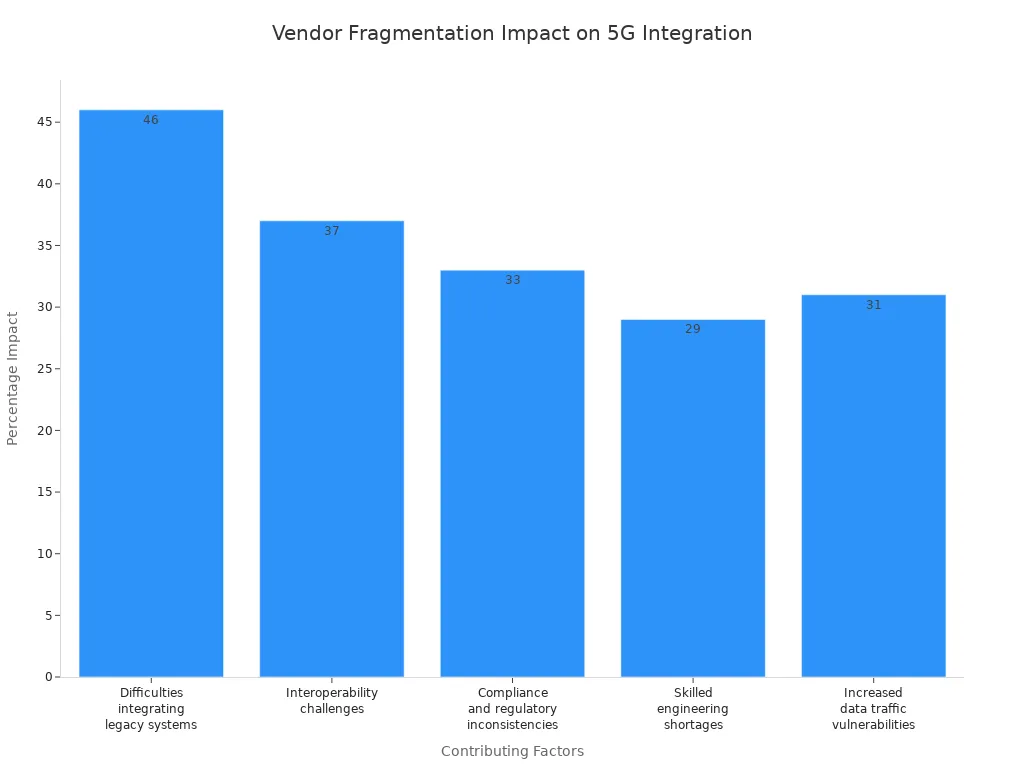
You often use many vendors when you build your 5G standalone network. Each vendor has its own platform, tools, and rules. This makes connecting everything harder. You must make sure all parts work together, which takes time and skilled workers. The table below shows how different things cause delays in 5G standalone projects:
|
Factor |
Percentage Impact |
|---|---|
|
Difficulties integrating legacy systems |
46% |
|
Interoperability challenges |
37% |
|
Compliance and regulatory inconsistencies |
33% |
|
Skilled engineering shortages |
29% |
|
Increased data traffic vulnerabilities |
31% |
|
Migration difficulties |
22-28% increase |
Interoperability Challenges
You must fix many problems when you use different vendors for your 5G standalone network. Each vendor may use different rules or ways to connect. This lack of matching can cause delays and technical problems. You may need extra testing and fixing to make sure your network works well. These problems slow down your 5G standalone rollout and make it harder to offer new business ideas.
Tip: To do well with 5G standalone, you need a clear plan for connecting and managing vendors. This helps you avoid delays and keep costs under control.
Why These Issues Hinder 5G Standalone Adoption and ROI
You see these technical and connection problems stop your 5G standalone progress for many reasons:
-
Connection problems make it hard to grow your network and make it better.
-
Running both 4G and 5G standalone networks adds planning and support problems.
-
You need skilled teams or partners to fix hard connection tasks.
-
High costs for hardware, software, and support lower your business gains.
These problems slow down your 5G standalone adoption and make it hard to show ROI. Operators who do not fix these problems may miss new business chances and fall behind in the market.
Misalignment in 5G Business Cases
Many operators have trouble with 5G business cases. They do not match what 5G can do with business goals. This mismatch causes confusion and slows things down. You need to know why these gaps happen and how they hurt your network and ROI.
Unrealistic Case Assumptions
Overestimated Demand
Operators often think people will use new 5G services fast. But real demand grows slowly. Many users keep using basic features instead of new ones. If you expect too much, your network investments do not pay off. This problem happens in many 5G core deployments. When you guess wrong, you get less money than you hoped.
-
Operators set goals based on perfect situations.
-
You use numbers that do not show real life.
-
The gap between what 5G can do and business messages leads to poor ROI.
Underestimated Costs
Operators sometimes forget about all the costs. They miss hidden expenses for upgrades, integration, and support. Multi-vendor setups and complex designs add extra charges. If you do not count every cost, your profits get smaller. You must plan for hardware, software, and support. If you skip these steps, your 5G business case will not work.
|
Cost Factor |
Impact on ROI |
|---|---|
|
Raises project cost |
|
|
Vendor management |
Adds support expense |
|
Spectrum timing |
Delays revenue |
|
Maintenance overheads |
Lowers profit |
Communication Gaps
IT vs. Business Priorities
IT teams and business leaders do not always agree. IT experts care about network performance and features. Business teams want clear plans and more money. If you do not match these goals, your business case suffers. Both sides must work together. If you skip this, your network launches slow down and ROI drops.
-
No teamwork between technical and business experts
-
Hard-to-understand solution designs
-
Not counting multi-vendor integration problems
-
Spectrum timing and allocation do not match
Consumer Messaging Failures
Operators must explain 5G value to customers. They often use technical words that confuse people. You need simple messages that show clear benefits. If you do not connect with customers, your plans lose power. People do not see why they should switch to 5G. You miss chances to grow and make money.
Tip: Use real data and clear messages for your business case. Match technical strengths with business goals to get better ROI.
You see misalignment in 5G business cases when technical abilities and business messages do not match. Wrong guesses and bad communication cause poor ROI. Careful planning and teamwork help you reach your goals.
Impact on ROI for 5G Core Deployments

You want your 5G core deployments to make money. Many operators have trouble because things take too long and cost a lot. These problems slow down how fast you earn money. It also makes it hard to reach your business goals. You need to know why these problems happen and how they hurt your plans.
Delayed Revenue
Slow Service Launches
You hope 5G will help you earn more money. But technical and other problems make you launch 5G slowly. You have to wait for network parts to work together. You also need new devices and must follow rules. Every delay means you cannot give new services to customers. Other companies might move faster and get more customers. You lose the chance to be first with new 5G features.
-
You spend time fixing network problems.
-
You wait for skilled workers to finish their jobs.
-
You test things again and again to follow rules.
These steps make your launch dates later. You make less money at the start. Your business plans do not look good because you cannot show quick wins.
Missed Opportunities
You miss important chances if you cannot launch 5G on time. Businesses and people want new network features. If you do not give them, they pick other companies. You lose early deals and partners. Your team cannot talk about special 5G offers. This delay hurts your company’s name and slows your growth.
Note: Every missed chance means less money and weaker ROI. You need to move fast to win in the market.
High Operational Costs
Running a 5G network costs a lot. These costs make it hard to show you are making money. You must pay for energy, workers, and support for both old and new systems.
Troubleshooting Expenses
You spend a lot of money fixing problems. Your teams watch the network all day and night. They fix issues, update software, and keep things safe. You need good tools to find and fix problems fast. If you use many vendors, you spend even more time and money.
Here is how ongoing costs look:
|
Ongoing Costs |
Description |
|---|---|
|
Network Management & Monitoring |
Watching the network all the time and fixing problems. |
|
Software Updates & Security Patches |
Keeping software and devices safe and up to date. |
|
SIM Provisioning & Lifecycle Management |
Giving out, managing, and removing SIMs for devices. |
|
Managed Services vs. Internal Staff |
Choosing between your own team or outside help. |
You must pick if you want your own team or outside help. Both choices cost money. These costs make it harder to reach your business goals.
Ongoing Support
You pay for support every year. These costs can be 15% to 20% of what you first spent. You also pay more for energy because 5G uses more power. 5G networks use three to four times more energy than 4G. You must keep everything updated and safe. This work never ends.
|
Aspect |
Details |
|---|---|
|
Ongoing Operational Costs |
Usually 15% to 20% of your first spending each year. |
|
Energy Consumption |
5G uses 3-4 times more energy than 4G because of more stations and work. |
|
Cost Savings |
86% of businesses say costs go down after 5G, and 60% save about 11%. |
You want to save money, but you must spend on good support. Some companies save money after 5G, but you need a smart plan. If you do not control these costs, you will not make more money.
Tip: Watch your costs closely. Try to use less energy and automate support.
Now you see why high costs and slow launches hurt your ROI. You need to plan for these problems when you make your business plans. To win with 5G, you must act fast, spend wisely, and have clear goals.
Solutions for 5G Core Deployment ROI
You want to know how real strategies can help you get better ROI in 5G core deployments. You face high costs, slow starts, and hard operations. You need answers that fix these problems and help you make money from 5G.
SaaS-Based Charging
SaaS-based charging is a new way to help 5G. This uses cloud-native technology to make your core network work like a subscription. You get more flexibility and speed, which are important for making money with 5G.
Flexible Costs
SaaS-based charging helps you control spending. You only pay for what you use, not for extra space you do not need. This lowers your first costs and makes things less complicated. You do not need to spend a lot at the start. You pay a set price each month. You can grow your 5G network as more people use it. You also make special service plans for different telecom customers without lots of extra work.
-
Subscription charging gives you what you need when you need it.
-
Pay-as-you-grow lets you add more as you get more customers.
-
Lower first costs help you avoid big money risks.
Faster Launch
You must launch new 5G services fast to stay ahead. SaaS-based charging lets you add features quickly. You can change with the market and start new services in weeks or days. This speed is very important for making money with 5G.
-
Fast feature launches help you keep up with the market.
-
Less complex work lets your teams focus on new ideas.
-
Multi-tenant charging helps you add business customers and support private networks.
Team Collaboration
You need better teamwork to solve 5G deployment problems. Teams from different areas working together get better results in cloud-native network projects.
Cross-Training
Cross-training is important. When you train your telecom staff for many jobs, they work better. Your teams fix problems faster and have less downtime. You also make your staff more flexible, which helps with 5G.
Shared KPIs
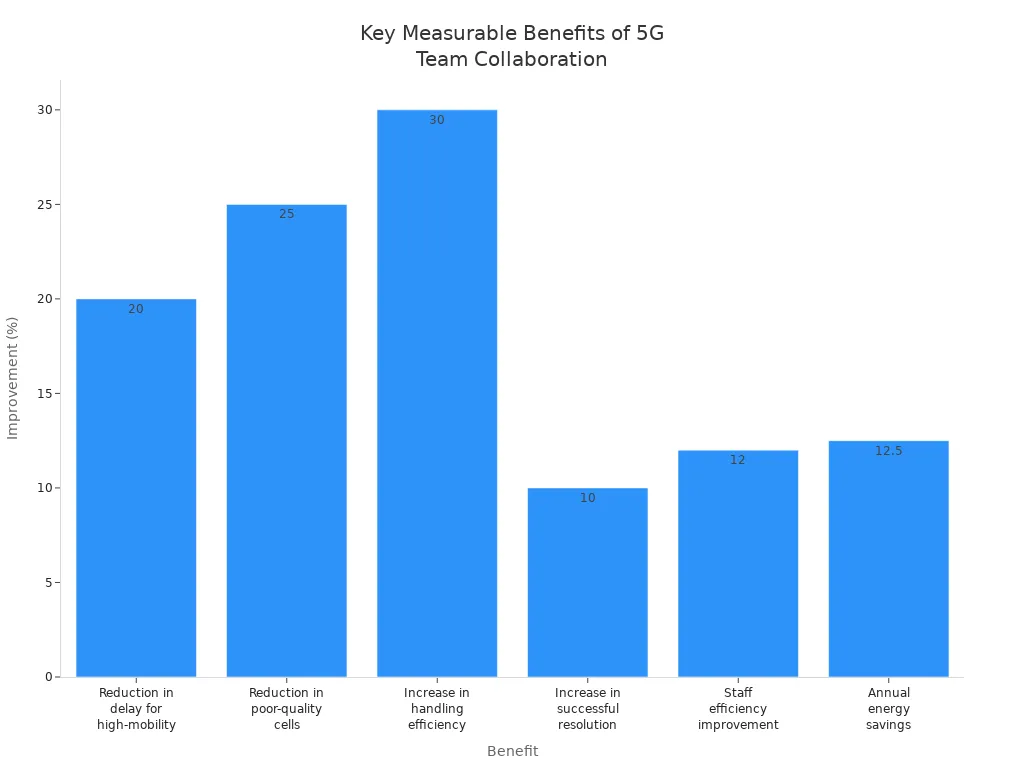
You need shared KPIs so everyone works toward the same goals. When teams have the same targets, you see real improvements.
|
Benefit Type |
Measurable Improvement |
|---|---|
|
Performance |
|
|
Customer Experience |
30% better at handling tasks |
|
Operational Efficiency |
12% better staff efficiency |
|
Energy Savings |
10-15% less energy used each year |
|
Financial Impact |
OPEX goes down by $125 million |
Realistic Case Development
You need real business cases to make money from 5G. Using real data and making changes as you go helps you avoid mistakes.
Data-Driven Forecasts
You use real numbers to set your 5G goals. This stops guessing and uses facts. You match your plan to what is really happening in the market. This helps you build better 5G business plans and get better results.
|
Evidence |
Explanation |
|---|---|
|
Too-high guesses are now replaced with real numbers |
This helps businesses match their plans to what is really happening, so 5G business cases are more real. |
|
MPN technology still matters even with problems |
This shows that knowing what the technology can do helps you make better choices. |
|
Faster deployments show more value |
Data from Nokia shows that as more 5G is used, businesses can see if they will get good returns. |
Ongoing Adjustments
You must change your plans as the market changes. Watching your network all the time and fixing things before they break keeps your 5G core working well. You need experts to help you get the best performance and keep things running.
|
Strategy |
Description |
|---|---|
|
Always watching helps you change when resources or user needs change. |
|
|
Proactive Maintenance |
Using smart tools can find problems before they cause trouble. |
|
Specialized Expertise |
Having skilled support and RF experts is key for the best core performance and reliability. |
Tip: You get better ROI when you use cloud-native tools, focus on new charging ideas, and keep your teams working together. These steps help you fix 5G network problems and get more customers.
Actionable Recommendations for 5G
Measurable Outcomes
You must check clear results to show your 5G project works. Many operators have trouble proving value because they do not measure the right things. You can use a Connectivity Index to see how your 5G network does. This index uses real data from 39 countries. It checks network coverage and how affordable your services are. These numbers help you see if your 5G plan meets your business goals.
The table below shows ways to measure your 5G outcomes:
|
Evidence Type |
Description |
|---|---|
|
Connectivity Index |
Checks 5G deployment results using real data from operators in 39 countries. |
|
Sub-indices |
Tracks network coverage and affordability, which are important for business success. |
|
Methodological Framework |
Uses the Tobit method to give scores from 0 to 100 for your 5G deployment. |
You can use these scores to show progress to your team and others. This helps you prove your 5G investment brings real value.
Tip: Set clear goals for your 5G network. Use these numbers to guide your business plans and improve your results.
Skills Investment
You must help your team learn new skills to do well with 5G. Many operators have problems because their staff do not know enough about new technology. You need to train your teams so they can handle 5G network changes. This training helps you fix problems faster and launch new services on time.
You should focus on these things:
-
Teach your staff about 5G basics and advanced features.
-
Give hands-on practice with real network tools.
-
Update training often to match new 5G standards.
When you invest in skills, you lower mistakes and delays. Your team can support both technical and business goals. This makes your 5G network stronger and helps you reach your targets.
Integration Planning
You need a good plan to connect all parts of your 5G network. Many operators fail because they do not plan for integration. Good planning makes things less complicated and helps you avoid costly mistakes. You should start with a readiness check. This step shows if your network can handle 5G changes.
Here is why integration planning matters for your 5G project:
-
Readiness checks help you move faster and avoid delays.
-
Using pre-validated, cloud-native platforms from trusted partners like Dell and Ericsson makes deployment easier.
-
Careful planning helps you spot risks that could hurt your business goals.
-
Unified infrastructure and simple life-cycle operations make daily management easier for operators.
You can lower your costs and speed up your 5G rollout with the right plan. This approach helps you meet both technical and business needs.
Note: Good integration planning is key to a smooth 5G launch. It keeps your network strong and your business on track.
Goal Alignment
You need everyone working toward the same goals for your 5g project to succeed. Many operators have trouble because their technical and commercial teams do not aim for the same results. When teams do not agree, your 5g network gets delayed. You waste resources and miss business chances. You want to know why this happens and how to fix it.
Technical teams try to build the best 5g network. They care about speed, coverage, and reliability. Commercial teams want clear business wins. They focus on new revenue, more customers, and bigger market share. If these teams do not share the same vision, your 5g project will not give you the results you expect.
You can stop these problems by using goal alignment best practices. These steps help everyone work together and keep your 5g project moving forward:
-
Structured planning helps your 5g project stay focused. You set clear goals for both technical and commercial teams.
-
Early alignment brings all key people in from the start. Your 5g network has a better chance to succeed.
-
Clear communication helps teams understand what matters most. You make sure everyone knows the main targets.
-
Defined roles and good teamwork make sure each group knows its job. You avoid confusion and overlap.
When you use these steps, you see fewer delays and better results. Your 5g network launches faster. You use your resources in smarter ways. Operators who align goals early can react to market changes and customer needs quickly.
You should check your goals often. The 5g market changes fast. You need to see if your network and business plans still match. If you find gaps, you change your approach. This habit keeps your 5g project flexible and ready for new challenges.
Operators who focus on goal alignment get stronger business results. You avoid wasted effort and use your 5g investment better. Your network supports both technical excellence and business growth. This approach helps you stand out in a busy market.
Tip: Bring your technical and commercial teams together early. Set shared goals and review them often. This step gives your 5g project the best chance for success.
You see lots of 5g core deployments fail to make money. This happens when teams do not work together on operations, technology, and business goals. If you connect these areas, you work faster and better. To get more money from future 5g projects, you should:
-
Use site-sharing so costs are split and capacity grows.
-
Pick energy-saving technologies to spend less money.
-
Use networks you already have for an easier 5g rollout.
These steps help you skip common mistakes and get better results.
FAQ
Why do 5G core deployments often fail to deliver ROI?
Operators guess costs are low and demand is high. They also have trouble connecting new and old systems. These problems make launches slow and cost more money. It becomes hard to make a profit.
Why is integration with legacy systems a major challenge?
Connecting 5G to old networks takes extra time and work. Old systems need special changes. This makes things cost more and slows down progress.
Why do operators struggle with skilled team shortages?
It is hard to find or train enough experts. 5G changes quickly. Without skilled people, you cannot fix problems or start new services fast.
Why does vendor fragmentation impact 5G ROI?
Using many vendors causes problems with how things work together. Each platform is different. This makes it harder to connect and takes more time to fix issues.
Why do regulatory requirements slow down 5G projects?
You must follow strict rules in every country. Meeting these rules takes time and money. Delays happen when you wait for approval or need new tools.
Why is clear communication important for 5G success?
You need to explain 5G in simple words. If you use hard words, customers get confused. Clear messages help you get more users and make more money.
Why do operators overestimate 5G demand?
Operators think people will want new features right away. But most people switch slowly. Guessing wrong means you miss goals and make less money.
Why should you invest in ongoing training for your teams?
Teams need new skills to run 5G networks well. Training helps staff fix problems faster and add new features. This helps your network work better and earn more money.