Network Slicing in 5G Core: The Key to Customized, Efficient, and Scalable Connectivity
In the 5G era, one-size-fits-all networks are obsolete. With applications ranging from ultra-responsive industrial robots to massive IoT sensor grids, a single network architecture can no longer meet the diverse demands of modern services. Enter network slicing—a foundational capability of the 5G Core Network (5GC) that transforms the network into a dynamic, on-demand service platform.
What Is Network Slicing?
Network slicing is a virtualization technology that enables operators to partition a single physical 5G infrastructure into multiple independent, end-to-end virtual networks. Each “slice” is optimized for specific performance requirements—such as latency, bandwidth, reliability, or security—and operates in logical isolation from others, even when sharing the same underlying hardware.
This approach embodies the vision of Network as a Service (NaaS), allowing tailored connectivity to be provisioned instantly for enterprises, industries, or consumer use cases.
Why Is Network Slicing Essential in 5G?
5G isn’t just about faster phones—it’s about enabling entirely new ecosystems:
- Autonomous vehicles requiring millisecond responses
- Smart factories with thousands of synchronized sensors
- Immersive AR/VR experiences demanding high throughput
Building a dedicated private network for each scenario would be prohibitively expensive and inefficient. Network slicing solves this by enabling multi-tenancy on a shared infrastructure, dramatically reducing CAPEX/OPEX while maximizing resource utilization.
The Three Pillars of 5G: Application Scenarios & QoS Requirements
3GPP defines three primary 5G service categories, each with distinct Quality of Service (QoS) needs:
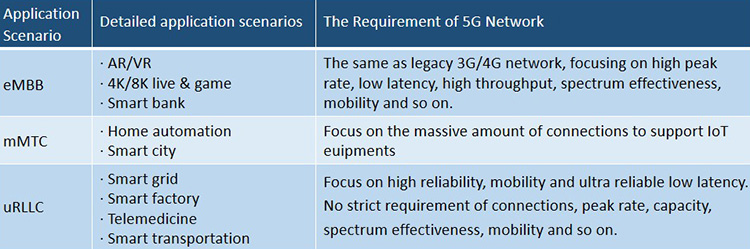
Figure: QoS characteristics across 5G’s key application scenarios
- eMBB (Enhanced Mobile Broadband): High data rates (e.g., 4K streaming, cloud gaming)
- mMTC (Massive Machine-Type Communications): Massive device density with low power consumption (e.g., smart meters, asset tracking)
- uRLLC (Ultra-Reliable Low-Latency Communications): Sub-10ms latency with 99.999% reliability (e.g., remote surgery, industrial automation)
Network slicing maps these requirements into dedicated virtual networks—ensuring that a video stream doesn’t interfere with a robotic control signal, even on the same physical tower.
Key Characteristics of IPLOOK’s 5G Network Slicing Solution
Our end-to-end slicing capabilities deliver enterprise-grade flexibility and control:
✅ End-to-End Isolation
Complete logical separation across RAN, transport, and core—between customers or between services from the same customer.
✅ Guaranteed QoS
SLA-backed performance for latency, throughput, and availability across 5G, backbone, and metro networks.
✅ Fully Customizable
Define slices by access method, terminal count, coverage area, security policies, and more—tailored to your business logic.
✅ Automated Orchestration
Cloud-native operations enable zero-touch provisioning, scaling, and lifecycle management of slices via unified orchestration.
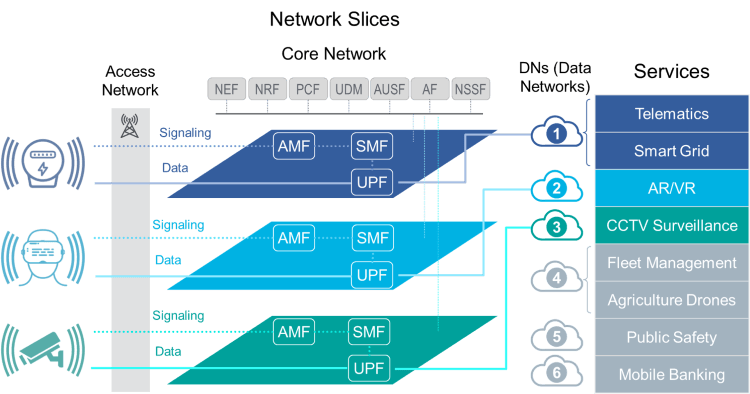
Figure: How network slicing works—from service request to automated slice deployment
The Future: One Network, Infinite Possibilities
Network slicing is not just a feature—it’s the cornerstone of 5G’s economic and technical viability. By enabling a single infrastructure to serve countless verticals—from healthcare to logistics to entertainment—it unlocks new revenue streams while optimizing operational efficiency.
As we move toward 6G and the vision of “connecting everything,” slicing will evolve to support AI-driven dynamic resource allocation, cross-domain service chaining, and real-time slice adaptation based on user context.
The era of intelligent, programmable networks has arrived.
Ready to Build Your Custom 5G Slice?
IPLOOK provides a standards-compliant, cloud-native 5GC with full network slicing support—designed for MNOs, MVNOs, and enterprises seeking agile, secure, and scalable connectivity.
Contact us today to explore how network slicing can transform your 5G strategy.