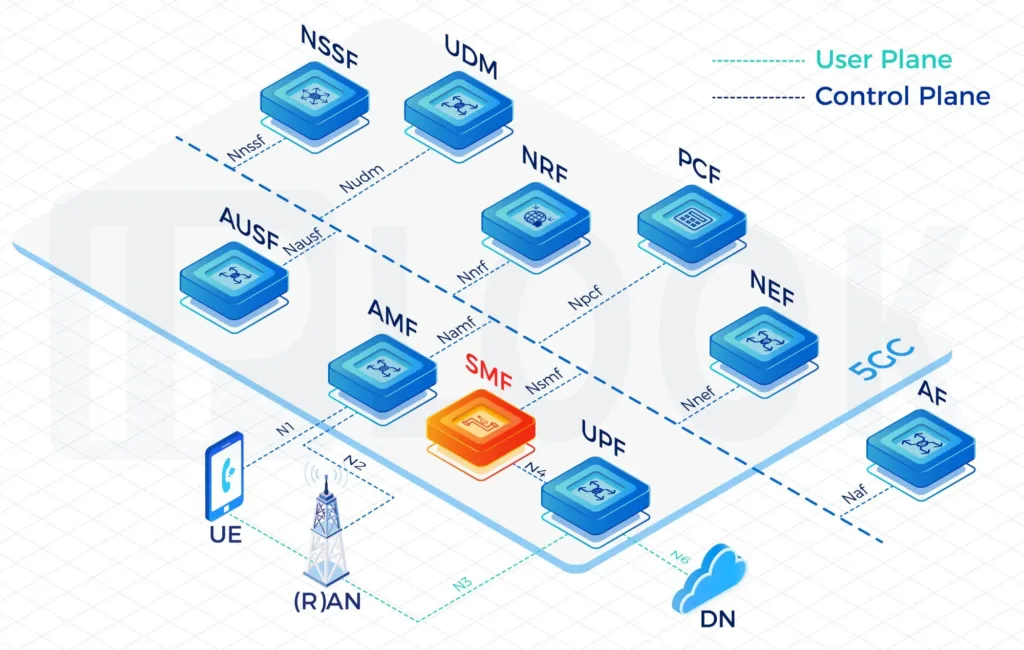
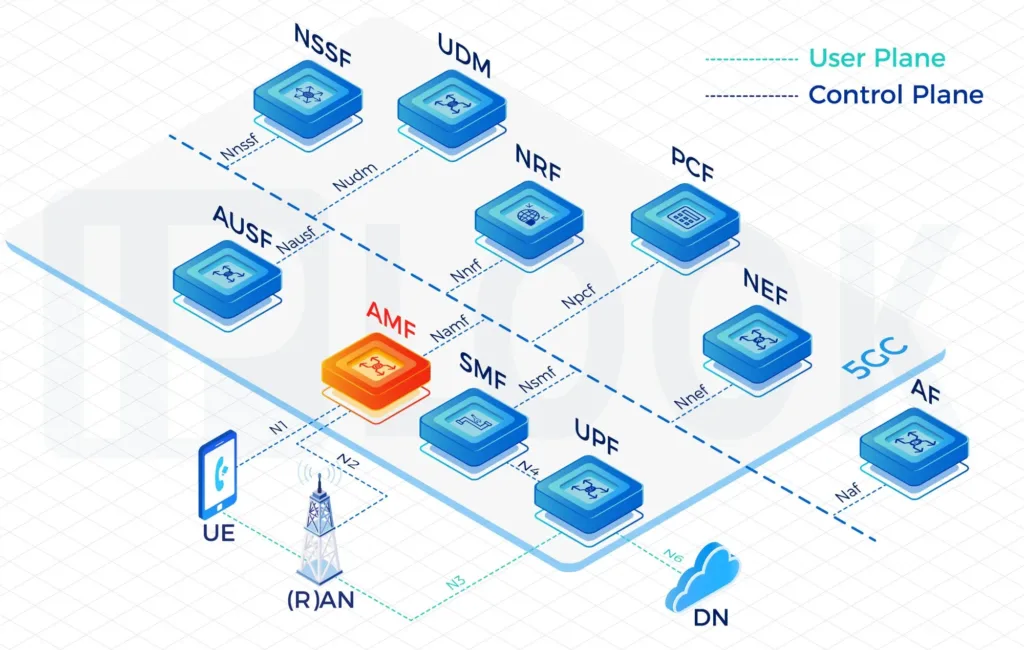
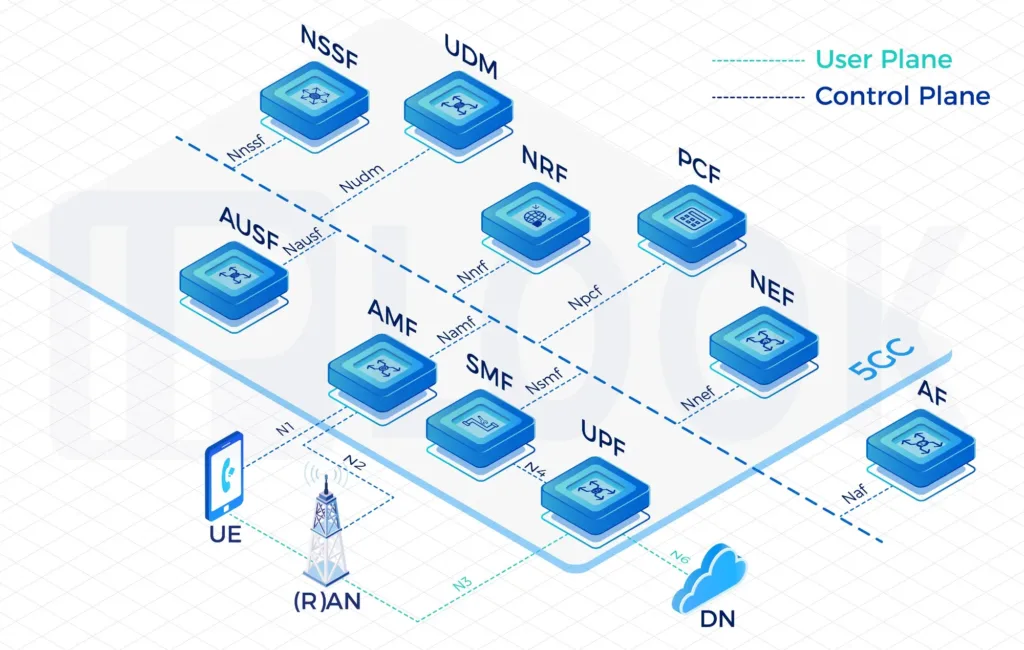
Our High-Performing Core Network
Fully virtualizable on VMware, K8S, Docker and OpenStack containers
Unified Data Management(UDM) / Authentication Server Function(AUSF)
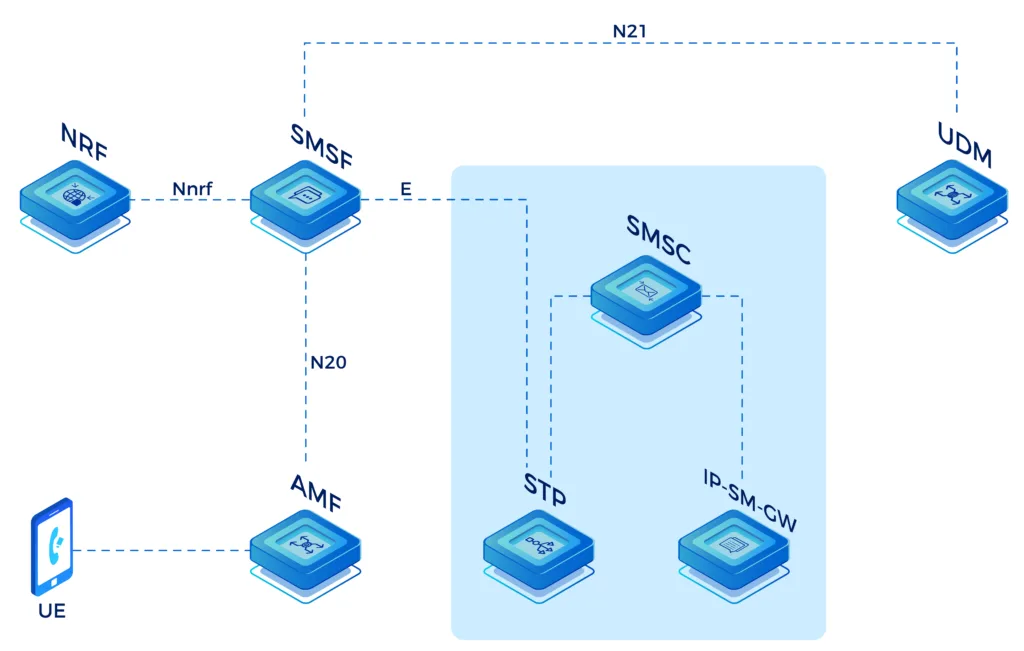
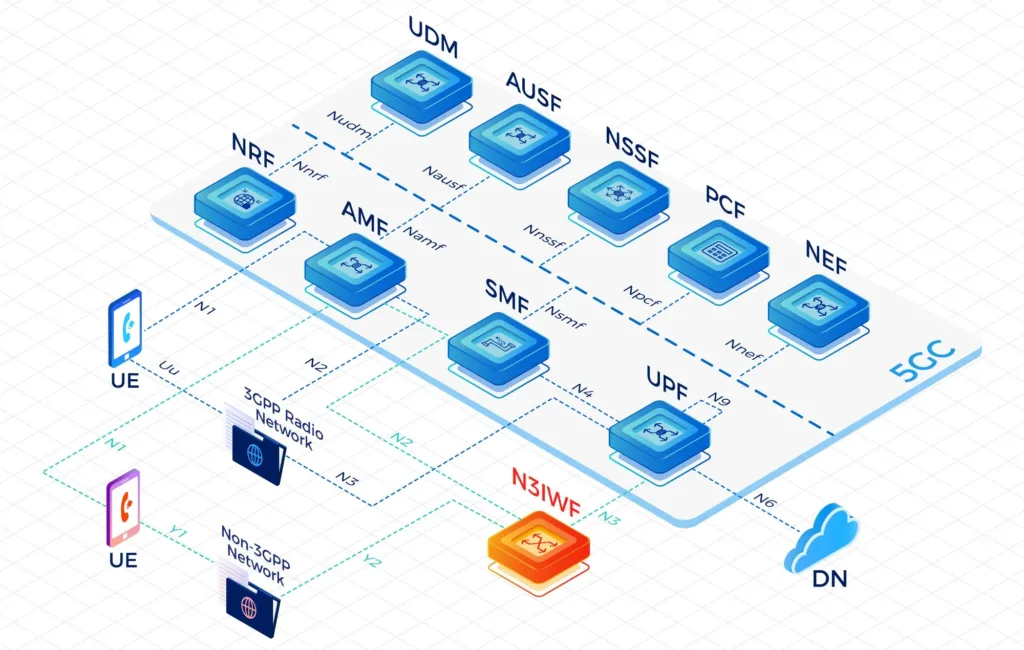
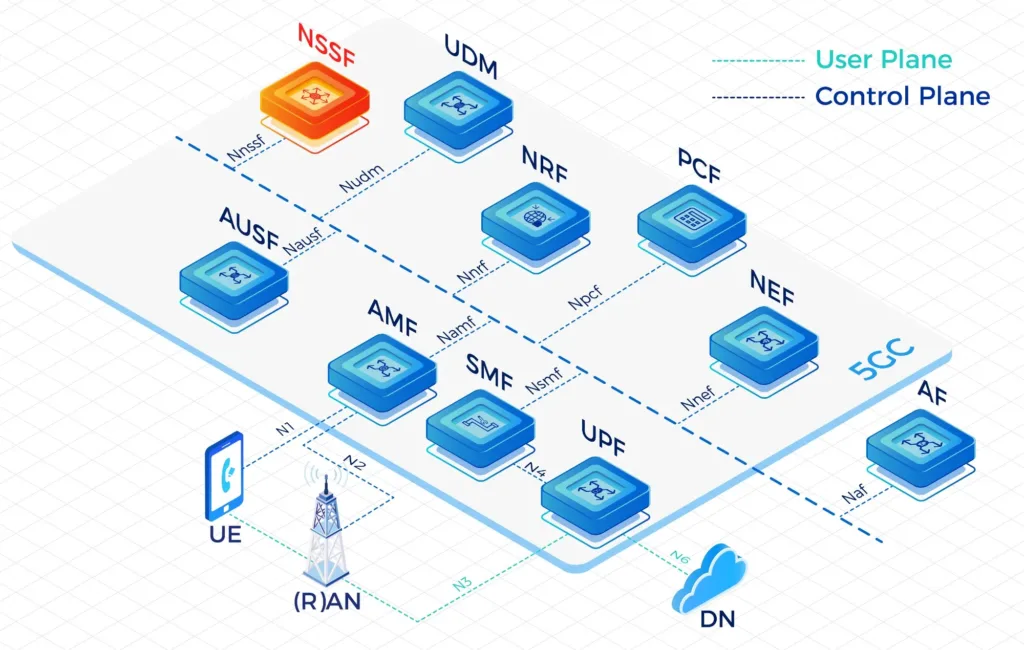
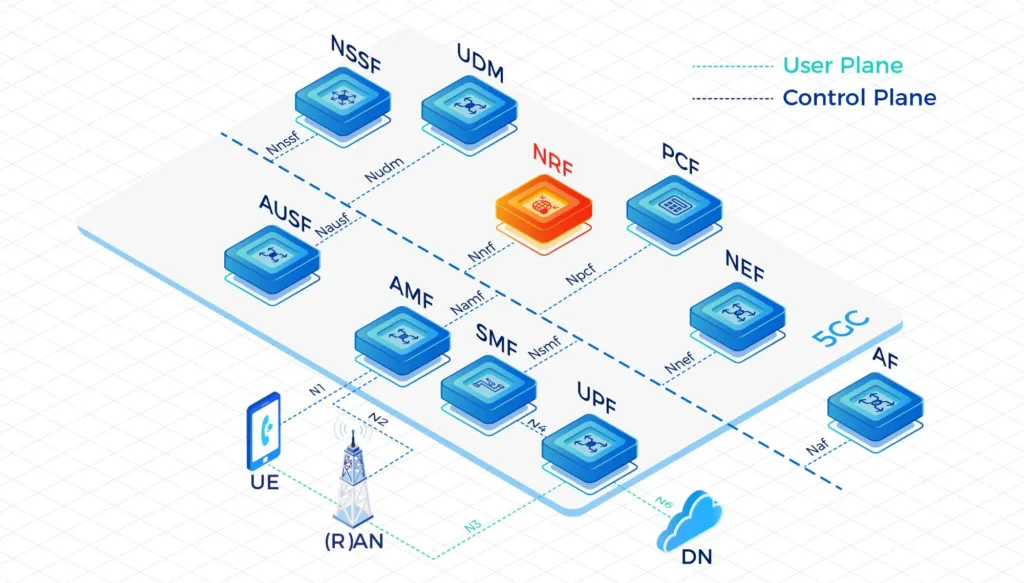
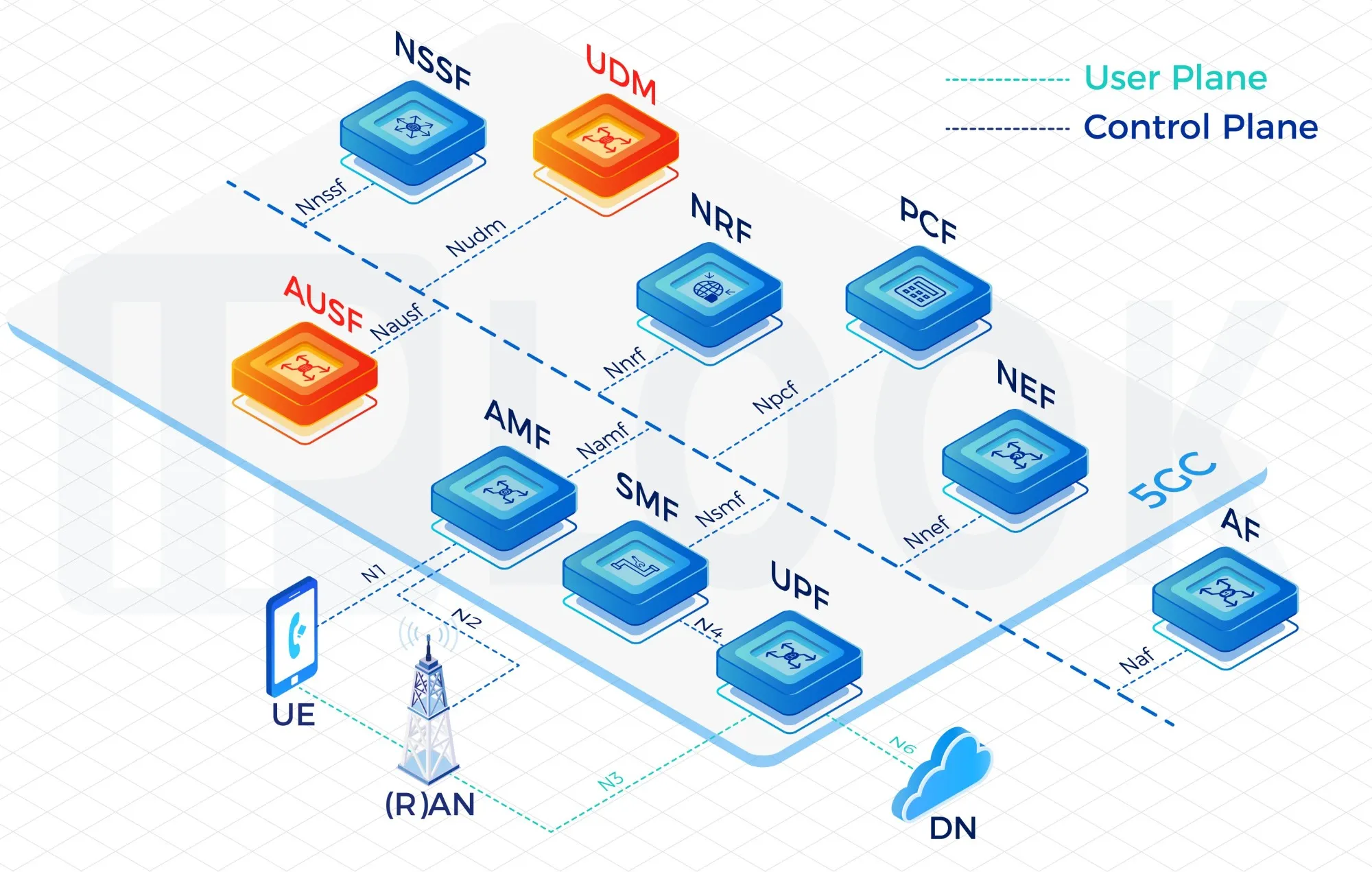
UDM: The same as 4G’ s HSS (Home Subscriber Services), UDM is a centralized way to process network user data in 5G through Nudm interfaces to provide services for AMF, SMF, SMSF, AUSF, NEF and GMLC. It also provides services such as authorization of accessing, registration, uninterrupted services.
AUSF: As a major part of 5GC to facilitate security processes, AUSF performs the authentication function of identifying UEs and storing authentication keys.
Key Benefits

Converged EPC-HSS, IMS-HSS, 5G UDM, 3G HLR functionality

Perfect compatibility with third-party core network elements

Deployed on X86 COTS server, NFV platform and Cloud

Enabled for centralized or distributed data centers
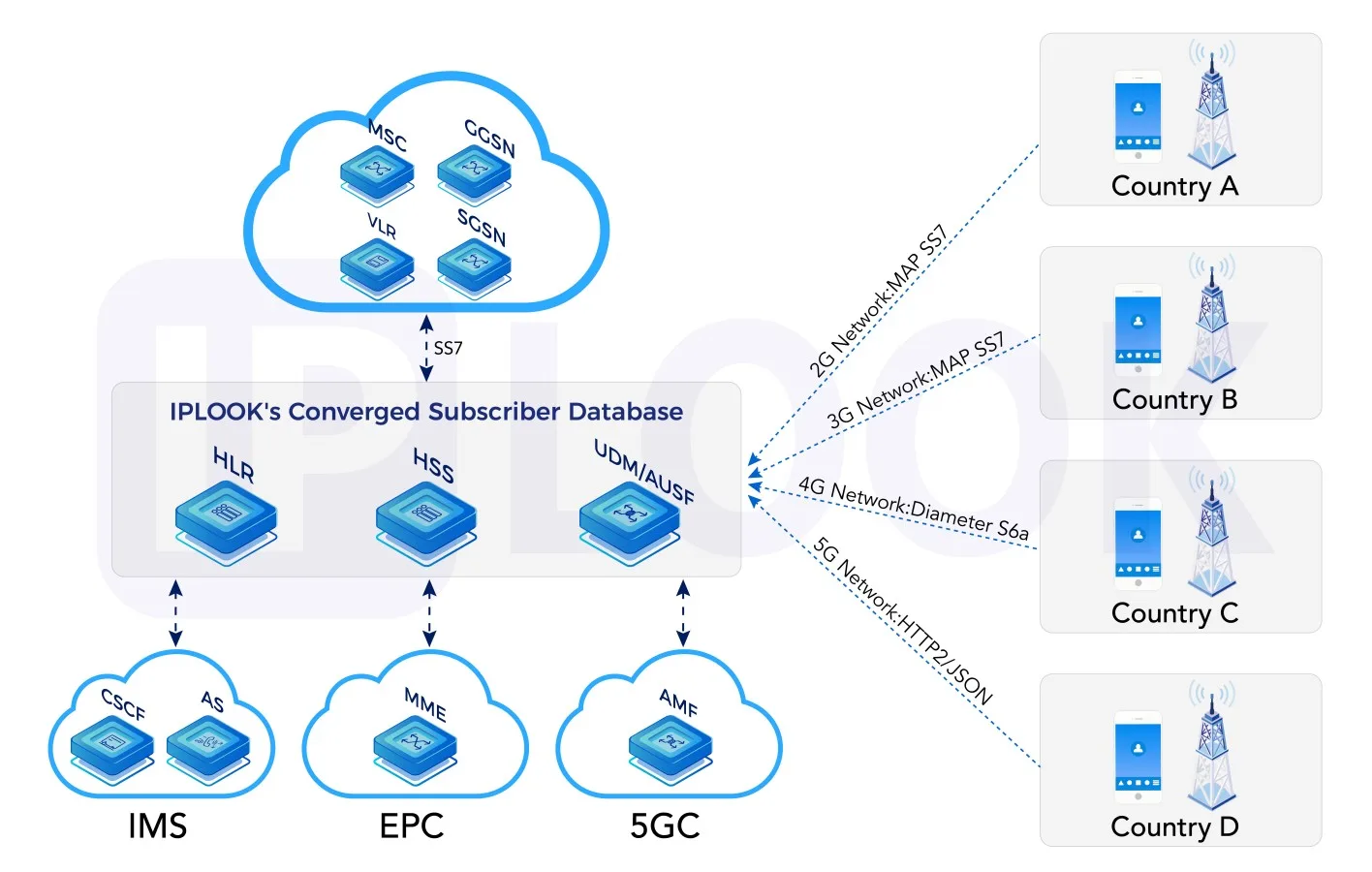
IPLOOK's 5GC UDM/AUSF
- As a unified data management center, IPLOOK UDM/AUSF can provide operators with converged data management and efficient user data processing capabilities in 2G/3G/4G/5G multiple networking scenarios. Moreover, it is compatible with both legacy services and the future 5G services, as well as protecting operators’ investment and supporting seamless network transfer.
- IPLOOK supports smooth evolution from 4G EPC HSS to 5GC UDM/AUSF, which can seamlessly migrate full user data to cloud-based UDM/AUSF.
- Our carrier-grade UDM/AUSF software is flexible and adaptable to the needs of the customer, that allows seamless migration and interworking and delivers significant feature and cost advantages over traditional products to both small and large service providers.
IPLOOK 5G Core Architecture Series
Part 01: What is UDM & Its 4 Core Functions in 5G Core?
Discover Unified Data Management (UDM) as the central brain for subscriber data: user data management, authentication credentials, SUPI/SUCI identity privacy, and subscription provisioning.
Part 02: UDM Key Procedures – Interfaces (N8, N10, N13, N21)
Understand how UDM interacts with AMF, SMF, AUSF, and SMSF via standard 3GPP interfaces for access control, subscriber state tracking, and policy rule management.
Part 03: Why UDM Matters – Subscriber Intelligence & Slicing
Explore how UDM enables seamless roaming, service personalization, Industrial IoT device authorization, network slicing, and centralized telecom data security.
Session 01: What is AUSF & Core Role in 5G Security?
Explore the Authentication Server Function (AUSF): 5G-AKA/EAP protocols, credential verification with UDM, and SUCI-to-SUPI privacy concealment.
Session 02: Key AUSF Procedures – N12, N13 & 4-Step Auth Flow
Examine AUSF operation through N12 (AMF) and N13 (UDM) interfaces, following the 4-step authentication handshake to deliver security keys and verified tokens.
Session 03: Why AUSF Matters – Zero-Trust, IoT & Private 5G
Analyze AUSF's security value: mitigating MITM attacks, ensuring regulatory compliance, and securing access across Industrial IoT, URLLC, and private enterprise 5G networks.
Features
Comply to 3GPP R15/R16 Standards
Interface Function
- Northbound Interface (RESTful API)
- MML
- SNMP
- N8 Interface
- N10 Interface
- N13 Interface
- N16 Interface
- N21 Interface
- N52 Interface
Availability Function
- Enhanced Linux OS Security
- DDoS Attack Proof
Basic Service Function
- MT
- Fault Recovery
- Event Exposure
- User Data Management
- User Profile Download
- Mobility Management
- ME Identity Check
- NIDD Authorization
- Parameter Provision
- Notification Management
- Online Subscriber Statistics
- Subscriber Data Management
Access Management
- Admission Control
Operation and Maintenance
- CLI
- SSH
- Availability
- KPI Management
- Fault Management
- Log Management
- License Management
- Configuration Management
Security Management
- Key Security Management
- Personal Data Protection
Authentication Management
- 5G AKA
- EPS-AKA
Restrict Management
- Plmn Roam Restrict
- GT Roam Restrict
Network Function Management
- NF Register
- NF Deregister
- NF Subscription
Open Northbound interface and graphical web based management interface
- API
- RESTful
FAQ
What are the primary roles of UDM and AUSF in a 5G network?
UDM (Unified Data Management): Functions similarly to the 4G HSS. It is a centralized repository for processing network user data, providing services like access authorization, registration, and session continuity.
AUSF (Authentication Server Function): Acts as the security hub of the 5GC. It performs the authentication process to identify User Equipment (UE) and securely stores authentication keys.
How does the 5G UDM differ from the 4G HSS?
While both manage subscriber data, the 5G UDM is designed with a cloud-native approach. It uses service-based interfaces (SBI) like the Nudm interface to communicate with other network functions (AMF, SMF, etc.), whereas the 4G HSS typically relies on Diameter-based protocols.
What is "Converged Data Management" in the context of IPLOOK’s solution?
IPLOOK’s solution offers a converged platform that integrates the functionality of 2G/3G HLR, 4G EPC-HSS, IMS-HSS, and 5G UDM. This allows operators to manage user data across multiple generations of mobile networks (2G through 5G) within a single, unified system.
Which authentication protocols are supported by the AUSF?
The AUSF supports industry-standard security protocols to ensure secure access to the network, specifically:
5G AKA (Authentication and Key Agreement)
EPS-AKA (for interworking and legacy compatibility)
What are the key interfaces supported by UDM/AUSF?
The system supports a wide array of 3GPP-standard interfaces and management protocols, including:
Service Interfaces: N8, N10, N13, N16, N21, and N52.
Northbound Interfaces: RESTful APIs for easy integration with external systems.
Management Protocols: MML, SNMP, CLI, and SSH.
How does the system handle security and protection against attacks?
Beyond standard authentication, the platform includes:
DDoS Attack Proofing: To ensure service availability under heavy malicious traffic.
Enhanced Linux OS Security: Hardened operating system environment.
Personal Data Protection: Features to ensure subscriber privacy and data integrity.
Can the UDM/AUSF be deployed in a virtualized or cloud environment?
Yes. The solution is designed for modern infrastructure and can be deployed on:
What features are included for Subscriber Data Management?
The UDM provides comprehensive subscriber-related functions, such as:
User Profile downloading and updates.
Mobility management and ME (Mobile Equipment) identity checks.
NIDD (Non-IP Data Delivery) authorization.
Online subscriber statistics and parameter provisioning.
Does the solution support a smooth migration from 4G to 5G?
Yes. The platform is built to support a smooth evolution from 4G EPC HSS to 5GC UDM/AUSF. It allows for the seamless migration of full user data to the cloud-based 5G system, protecting the operator's existing investment while enabling new 5G services.
How is the O&M (Operation and Maintenance) managed for these functions?
Operators can manage the UDM/AUSF through a graphical web-based management interface or a command-line interface (CLI). Key O&M features include:
KPI Management: Monitoring network performance indicators.
Fault & Log Management: Real-time troubleshooting and historical analysis.
Configuration & License Management: Flexible system adjustments and scaling.