Our High-Performing Core Network
Fully virtualizable on VMware, K8S, Docker and OpenStack containers
Access and Mobility Management Function(AMF)
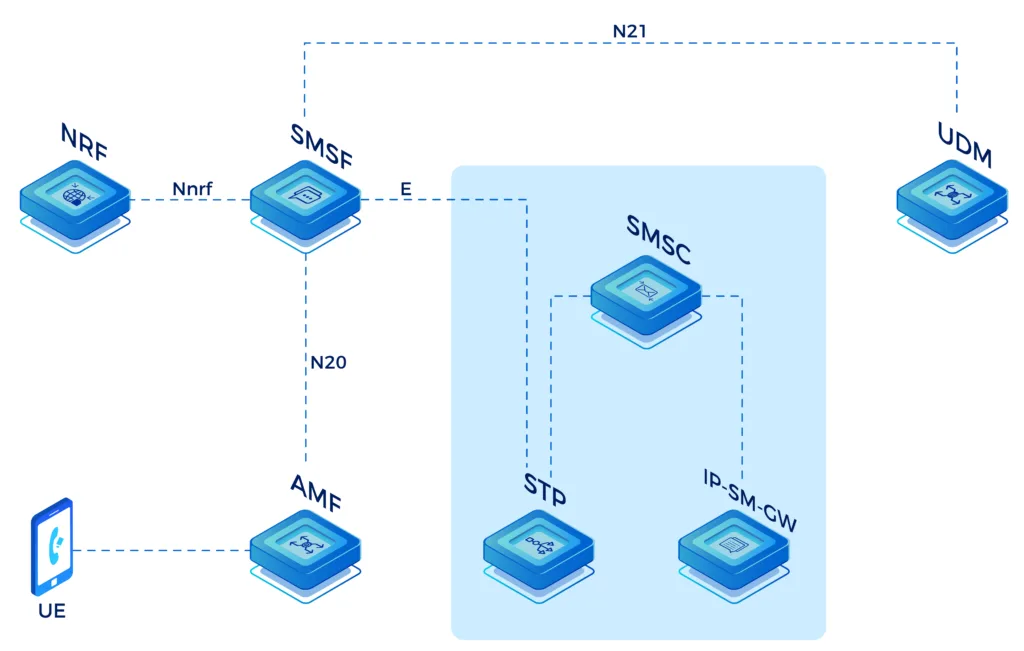
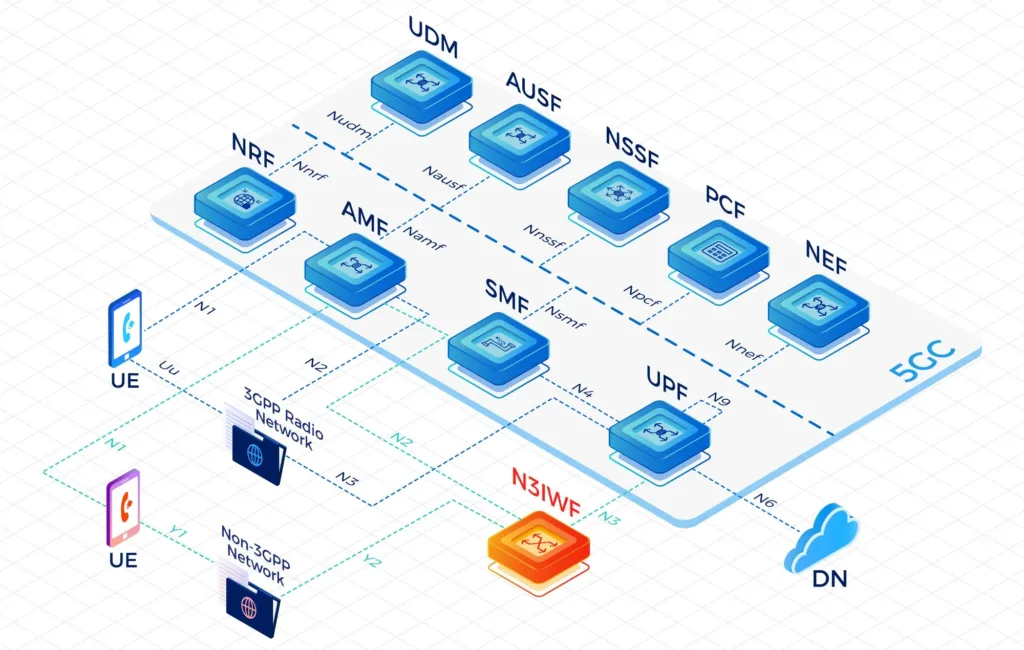
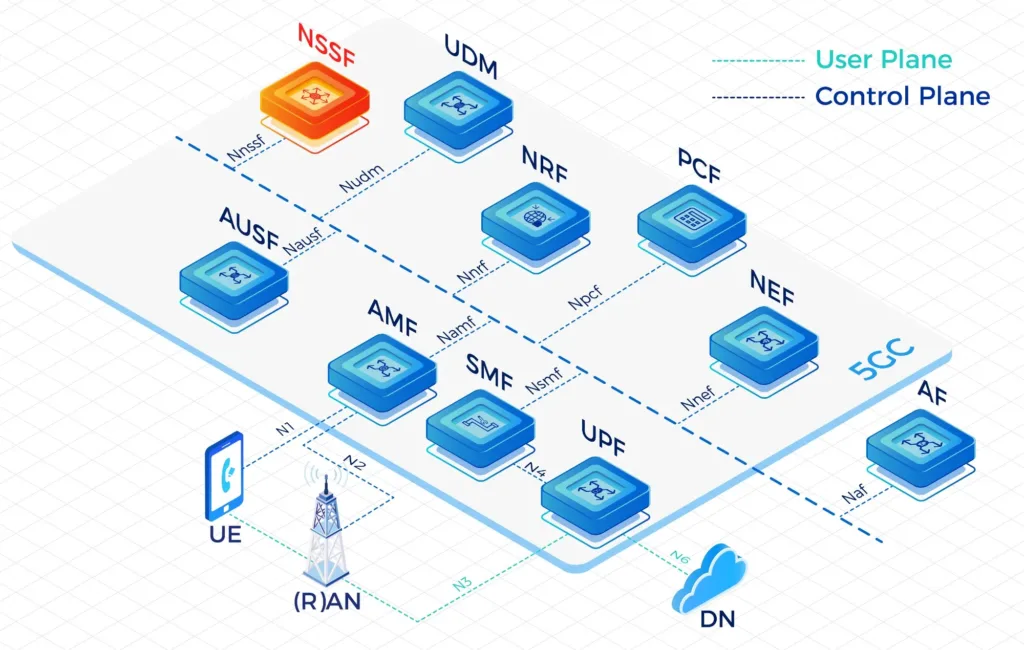
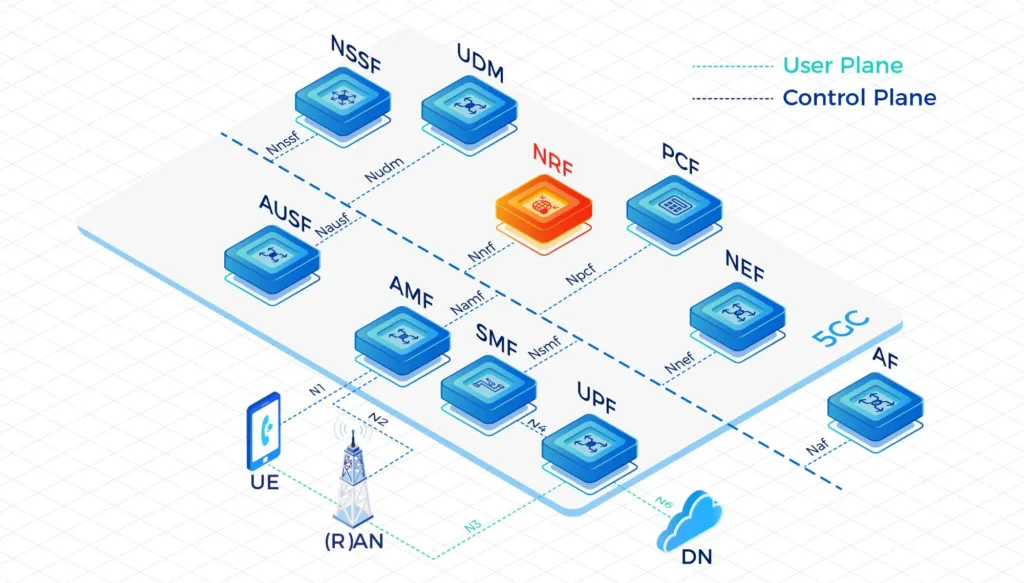
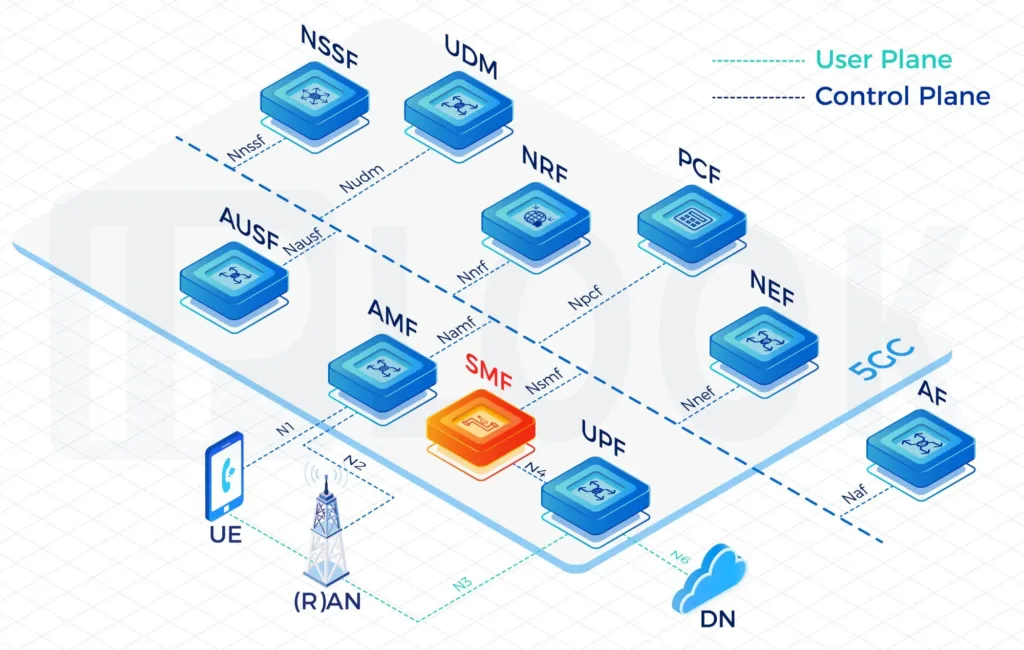
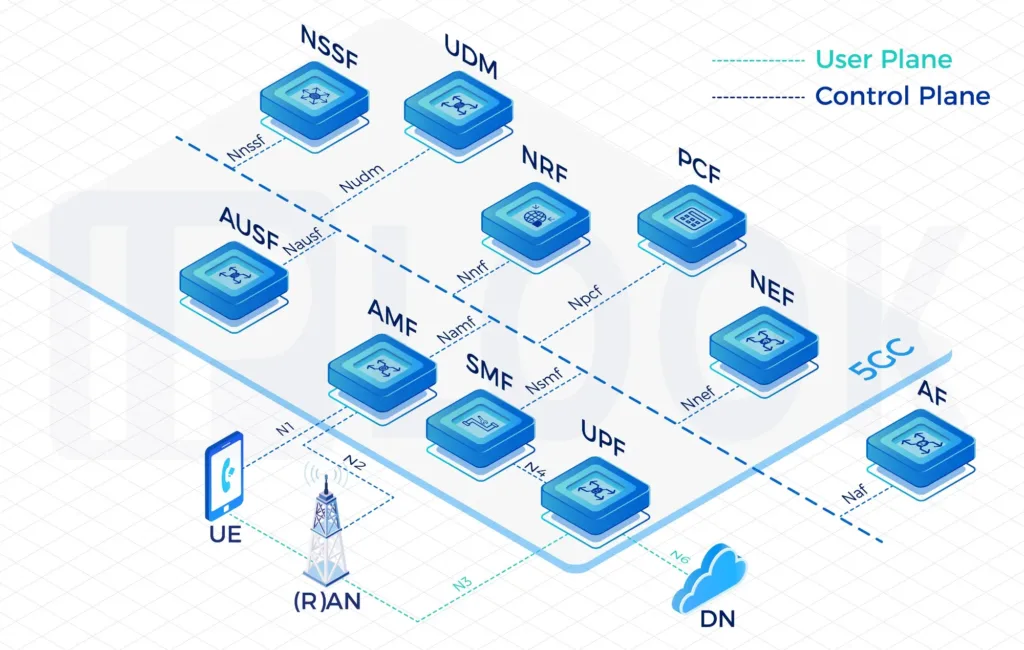
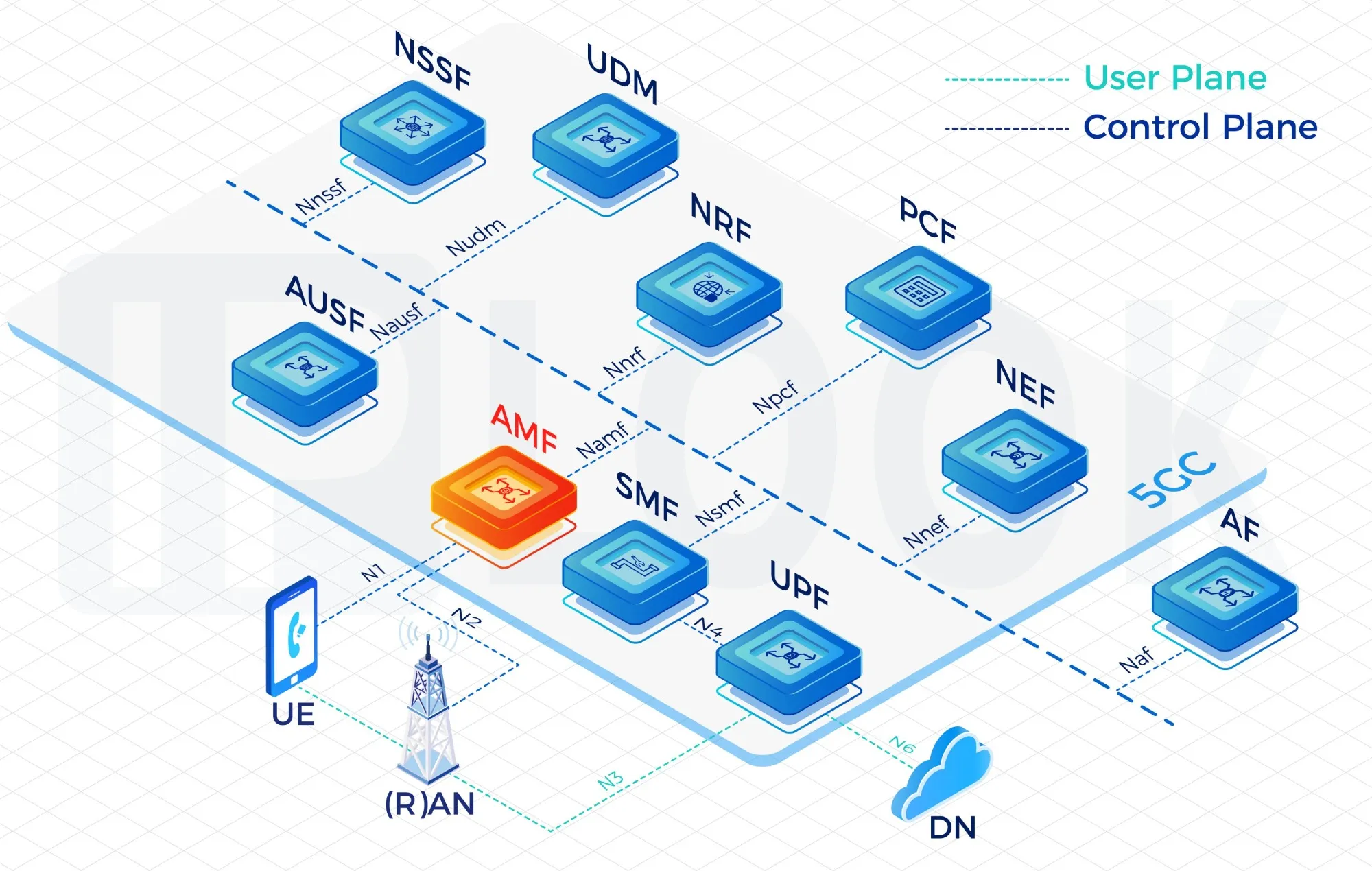
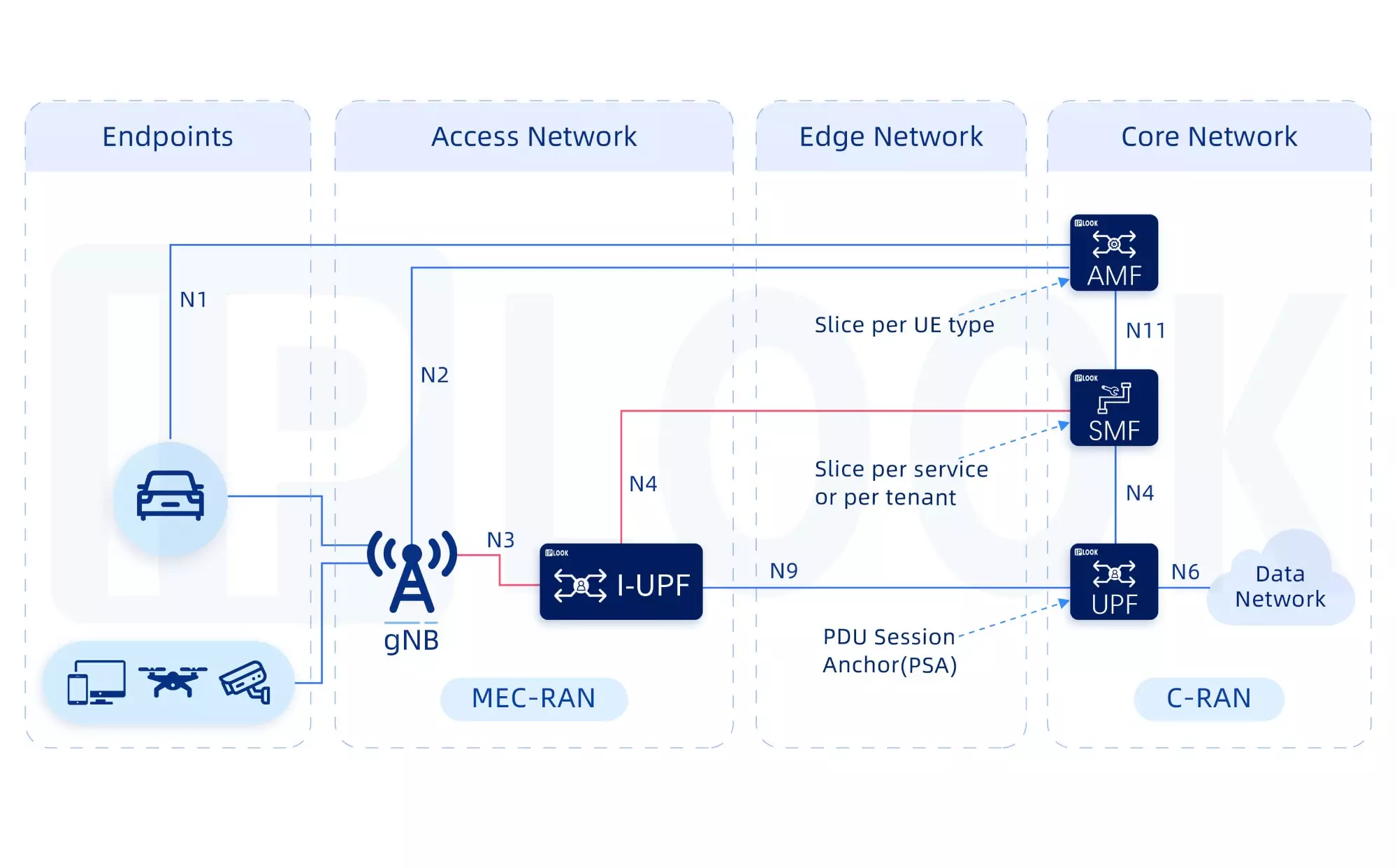
AMF terminates the control plane of different access networks onto the 5G Core Network(5GC) and control which UEs can access the 5GC to exchange traffic with DNs. It also manages the mobility of UEs when they roam from one gNB to another for session continuity, whenever possible.
Key Benefits

Converged EPC MME and 5GC AMF core network function

Perfect compatibility with third-party core network elements

Deployed on X86 COTS server, NFV platform and Cloud
Enabled for centralized or distributed data centers
IPLOOK's 5GC AMF
- IPLOOK 5GC AMF supports registration management, access control and mobility management function for all 3GPP accesses as well as non-3GPP accesses such as WLAN. AMF also receives mobility related policies from PCF (e.g. mobility restrictions) and forwards them to the UE. AMF fully supports 4G interoperability with the interface to 4G EPC MME node.
- Assuming the responsible for mobility management, the AMF is in charge for managing handovers between gNodeB’s (gNB’s), within the Next Generation Radio Access Network (NG-RAN). Formally referred to as an X2 handover, in 5G it is termed an Xn handover. This represents the updated reference interface application protocol (XnAP) employed between gNB base stations, which is defined within the 3GPP’s Technical Specification (TS) 38.423.
IPLOOK AMF Video Series: Seamless 5G Access & Mobility
Part 01: What is AMF & Its Core Roles in 5G Core?
Understand the Access and Mobility Management Function (AMF) as the gatekeeper and traffic controller of 5GC: access verification, seamless handover mobility, and session signaling coordination.
Part 02: Key AMF Procedures – 4-Step Network Handshake & UDM
Explore the 4-step registration process when devices attach to 5G. Discover how AMF collaborates with UDM (Unified Data Management) for identity verification and personalized profile setup.
Part 03: Why AMF Matters for Seamless 5G Mobility & IoT
Analyze how AMF delivers zero-lag handovers for phones, smart factory AGVs, and connected vehicles, while powering enterprise security, QoS policy enforcement, and edge computing.
Features
Comply to 3GPP R15/R16 Standards
Interface Function
- S6a/S6d Interface
- N1 Interface
- N2 Interface
- N8 Interface
- N11 Interface
- N12 Interface
- N14 Interface
- N15 Interface
- N22 Interface
- N26 Interface
- Web Server
Mobility Management
- Registration
- UE-initiated Deregistration
- AMF-initiated Deregistration
- UDM-initiated Deregistration
- Mobility Registration Update
- Periodic Registration Update
- UE triggered Service Request
- Network Triggered Service Request(Paging)
- RAN Configuration Update
- N2 release procedure
- Xn-based handover
- Intra AMF N2-based handover
- Inter AMF N2-based handover
- Location Report
- UE Configuration Update
- AMF Configuration Update
- 5GS to EPS Handover(Idle State)
- EPS to 5GS Handover(Idle State)
- 5GS to EPS Handover(Connect State)
- EPS bearer ID allocation
- AM Policy Control
- UE Policy Control
- MICO Mode
- AMF Reallocation
- Network Slice Selection
Element Management System(EMS) supported
Session Management
- PDU session establishment
- PDU session modification
- PDU session release
Operation and Maintenance
- KPI Management
- Fault Management
- Log Management
- Configuration Management
- License Management
- CLI
- Remote Operation and Maintenance
- Telnet
- Stelnet
- SFTP
- Daylight Saving Time
- Online Support
- Online Loading
- SSH
- Availability
Security Management
- NAS Security Mode Command
- The authentication and key agreement(5G AKA)
- User Identity Confidentiality
- GUTI Reallocation
- User Data and Signalling Confidentiality
Network Function Management
- NF Register
- NF Subscription
- NF Deregister
- Access Token
Open Northbound interface and graphical web based management interface
- API
- RESTful
FAQ
What are the primary functions of the AMF in a 5G network?
The Access and Mobility Management Function (AMF) is essential for UE authentication, authorization, and registration. It manages user states and tracks location areas to ensure seamless service continuity and network accessibility as users move across the network.
How does the IPLOOK AMF support 4G and 5G network interoperability?
Our AMF supports smooth migration through LTE to 5G SA network reselection and handover. It interfaces with the MME via the N26 interface to facilitate these transitions. Additionally, it supports EPS Fallback, allowing voice calls to fall back to the 4G VoLTE network via switching or redirection.
What mechanisms are in place to ensure carrier-grade reliability for the AMF?
The system employs process-level active-standby deployment with real-time data backup; if a main process fails, a standby process takes over immediately. It also supports SCTP link backup to restore coupling without rebuilding it after a failure and features AMF POOL redundancy to distribute loads across multiple elements.
What is the maximum registration capacity and processing speed (CAPS) of the AMF?
The IPLOOK AMF is highly scalable, supporting a registration capacity ranging from 1,000 to 1,000,000 users. It can process between 100 and 4,000 Call Attempts Per Second (CAPS), ensuring high-performance handling of signaling traffic.
How quickly can the AMF recover from a primary node failure?
In the event of a failure, the AMF supports primary/backup switchover within 10 seconds. This rapid transition, combined with an MTBF (Mean Time Between Failures) of over 150,000 hours, ensures maximum network uptime.
Does the AMF provide robust security for user identities and signaling?
Yes, security is a priority. The AMF supports network user identity confidentiality, IMEI checks, and NAS signaling encryption and integrity protection. It also features IPv4/IPv6 dual-stack access for secure and flexible networking.
Which virtualization and cloud platforms are compatible with the AMF?
The AMF supports a wide variety of deployment methods, including server bare metal, KVM virtual machines, and cloud-native containers via Kubernetes and OpenStack. It also supports management through the MANO platform.
What are the typical hardware requirements for supporting 100,000 users?
Based on our estimation models, a deployment for 100,000 users typically requires a resource configuration of 32C CPU and 64GB RAM. For larger scales up to 1,000,000 users, we recommend a distributed setup of four such nodes (4 * 40C, 128GB).