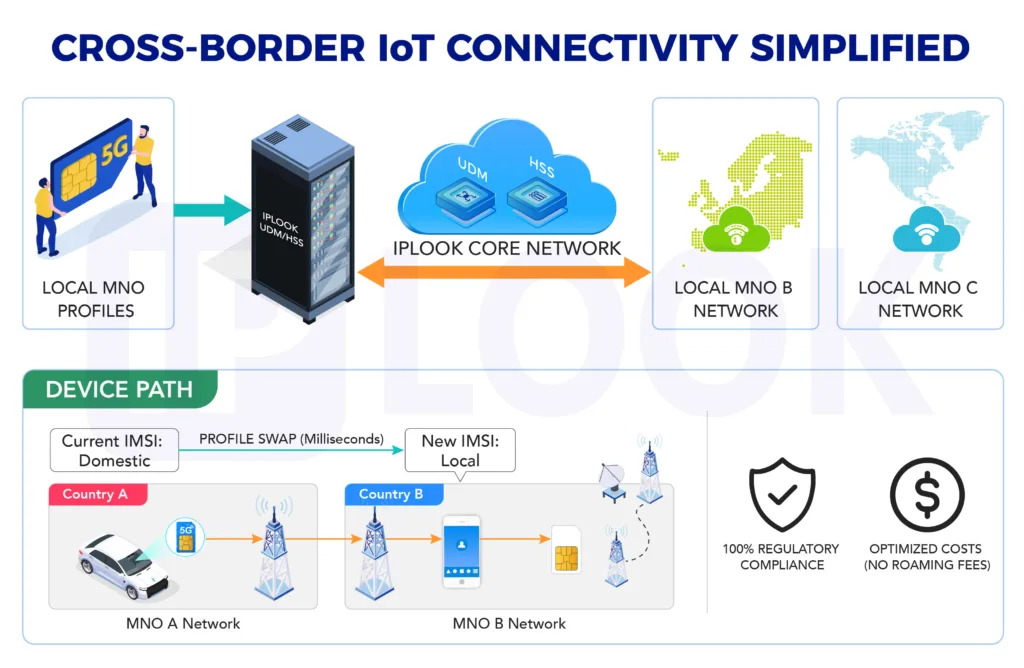
Regulatory policies across the globe, particularly strict rules rolled out by European Union authorities, have imposed heavy restrictions on permanent roaming services. Conventional roaming SIM cards now bring two severe challenges to IoT businesses and IoT MVNO operators. Frequent unexpected disconnections disrupt stable device operation, while roaming charges keep climbing and erode profit margins. For enterprise clients and virtual operators focusing on IoT services, global wireless connectivity is no longer judged solely by signal coverage. Full compliance with cross border telecom regulations has become an indispensable core requirement for cross regional IoT deployment.
Defects of Traditional Fixed Identity Roaming Mode
Many IoT operators struggle to balance stable international device access and regulatory compliance. Traditional roaming frameworks rely on fixed subscriber identity information, which makes IoT devices easily identified as permanent roaming terminals once they stay in foreign territories for a long time. This triggers large fines from local regulators and inflated roaming settlement fees from partner mobile network operators. Operators need a fundamental solution built on core network capabilities rather than simple SIM card configuration adjustments.
Three Automated Steps of IPLOOK Multi IMSI Switching Mechanism
IPLOOK’s core network system delivers a complete multi IMSI switching mechanism that automatically adapts device identities when IoT hardware crosses national borders. The whole process runs through three continuous, automated steps without manual intervention.
Network Trigger Initiates Identity Switch Logic
The first step is the network trigger. When an IoT device moves across a national boundary, its built-in communication module automatically identifies the new local mobile network and sends an Attach Request signal to the core network. This action marks the start of identity switching logic.
UDM & HSS Complete Millisecond Level Signaling Interaction
The second step is intelligent core network scheduling. IPLOOK’s integrated Unified Data Management and HSS modules respond to the request within milliseconds. The system completes secure signaling interaction with the visited local network in real time, laying the foundation for seamless identity replacement.
Dynamic Local IMSI Profile Switch Realizes Full Compliance
The third step is dynamic subscriber profile switching. The UDM platform automatically activates a local IMSI profile pre stored on the device’s eUICC or physical SIM card. After the switch finishes, the local mobile network operator recognizes the IoT terminal as a regular domestic subscriber device. This mechanism eliminates permanent roaming related penalties completely, removes expensive cross border roaming charges, and keeps all service operations fully aligned with global roaming regulatory standards.
Core Network Layer Processing Simplifies Global IoT Deployment
All complicated identity switching logic runs on the core network signaling plane managed by IPLOOK. Operators do not need to modify terminal hardware or deploy additional edge equipment. The unified core architecture removes all regulatory barriers for global IoT layout, and maintains consistent high speed, low cost localized connectivity for massive distributed IoT equipment worldwide.
IPLOOK Unified Core Network for Compliant Global IoT Connectivity
Regulatory compliance risks will seriously delay the rollout of your cross border IoT projects if you stay with outdated fixed SIM roaming solutions. If you operate an IoT MVNO or run enterprise global IoT business, IPLOOK’s unified core network with native multi IMSI dynamic switching function is your reliable solution. Our integrated UDM and HSS modules support automatic cross border IMSI profile replacement, fully eliminate permanent roaming fines and excessive roaming costs, and help you achieve fully compliant global IoT connectivity with stable high speed access.