The global mobile virtual network operator market is entering a high-speed growth cycle. Industry data forecasts its total value will rise from 85 billion US dollars in 2024 to 155 billion US dollars in 2031, with an annual compound growth rate of 8.9 percent. Europe and the Asia Pacific region stand out as the fastest expanding markets, bringing massive commercial opportunities for new market entrants. Before launching an MVNO project, operators must clarify core definitions, mainstream operation models and standardized launch procedures to avoid blind investment and low profit margins.

Distinguishing Core Industry Concepts
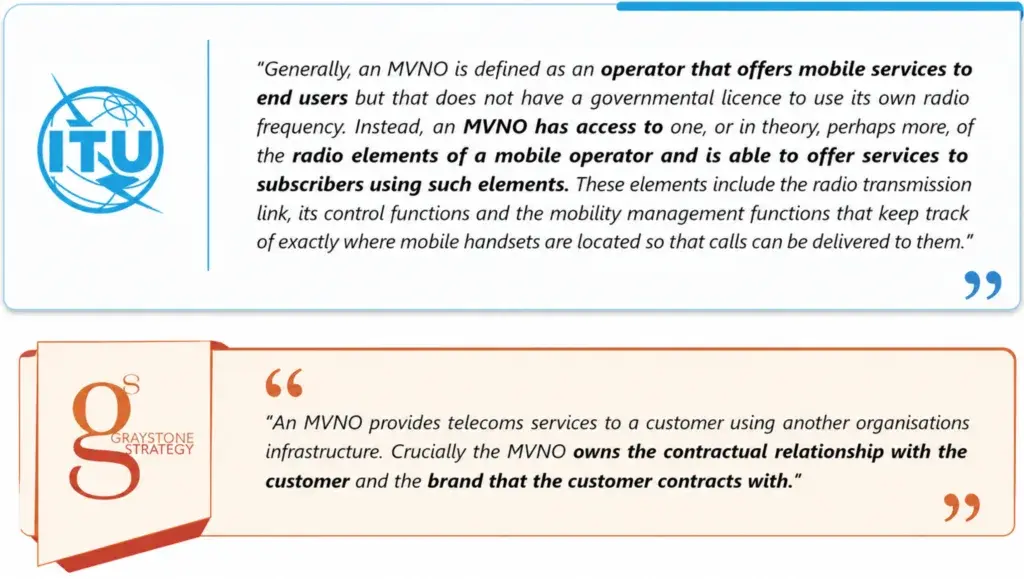
First, it is necessary to distinguish core industry concepts. According to ITU standards, an MVNO provides mobile communication services to end users without independent radio frequency licenses, relying on radio access resources leased from basic mobile network operators. Many market participants confuse MVNA and MVNE service providers. An MVNA acts as an intermediate agent that helps multiple small MVNOs complete unified docking with MNOs to reduce the management burden of network operators. An MVNE delivers professional technical enablement platforms, allowing MVNOs to retain direct commercial cooperation relationships with MNOs and gain richer functional support.
Three Core MVNO Operation Modes
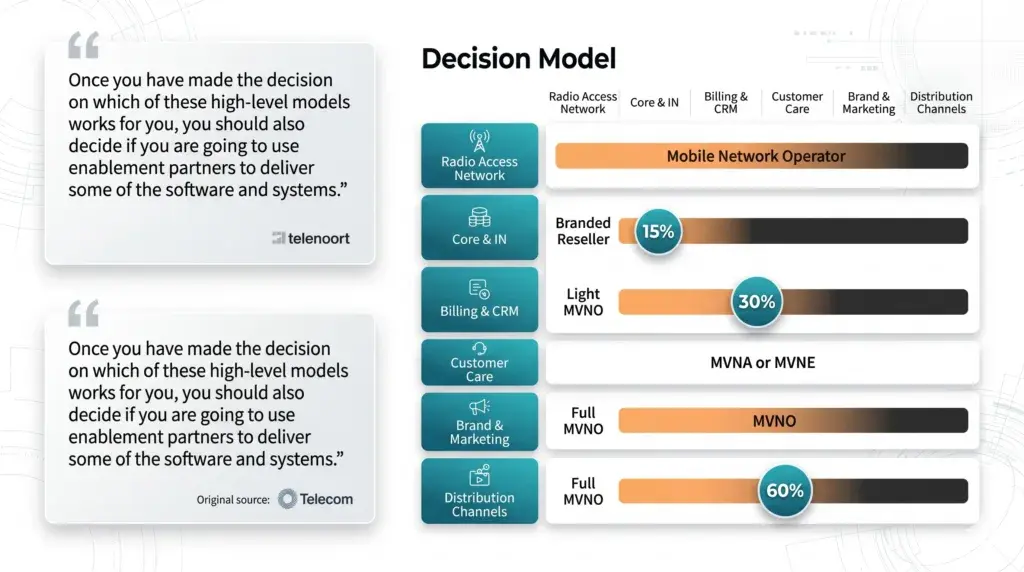
The telecom value chain divides MVNOs into three core operation modes with clear profit differences. Branded resellers only operate sales channels and gain the lowest profit share. Light MVNOs rely on external enablement platforms, which limits independent pricing and service iteration space. Full MVNOs deploy self-controlled core network equipment covering HLR, HSS, PGW and UPF, and hold complete control over billing, subscriber management and value added services. Industry data shows full MVNOs can achieve far higher gross profit levels than light MVNOs, laying a solid foundation for long term business expansion.
Five Sequential Stages of MVNO Launch
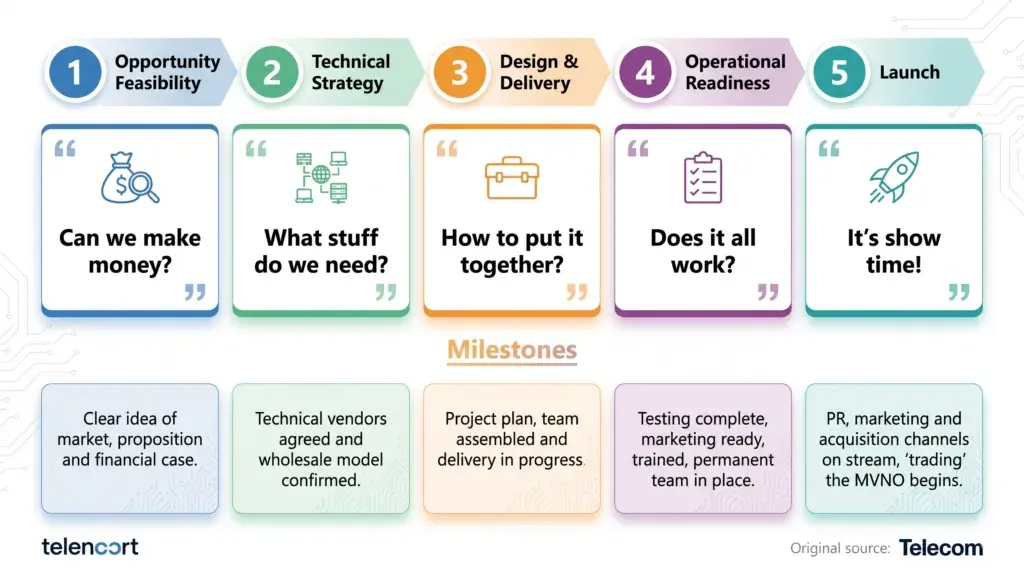
A standardized MVNO launch follows five sequential stages with clear deliverables. The first stage is opportunity feasibility research, covering market survey, customer demand verification, wholesale negotiation and financial model building to confirm project profitability. The second stage focuses on technical strategy formulation, selecting operation modes, sorting out vendor bidding plans and defining the division of responsibilities between MNOs, enablement partners and MVNO teams. The third stage covers design and delivery, including brand construction, system integration, contract signing and resource allocation for operation teams. The fourth stage completes full operational readiness through end to end system testing, staff training and market launch plan polishing. The fifth stage is formal commercial launch, with a dedicated operation command center to coordinate marketing, customer service and technical troubleshooting for stable service delivery.
Key Growth Drivers: Vertical Segmented Scenarios
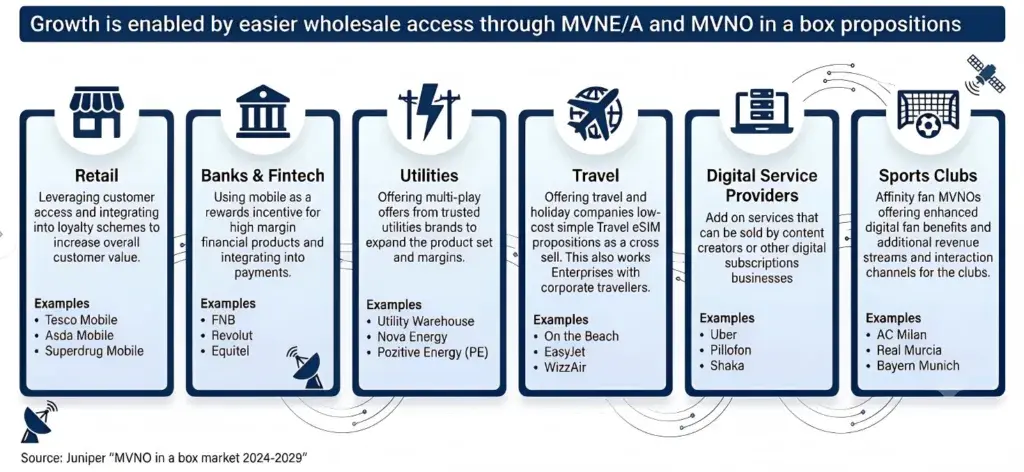
Vertical segmented scenarios become key growth drivers for modern MVNOs, covering retail, financial technology, public utilities, travel, sports clubs and enterprise IoT. Each track has customized customer groups and monetization paths, requiring flexible, scalable core network infrastructure to match differentiated service demands.
End-to-End Solutions with IPLOOK
If you plan to build a new MVNO or upgrade from light MVNO to full MVNO, IPLOOK delivers lightweight, cost efficient end to end core network solutions. Our cloud native network architecture supports flexible capacity scaling for niche vertical businesses and massive IoT connections, simplifies cross vendor system integration, and shortens the whole launch cycle of MVNO projects. Our professional technical team can customize network deployment plans matching your five stage launch roadmap, helping you raise gross margins and seize market growth dividends across Europe, Asia Pacific and other high potential regions.