Our High-Performing Core Network
Fully virtualizable on VMware, K8S, Docker and OpenStack containers
5G Core Network(5GC)
5G Core Network(5GC) holds a key role in realizing the full potential of 5G services. Without 5GC, fully-fledged NR services cannot be obtained. 5G NSA deployment leaning on traditional LTE network and EPC allows for a quick launch of 5G services, but also hinders the realization of 5G’ s full potential.
Base on Service Based Architecture(SBA), in 5GC, a cloud native design is introduced to enable flexible scaling and upgrades.
Key Benefits

Supports VoNR/VoLTE/CSFB
Allow operators to meet a variety of voice application scenarios

Flexible Deployment
Enable for centralized or distributed data centers

Virtualized, Cloud-Native Dual-Mode 5G Core
Support NSA/SA Networking

Fully standards based, multivendor solution
Supports End-to-End 5GC Slicing

3G/4G/5G Converged Core
Enable smooth handover among 3G, 4G and 5G

Full Stack capabilites
A complete core network portfolio, Simplify operators' network structure

High scalable
Enable to deploy on Cloud Platform such as AWS and Azure

Enable more granular end-to-end management and control of traffic flows and applications
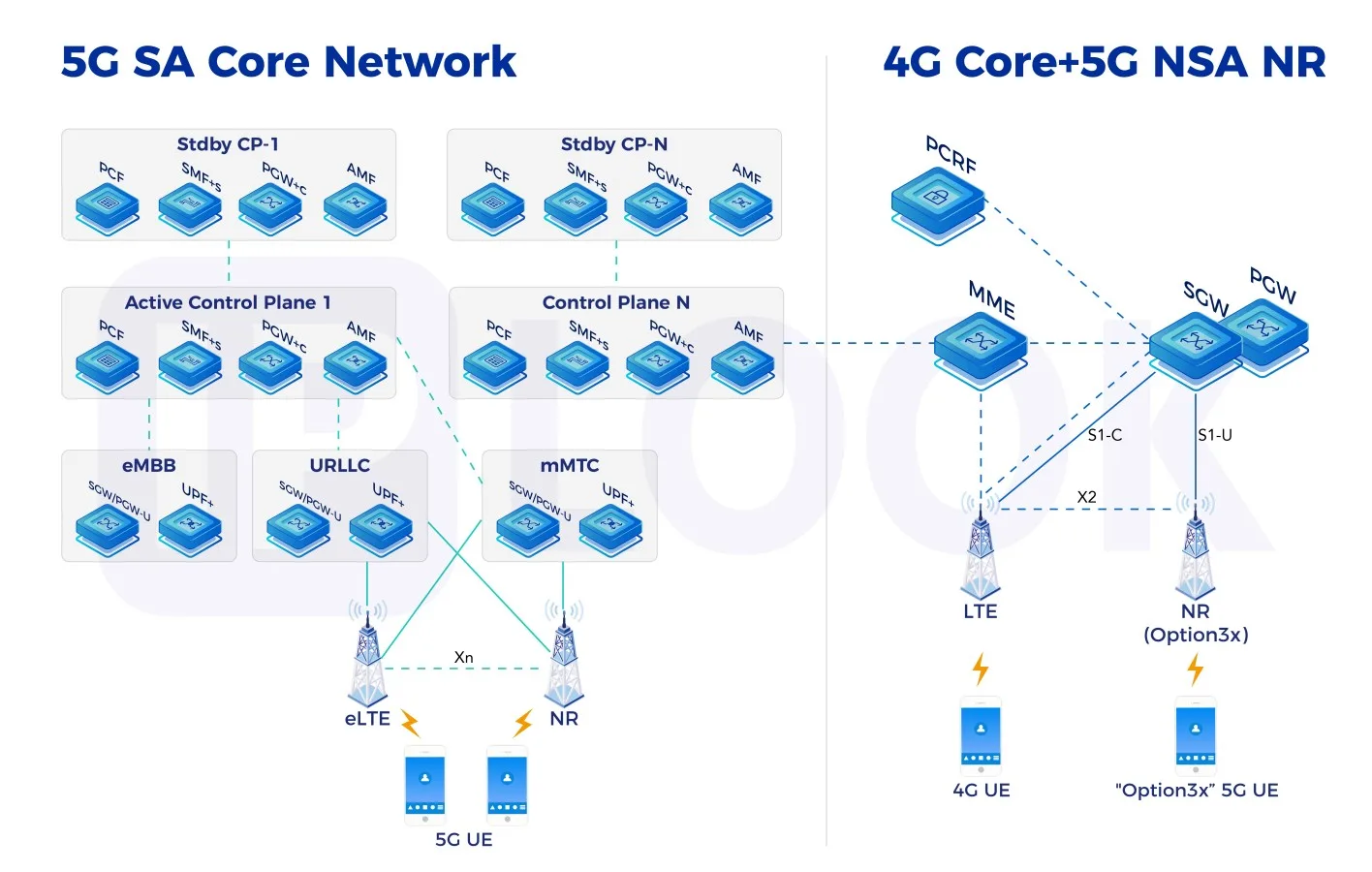
IPLOOK's Ultra 5G Core Network
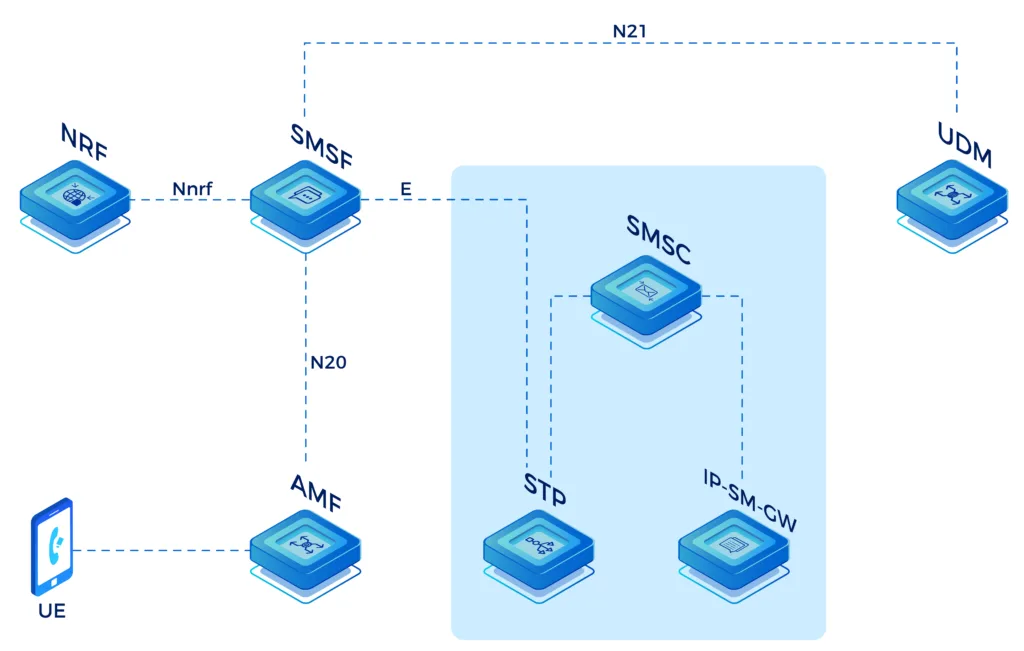
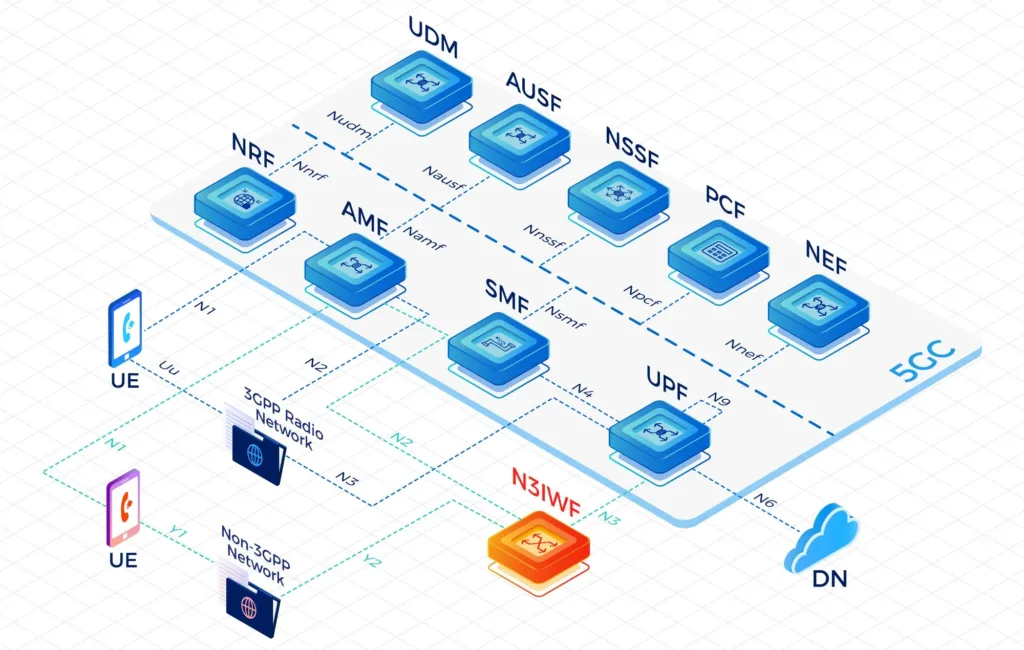
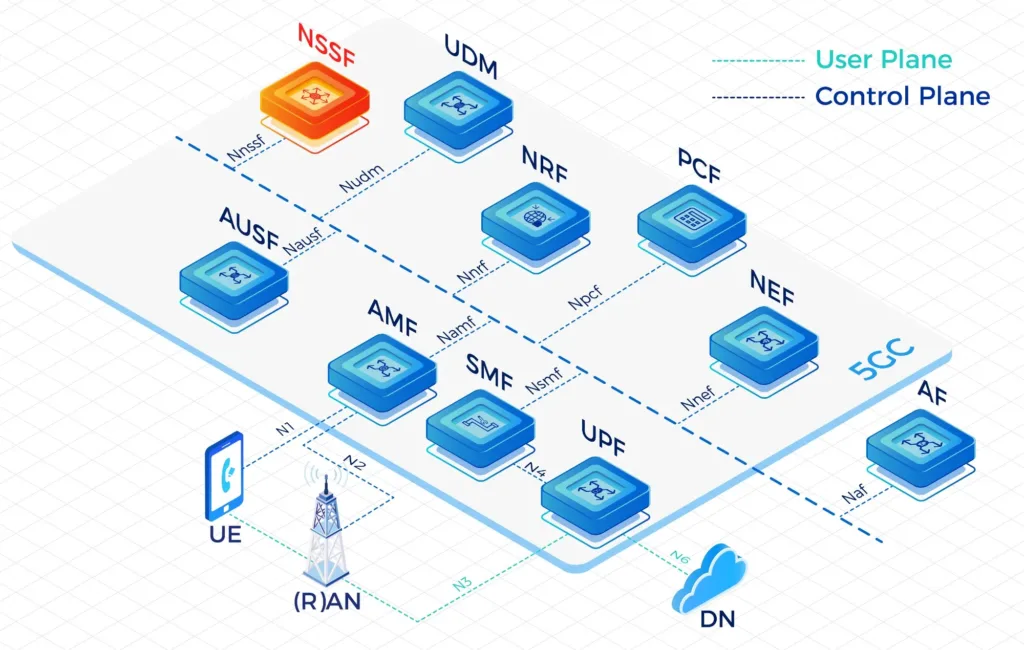
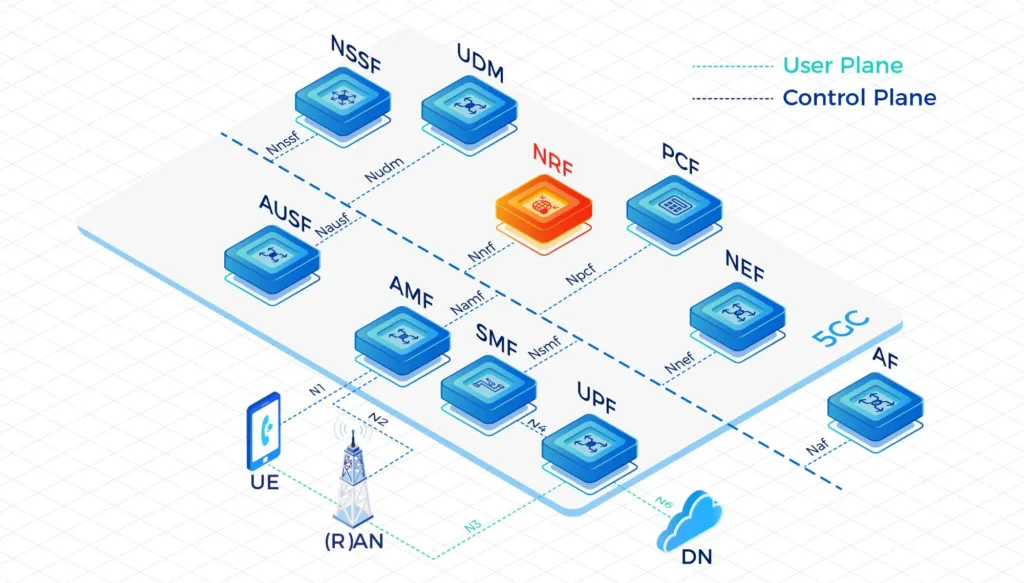
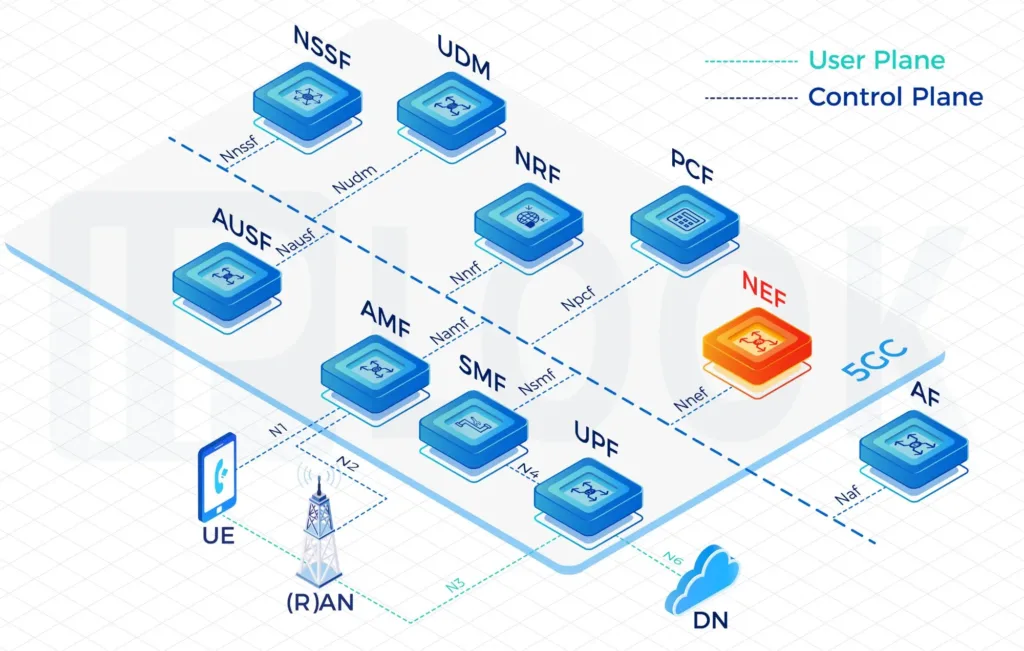
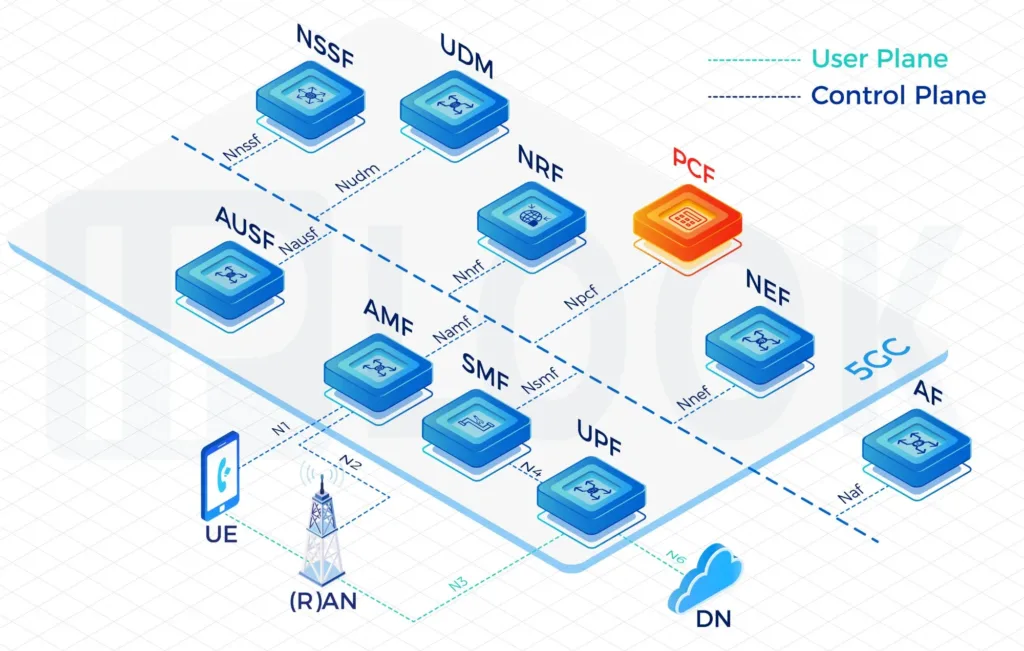
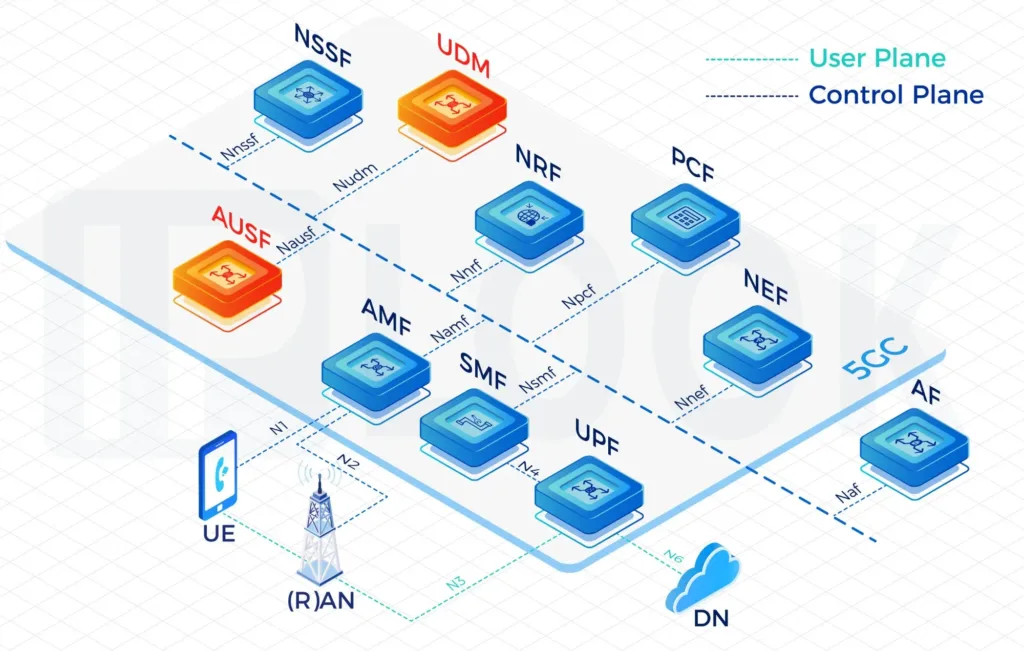
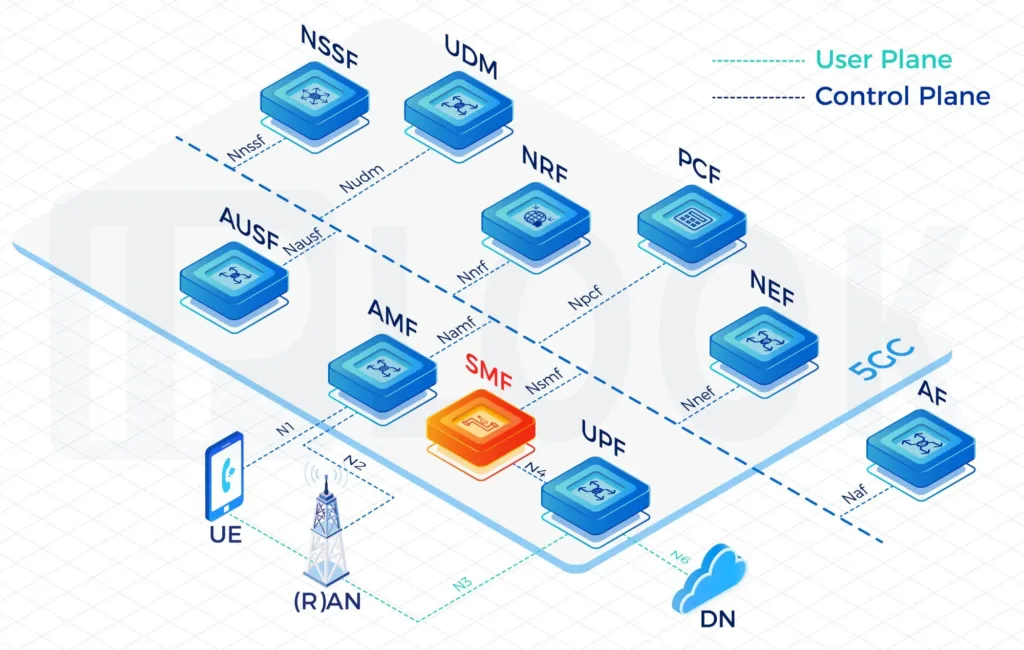
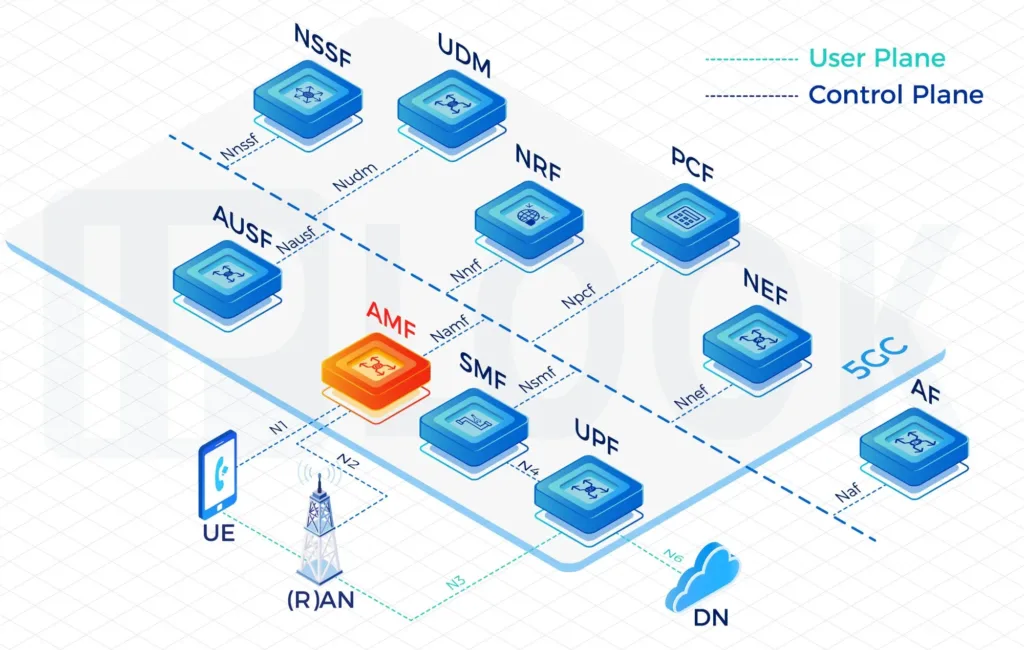
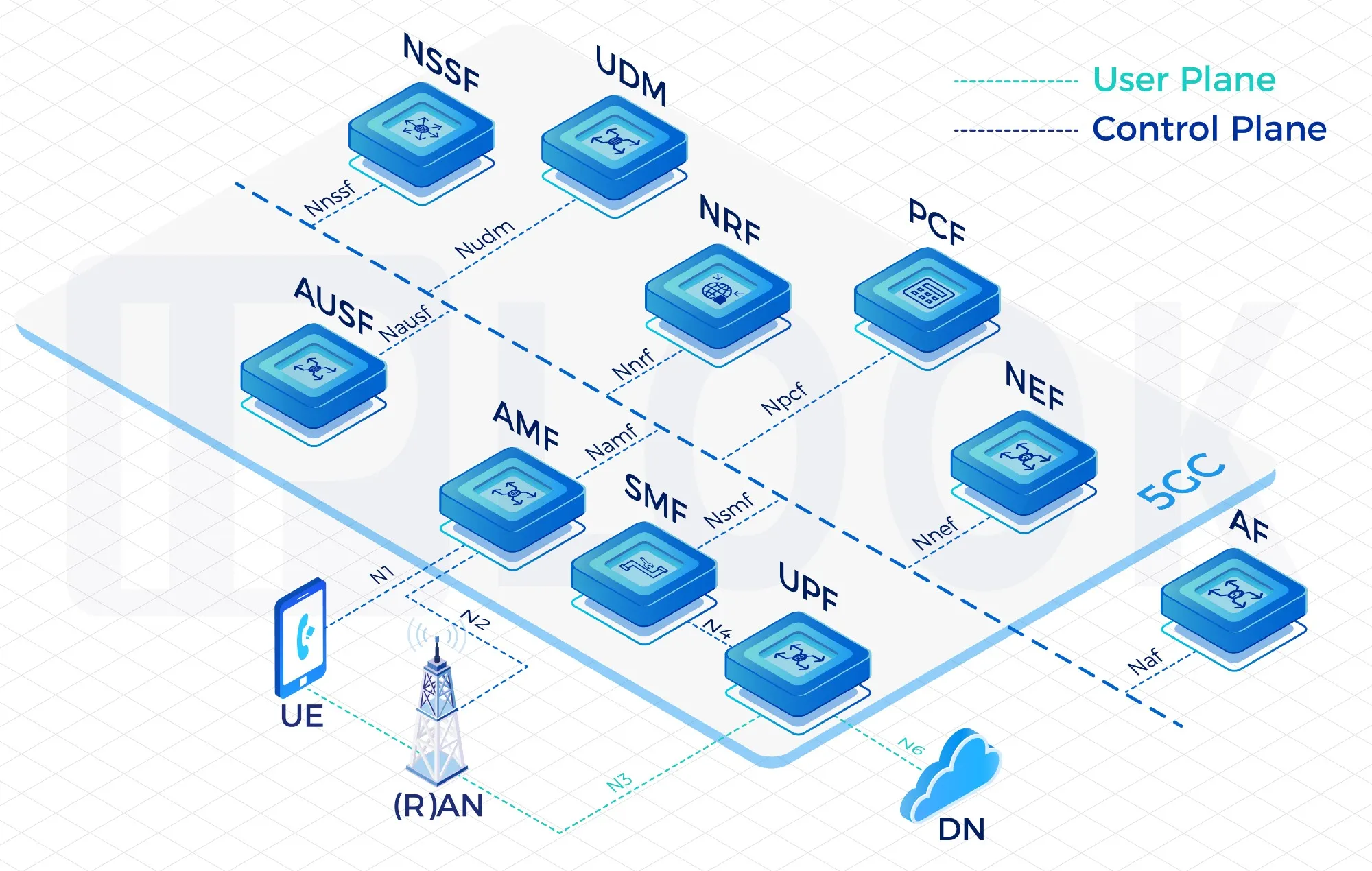
- IPLOOK’s 5GC includes the elements: UPF, AUSF, UDM, AMF, SMF, PCF, NSSF, NRF, NEF.
- Highly compact, IPLOOK 5GC can be implemented on low end COTS servers, or can utilize available CPU capacity in a radio by embedding directly into available CPU cores within the radio itself. It can also be containerized for deployment on an NFV platform.
- IPLOOK 5GC has higher compatibility and will be upgraded to support 3G and 4G user access. Users can register for 3G/4G/ 5G networks, thus ensuring a smooth upgrade to 5G for existing 3G/4G users.
- We enable 5G services for Service Providers, Systems Integrators, Enterprises and Government Organizations while optimally leveraging investments of existing networks and systems, at price levels which are significantly lower than the products of the established tier 1 vendors.
Video Series
Features
Comply to 3GPP R15/R16 Standards
A Service Based Architecture (SBA): AMF, SMF, PCF, UPF, UDM, AUSF, NSSF, NRF, NEF Full Functions
- UPF: User Plane Function
- AMF: Access and Mobility Management Function
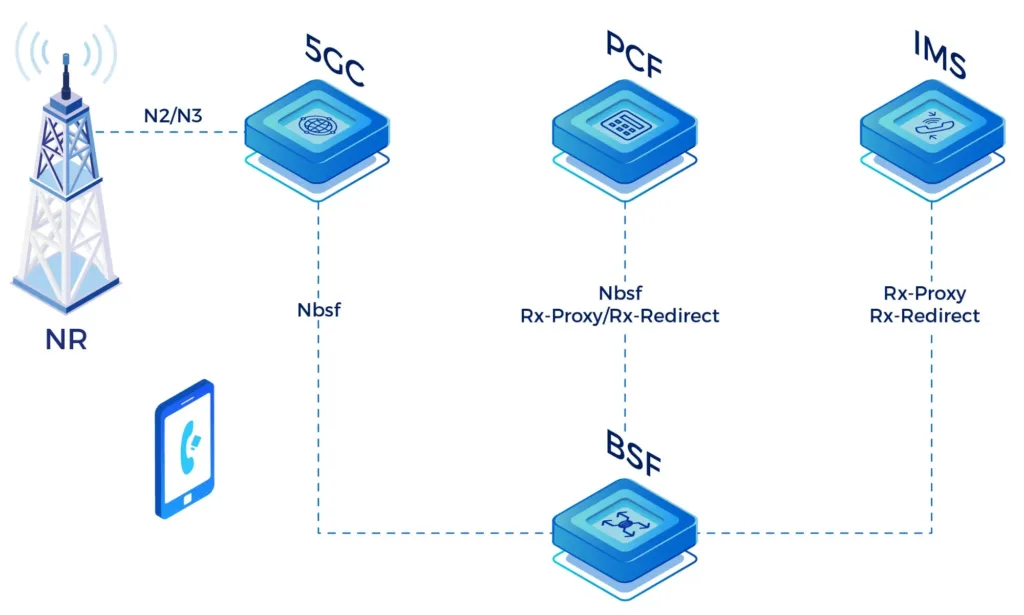
- BSF: Binding Support Function
- SMF: Session Management Function
- PCF: Policy Control Function
- UDM: Unified Data Management
- AUSF: Authentication Server Function
- NSSF: Network Slice Selection Function
- NRF: Network Repository Function
- NEF: Network Exposure Function
- NSSF: Network Slice Selection Function
- SMSF: Short Message Service Function
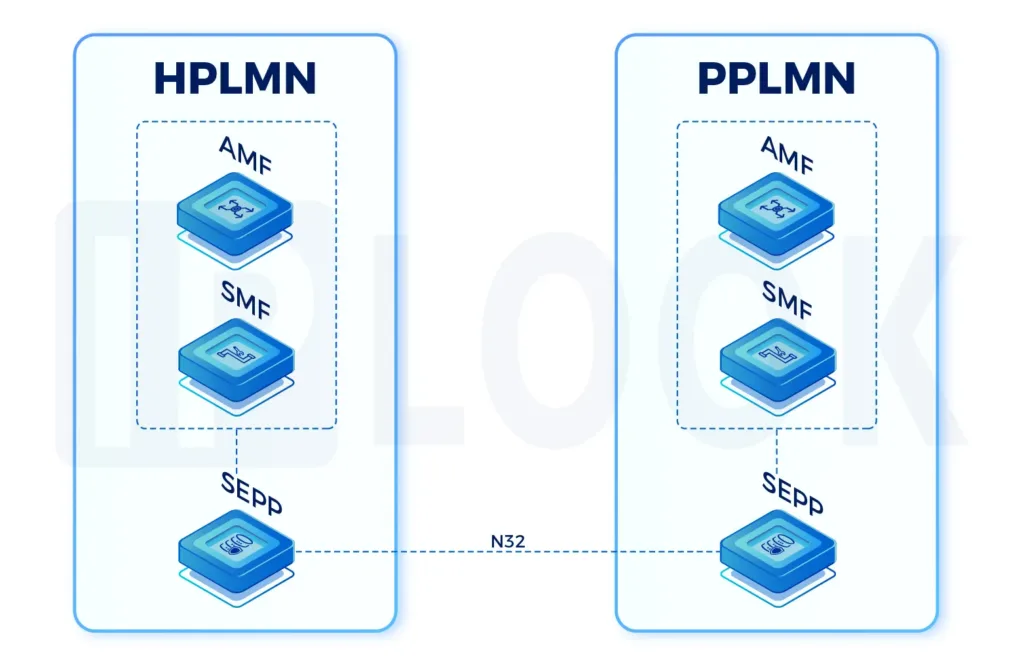
- SEPP:Security Edge Protection Proxy
- N3IWF:Non-3GPP InterWorking Function
The IoT with NR
- VoNR
5GC NFV Architecture
- Cloud Native
- Docker
Separate the User Plane (UP) functions from the Control Plane (CP) functions, allowing independent scalability, evolution and flexible deployments e.g. centralized location or distributed (remote) location
UPF Multi-Gbps support: 10GbE/25GbE/40GbE/100GbE
5GS interworking
- PGW-C/SMF
- PGW-U/UPF
- PCRF/PCF
- MME/AMF
- HLR/HSS/UDM/AUSF
- N26 interface
5GS interworking
Modularize the function design, e.g. to enable flexible and efficient network slicing
Open Northbound interface and graphical web based management interface
FAQ
What makes IPLOOK’s 5G Core different from traditional EPC solutions?
IPLOOK’s 5G Core Network is built on a cloud-native Service Based Architecture (SBA) compliant with 3GPP R15/R16 standards. Unlike traditional EPC-based architectures, it supports full 5G SA capabilities such as network slicing, VoNR, flexible scaling, and ultra-low latency services while still supporting NSA deployments for smooth migration.
Can IPLOOK’s 5GC support both NSA and SA deployments?
Yes. IPLOOK’s dual-mode 5G Core supports both NSA (Non-Standalone) and SA (Standalone) networking. This enables operators to launch 5G services quickly using existing LTE infrastructure while gradually evolving toward full standalone 5G architecture.
How does IPLOOK help operators reduce deployment costs?
IPLOOK’s 5GC is highly compact and optimized for deployment on low-end COTS servers, virtualized environments, and cloud platforms such as AWS and Azure. Its modular cloud-native design reduces hardware dependency, simplifies scaling, and lowers both CAPEX and OPEX compared to traditional tier-1 vendor solutions.
Does the solution support network slicing?
Yes. IPLOOK’s 5G Core supports end-to-end 5GC network slicing through functions such as NSSF and modular SBA architecture. This allows operators and enterprises to create dedicated logical networks for different use cases including IoT, private networks, FWA, and mission-critical services.
How does the platform ensure smooth migration from 3G/4G to 5G?
The solution supports a converged 3G/4G/5G core architecture, enabling seamless interoperability between legacy and next-generation networks. Features such as N26 interface support, 5GS interworking, and compatibility with existing EPC functions allow operators to protect previous investments while transitioning to 5G.
What deployment models are supported?
IPLOOK’s 5GC supports centralized, distributed, virtualized, and containerized deployment models. It can run on NFV infrastructure, Docker-based cloud-native environments, or embedded CPU resources within radio systems, providing flexibility for public networks, private LTE/5G, and enterprise deployments.
Which industries and organizations can benefit from this 5G Core solution?
The solution is designed for mobile operators, MVNOs, enterprises, system integrators, government organizations, and private network providers. It is suitable for scenarios such as smart manufacturing, IoT connectivity, campus networks, industrial automation, FWA, and mission-critical communications.
How does IPLOOK ensure scalability and future readiness?
The architecture separates the Control Plane (CP) and User Plane (UP), allowing independent scaling and flexible expansion. The UPF supports multi-Gbps throughput with 10GbE/25GbE/40GbE/100GbE interfaces, while the cloud-native SBA framework enables continuous upgrades, rapid service innovation, and long-term evolution toward advanced 5G applications.