5GC Network Slicing
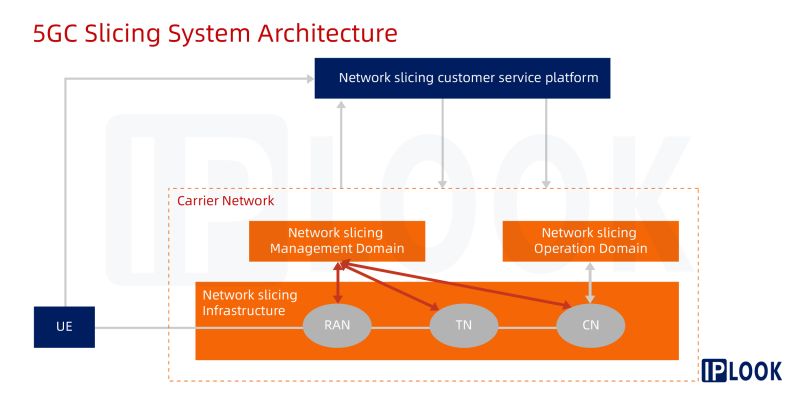
A network slice is a logical network serving a defined business purpose or customer, consisting of all required network resources configured together. It is created, changed, and removed by management functions. Network slicing divides an operator’s physical network into multiple logical networks.
The network slicing system architecture consists of three parts: UE, network slicing customer service platform, and carrier network. The latter includes network slicing infrastructure providing the necessary support for network slicing in RAN, Transport Network (TN), and Core Network (CN) and implements assurance. Main functions of network slicing service operation include network slicing offering release, network slicing offering subscription, network slicing charging, and network slicing member management.
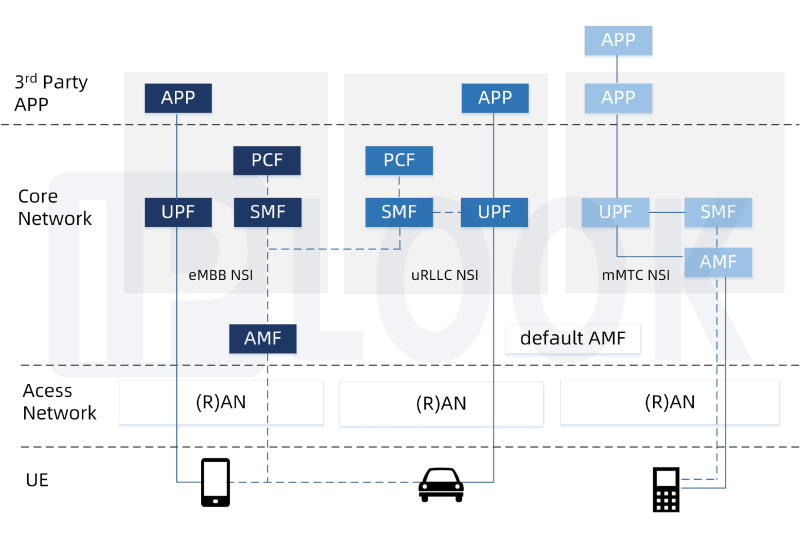
Core Network Architecture with Network Slicing Support – Example
The Core Network is considered the most critical and essential part of the network. The CN provides network services for tenants and their end users—for instance, control plane functions (mobility management, session management, policy control, and charging) and user plane functions (data forwarding). To meet the diversified demands of vertical industries, network service customization and on-demand deployment are key concepts that must be reflected in the CN design.
The Core Network has the following attributes:
- ✔ Cloudification
- ✔ Modularization
- ✔ Service-Orientation
As illustrated in the figure below, the Core Network adopts a service-based architecture design methodology, which includes a unified database to enable a coherent view, and a programmable user plane to support network slicing. This architecture promotes the simplification of signaling interactions, enables the distribution of network functions, and allows customized network function placement (e.g., close to the Access Network to reduce latency).